


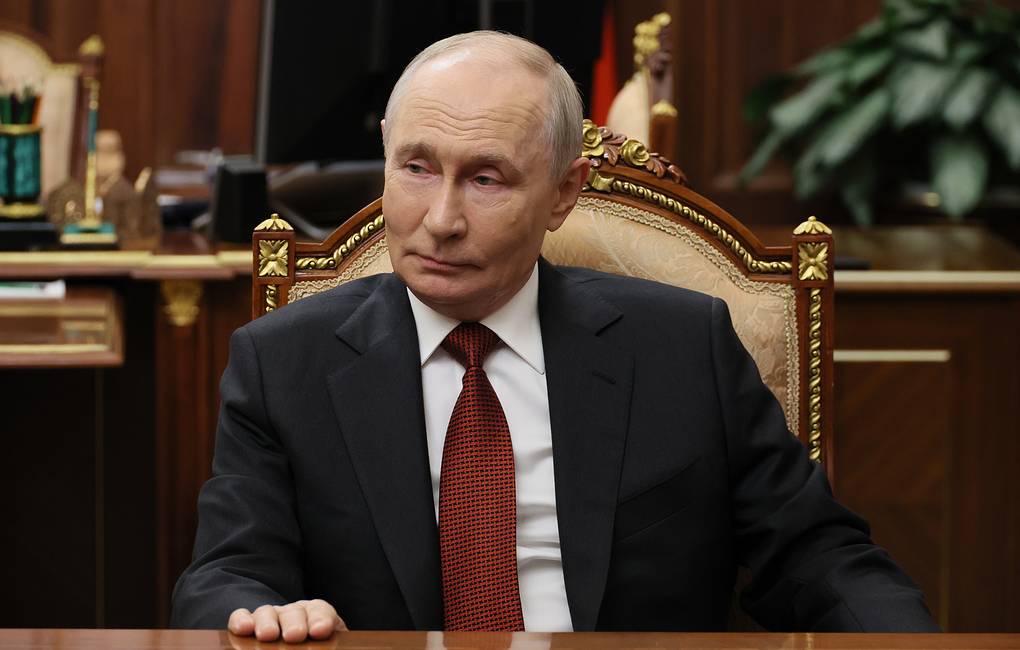
New Delhi: The Russian president, Vladimir Putin, has warned that Moscow will intensify attacks on Ukraine’s most vulnerable economic sectors after Kyiv expanded its long-range drone campaign against Russian oil, industrial and logistics infrastructure. His remarks signal a widening of the economic war, with both countries increasingly targeting assets far beyond the battlefield that sustain trade, state revenue and military operations.
In comments broadcast by Russian state television on August 22, Putin accused Ukraine of opening a “Pandora’s box” by attempting to inflict systematic damage on the Russian economy. He said Moscow would respond by striking what he described as Ukraine’s “most sensitive economic sectors”, without specifying which facilities could be targeted next.
The warning followed a sharp escalation in Ukrainian drone attacks during the summer, including strikes on Russian oil refineries, export facilities and warehouses operated by major online retailers. Kyiv says these sites form part of the economic and logistics network supporting Russia’s war, although Moscow and the companies concerned dispute claims that civilian commercial infrastructure is being used for military purposes.
Ukrainian drones struck an oil refinery at Novokuibyshevsk and an Ozon logistics centre in Russia’s Samara region on August 22, according to Ukrainian and Russian accounts. At least 10 people were reported killed in attacks across Russia and Russian-controlled Ukrainian territory that day, while Russia’s defence ministry said its forces had intercepted 457 drones.
The attack was the first reported strike on a warehouse operated by Ozon, Russia’s second-largest online retailer, and followed repeated attacks on its larger rival, Wildberries. Earlier strikes on Wildberries facilities had disrupted distribution networks and affected thousands of small businesses that use the platform, illustrating how attacks intended to pressure the war economy can also reach civilian supply chains.
Ukraine’s expanding drone fleet has given it a relatively inexpensive means of striking targets hundreds or even more than 1,000 kilometres inside Russia. On July 29, Ukrainian drones hit refineries and logistics facilities in Perm, Ryazan and Taganrog, while a Wildberries warehouse in Ryazan was evacuated after catching fire.
The campaign is designed to disrupt fuel processing, military supply routes and export earnings at a time when Ukraine faces shortages of sophisticated air-defence interceptors. Russia, however, portrays the attacks as indiscriminate strikes on civilian economic activity and has increasingly presented its own operations against Ukrainian infrastructure as retaliation.
Moscow has attacked Ukrainian ports, grain terminals, storage facilities and vessels operating in the Black Sea, placing additional pressure on one of Kyiv’s most important sources of foreign revenue. Ukrainian grain shipments fell by 76 per cent during the first two weeks of August compared with the corresponding period in 2025, according to figures cited by Ukraine’s agriculture ministry.
Putin dismissed concerns that sustained attacks on Ukrainian agricultural infrastructure could create shortages in the international market, arguing that Russia was capable of replacing the lost supply. He acknowledged difficulties in transporting Russian commodities but maintained that Moscow would overcome them, even as Ukraine has also struck Russian grain-export infrastructure.
Russia is the world’s largest wheat exporter, while Ukraine remains a major supplier to countries in Africa, West Asia and parts of Asia despite the disruption caused by the war. Attacks on either country’s Black Sea terminals can therefore affect freight costs, insurance premiums and international grain prices well beyond the immediate theatre of conflict.
The growing threat to agricultural trade also recalls the collapse of the Black Sea Grain Initiative, brokered by Türkiye and the United Nations in July 2022. The agreement allowed Ukrainian food exports to pass through designated maritime routes, but Russia withdrew in July 2023 after saying that restrictions affecting its own agricultural exports had not been removed.
Ukraine subsequently established an alternative shipping corridor close to the western Black Sea coastline, restoring part of its export capacity despite the continuing threat of Russian attacks. The latest escalation shows how vulnerable that arrangement remains when both sides are striking ports, vessels and agricultural infrastructure around the Black Sea and the Sea of Azov.
Putin also repeated that Russia remained prepared to discuss a negotiated settlement, but only if proposals reflected what Moscow calls the “realities on the ground”. That formulation generally refers to Russia’s occupation of about a fifth of Ukraine’s internationally recognized territory, which Kyiv refuses to accept as the basis of a permanent settlement.
The exchange of economic strikes has intensified as battlefield movement remains costly and relatively slow, turning refineries, warehouses, ports and transport networks into instruments of strategic pressure. It also raises the risk of an expanding cycle of retaliation in which civilian commerce, food exports and energy supplies become progressively more exposed, even though both Moscow and Kyiv deny deliberately targeting civilians.