


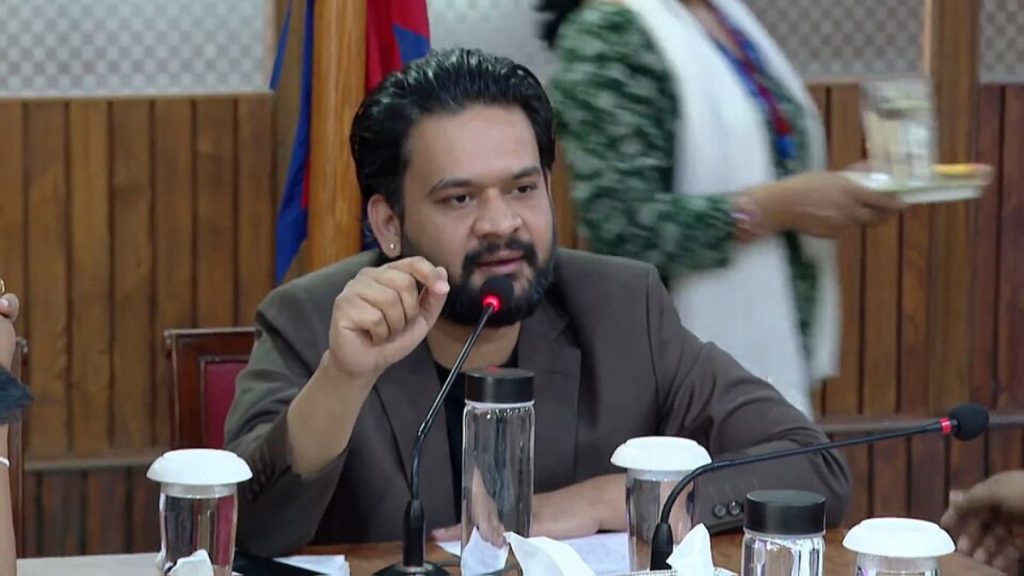
New Delhi: The Nepal prime minister, Balendra Shah, has thanked India, China and the US for their assistance after flash floods devastated parts of the country on August 26. The death toll till now has risen to 1,204, with 4,216 people still missing.
His remarks came as rescue teams continued searching for survivors and foreign nationals, while Nepal’s government stepped up its call for international support to address what it describes as growing climate-related risks.
The numbers are still moving. Nepal’s National Disaster Risk Reduction and Management Authority (NDRRMA) has revised its count almost daily, as bodies are recovered from rivers as far as Uttar Pradesh and as phone networks slowly return in cut-off villages.
As reported earlier by RNA, nearly 12,000 people have been rescued so far. Shah told the parliament, though he cautioned the toll could still climb once rescue teams reach the last of the inaccessible areas.
“In these difficult times, we got support from various countries, including India, China, the US, and others,” Shah said, addressing the Nepali Parliament.
His acknowledgement came shortly after Nepal’s foreign minister, Shishir Khanal, said assistance from the world’s largest emitters should be treated as a legal and moral responsibility, not charity.
According to reports, in an recent interview with Kantipur TV, Khanal said Nepal contributes almost nothing to global emissions yet is paying “the highest price for a global crisis we did not create.” Nepal’s finance ministry has since sent a formal climate compensation claim letter to China, the US and India − the three countries Khanal named as the world’s largest emitters.
Rescue teams narrow search to hydropower tunnels
The floods destroyed homes, roads and bridges across several districts, and damaged at least 14 hydropower and solar projects with a combined capacity of close to 750 megawatts.
A week on, the search has narrowed almost entirely to those hydropower tunnels, where hundreds of workers are feared trapped. According to NPR, rescuers first had to locate the tunnels themselves, one tunnelling expert said the post-flood landscape looked as though a bomb had gone off.
There have been rare moments of relief. Shah said nearly 300 workers had been rescued from hydropower sites, most from the Upper Trishuli-1 project. But officials say the odds of finding more survivors are narrowing, and the focus for many teams has shifted from rescue to recovery, including mass burials in Kathmandu for bodies that could not be identified.
International search effort
Visitors from more than 30 countries were caught up in the floods, many of them trekkers and pilgrims headed towards Mount Kailash. Indian nationals made up the largest group of affected tourists, followed by citizens of the US, Ukraine, Malaysia, Australia, the UK, Latvia and Canada, per Nepal’s tourist police.
Australia has continued to report citizens unaccounted for. Four more Australians were confirmed alive this week, but 38 remain missing, ABC reported. Families of the missing have been pressing authorities to do more.
India’s rescue and forensic effort
India remains among the most active countries assisting Nepal. A fifth Indian Air Force flight reached Kathmandu on Wednesday carrying about 5.5 tonnes of medical supplies − antibiotics, analgesics, surgical items and other essential medicines − along with an 11-member specialized team and more than 6 tonnes of rescue equipment. India has now delivered around 74 tonnes of relief assistance to Nepal in total.
According to the officials, as of Wednesday, 166 Indian nationals had been rescued, while 410 Indian nationals visiting Tibet for pilgrimage or other activities had crossed back into China and out.
The Indian tunnel rescue team moved its base from Trishuli to Syabrubesi, cutting travel time to the Chilime site where it is working alongside the Nepali Army. A fresh batch of 11 rescue experts has moved close to Trishuli Bazaar and was expected to join the search.
Separately, a 19-member Indian forensic team is also working out of two laboratories in Kathmandu, examining and analysing DNA samples with Nepali experts to help identify unclaimed bodies.
China and US step up relief
China is running its own extensive rescue operation across the border in Tibet, where the floods caused heavy casualties. Beijing has reopened the G216 national highway to the Gyirong border crossing, letting heavier equipment reach areas that had been cut off, Reuters reported.
A third batch of Chinese relief supplies − Bailey bridges, mortuary refrigerators, epidemic-prevention items and emergency communication equipment, was on the way to Nepal, as posted by China’s foreign ministry spokesperson on X. Beijing said it was helping stranded border residents and pilgrims leave China by land and air, and that its foreign ministry had briefed diplomatic missions on the identities of foreign nationals still unaccounted for.
The US has also stepped up assistance. More than 40 tons of emergency relief from the American humanitarian group Samaritan’s Purse arrived in Kathmandu, carrying enough water filters, tarpaulins, blankets, hygiene kits and solar lights for 2,600 families, according to a post by the US Embassy in Nepal on X. The embassy said it was coordinating closely with the Nepal government to match the aid to local needs.