


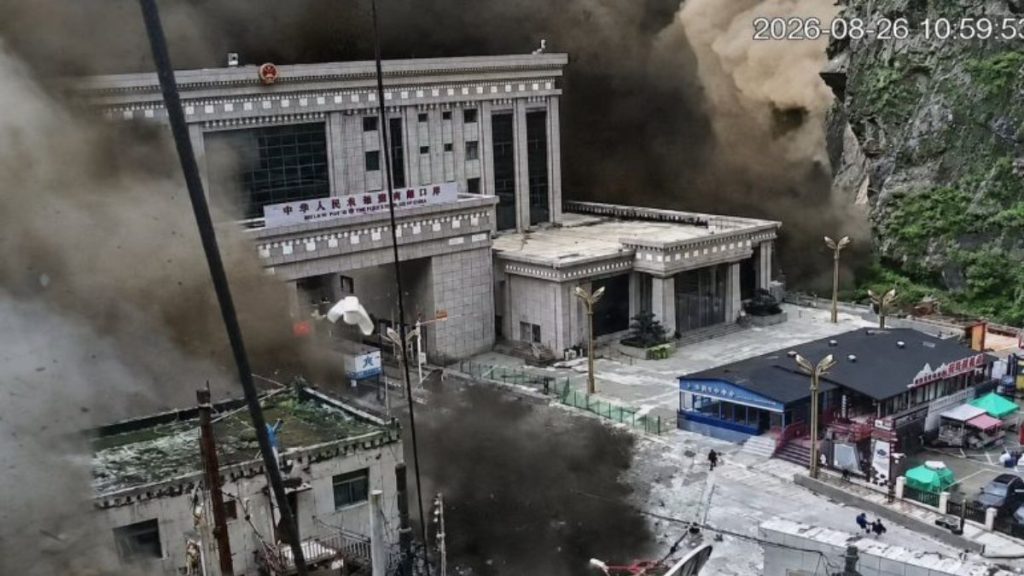
New Delhi: Nepal has recovered 1,114 bodies and around 3,900 people remain missing following the August 26 flash flood, as rescue teams continue searching hydropower tunnels and debris covered areas for survivors. Nearly 12,000 people have been rescued so far, according to the latest government figures released on Wednesday.
The flood followed a glacier collapse near Nepal’s border with China, sending ice, rock, mud and debris through mountain valleys and damaging settlements, roads, bridges and hydropower infrastructure.
Search operations are now heavily focused on hydropower projects, where hundreds of workers remain unaccounted for. Rescuers are now concentrating on tunnels and underground chambers where air pockets, food and water could mean some workers are still alive.
At Rasuwagadhi hydropower project in Rasuwa district, officials believe dozens of workers may be inside a tunnel-like chamber with access to food and water. Rescue operations are also underway at several other hydropower sites affected by the flood.
Nepal’s latest official briefing said specialized foreign teams had been deployed at specific sites. An Indian tunnel rescue team was working with Nepali teams at Langtang and Chilime, while a Chinese team was involved at Upper Trishuli-3A and a South Korean team was assisting at Upper Trishuli-1.
The Nepali prime minister, Balendra Shah, has said search and rescue operations will continue as authorities restore roads, electricity and communication links across the affected areas. Reuters reported that around 95 per cent of telecommunications services had been restored by Tuesday, while the floods disrupted more than 431 megawatts of electricity generating capacity.
163 Indians rescued as India expands assistance
The Ministry of External Affairs said 163 Indian nationals had been rescued in Nepal as of Tuesday, while 151 Indian nationals departed China during the day. India remains in coordination with Nepali authorities on rescue and relief operations. As RNA Media reported earlier, New Delhi has progressively expanded its response in Nepal, deploying specialized tunnel rescue and forensic teams alongside humanitarian assistance.
The latest MEA update did not provide a revised figure for Indian nationals who remain missing or announce a new confirmed death toll among Indians in Nepal.
A 19-member specialized Indian forensic team is working in Kathmandu to assist with DNA analysis and the identification of mortal remains. The team has been coordinating with Nepali forensic authorities.
India has also deployed a specialized tunnel rescue team. At Chilime, rescuers faced restricted access, difficult terrain and marshy conditions inside tunnels, forcing them to use improvised techniques to move deeper into affected sections. The team has also worked at the Langtang hydropower site.
India has sent relief supplies, medical material, rescue equipment and specialised personnel to Nepal since the disaster. Earlier consignments included medicines, food, blankets, sleeping bags, tarpaulins and technical equipment, while an Indian Air Force C-130 aircraft transported tunnel-rescue specialists and forensic experts.
India’s response has therefore involved both assistance to its own nationals and direct support for Nepal’s wider search, identification and relief operations.
Around 590 foreign nationals from 39 countries remain missing
Nepal’s foreign ministry said 324 foreign nationals had been rescued, while around 590 people from 39 countries remained missing following the August 26 floods. The ministry said the figures were continuing to change as search operations progressed and information was verified.
Some foreign nationals previously listed as missing have since made contact with authorities. The Associated Press reported on Wednesday that five Australians had been confirmed safe, while the Nepal Tourism Board said at least five other tourists who had earlier been reported missing had contacted authorities by telephone or email.
The figures cover foreign nationals and should not automatically be treated as a count exclusively of tourists.
Nepal’s foreign ministry has established an emergency control room to coordinate search, rescue, information verification and consular assistance involving foreign nationals. Nepalese diplomatic missions are also sharing verified information, facilitating communication with families and assisting with identification and repatriation procedures where required.
Nepal to rebuild early-warning system along China border
Nepal is preparing to rebuild early warning infrastructure along its northern border after the flood destroyed monitoring equipment, two government sources told Reuters. No formal government announcement on the plan had been made at the time of the Reuters report.
The first equipment is expected to be installed at Timure in Rasuwa district, close to the area devastated by the flood.
The planned network would combine seismic sensors and cameras with a very small aperture terminal (VSAT) satellite connection. The satellite link is intended to allow warning stations to continue transmitting information when conventional mobile networks are disrupted.
Reuters reported that at least four gauging stations close to the China border were knocked out during the disaster. The existing system had transmitted regular messages, but parts of the infrastructure were swept away, making it difficult for officials to immediately establish when individual stations had stopped functioning.
Nepal’s National Disaster Risk Reduction and Management Authority (NDRRMA) is expected to install the initial cameras, seismic sensors and VSAT equipment after officials surveyed the affected region by helicopter. Additional locations could subsequently receive similar equipment.
Nepal is also seeking greater real-time information sharing with China on glacier movement and water levels. China has shared satellite imagery, hydrological information and data on upstream conditions following the disaster, according to Reuters.
The limitations of the previous warning network became apparent on August 26. The flood reached the Gyirong border crossing at 8.32am, while a public warning was issued at 9.13am.
China restores road access to Tibet disaster zone
Across the border in Tibet, Chinese authorities raised the toll to 21 dead and 541 missing on Wednesday. China reopened the G216 national highway leading to the Gyirong border crossing, allowing heavy machinery, search dogs and life-detection equipment to reach the affected region by road. Rescue operations had earlier depended heavily on air transport because roads into the disaster zone had been cut.
Among those listed as missing on the Chinese side were 104 Nepalis, 49 Indians, 33 Latvians and six Canadians, according to Chinese official figures.