


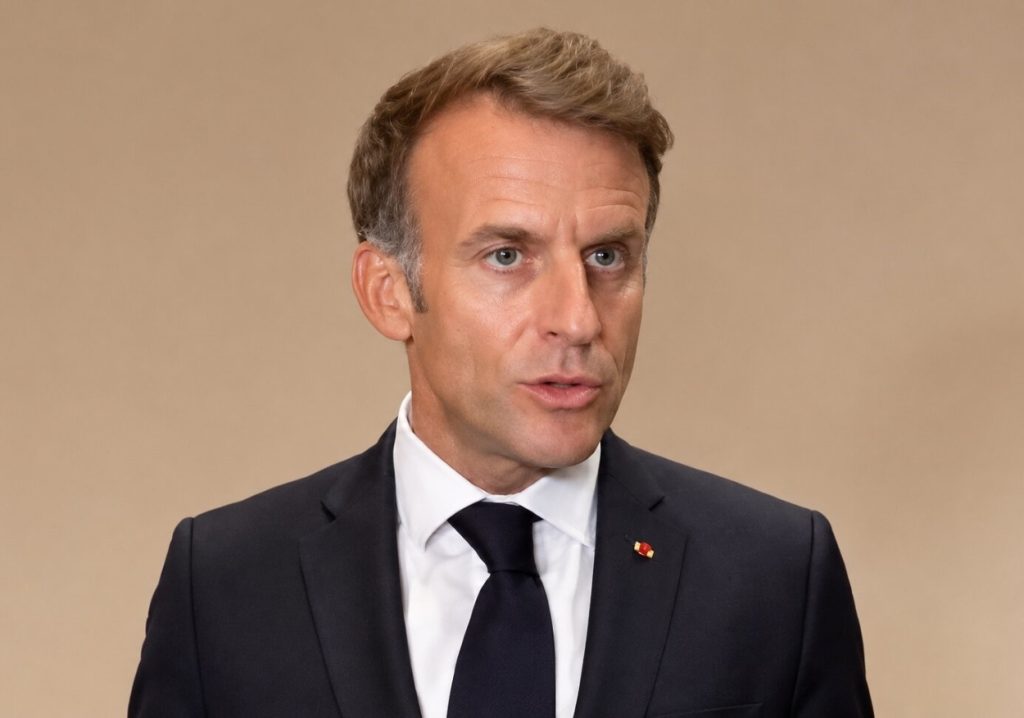
New Delhi: The French president, Emmanuel Macron, has accused foreign leaders, including the US president, Donald Trump, of exploiting unrest in his country for electoral advantage and spreading misleading claims about its causes. Speaking in Doha on Wednesday, he rejected attempts to portray the disturbances as an immigrant takeover, while promising to prevent further violence during fresh demonstrations.
Macron’s intervention followed remarks by Trump linking the disorder to immigration and warning American voters of similar consequences if the Democrats prevailed in the US midterm elections. Asked whether his criticism was directed at Trump, Macron replied: “Among others, yes.”
The French leader drew a distinction between foreign involvement in starting the unrest and the subsequent circulation of misleading accounts of it. According to Euronews’ report on his remarks, he said there was no visible foreign interference behind the events but accused overseas figures of manipulating information afterwards.
He cited artificial intelligence-generated images purporting to show incidents that had never happened in France, alongside claims that migrants and Islamists had overrun the country. Describing foreign leaders’ comments as “unacceptable and stupid”, Macron argued that politicians campaigning abroad were using France’s difficulties to advance their own agendas.
The prime minister of Israel, Benjamin Netanyahu, had also attributed the turmoil to extremist Islam and accused French authorities of failing to prepare. His remarks added to the international dispute over how the protests were being characterized.
The demonstrations themselves grew out of grievances over living costs, deteriorating schools and pressure on public services. Protests that began among school students in poorer northern suburbs of Paris widened into a movement drawing support from trade unions and activists seeking to revive the yellow vest mobilization of 2018.
On October 17, approximately 550,000 people demonstrated nationwide, according to the interior ministry, while the CGT trade union estimated participation at 800,000. Peaceful marches were overshadowed in several cities by attacks on buildings, clashes with police and extensive looting, including a fire that devastated the historic town hall in Limoges.
The scale of the disorder has also exposed shortcomings in the government’s preparations. An investigation by Le Monde found that intelligence assessments substantially underestimated turnout, leaving police deployments inadequate despite advance warnings about possible violence and looting.
The interior minister, Laurent Nunez, acknowledged that authorities had lost control in some major cities and offered his resignation, which Macron rejected. The prime minister, Sebastien Lecornu, subsequently introduced localized curfews, with restrictions varying by area, and promised support for businesses damaged in the unrest.
Macron said ministers and intelligence officials would meet on Wednesday to review the disturbances and preparations for further demonstrations on Saturday. He indicated that curfews and restrictions on gatherings would remain part of the response, while stressing the need for dialogue with unions and political parties.
The yellow vest movement has submitted plans for a Paris march, while the student union UNEF has called for further rallies. Separately, unions intend to proceed with nationwide strike action on November 5 after talks with Lecornu failed to produce a breakthrough, Reuters reported.
The justice minister, Gerald Darmanin, said approximately 2,500 people had been taken into custody, with 917 referred for prosecution and 174 jailed. Meanwhile, French benchmark 10-year bond yields reached 5%, their highest level since July 2002, amid investor concerns about the crisis and strained public finances.
Macron’s Gulf visit also had a domestic economic purpose: securing additional energy supplies as fuel costs intensified public discontent. He announced that the United Arab Emirates and Bahrain had pledged a combined additional 200,000 tonnes of diesel a month, linking his diplomacy abroad to one of the pressures driving anger at home.