


New Delhi: France’s prime minister, Sebastien Lecornu, called on local authorities on Monday to impose targeted curfews after a weekend of rioting and looting exposed serious weaknesses in security preparations. The move followed nationwide demonstrations over rising living costs and deteriorating school conditions that brought hundreds of thousands onto the streets before violence engulfed several city centres.
According to French media reports, Lecornu wanted restrictions introduced that evening in selected areas, while leaving open the possibility of a state of emergency if circumstances required it. He ruled out a blanket curfew across Paris, emphasizing that restrictions should remain geographically limited.
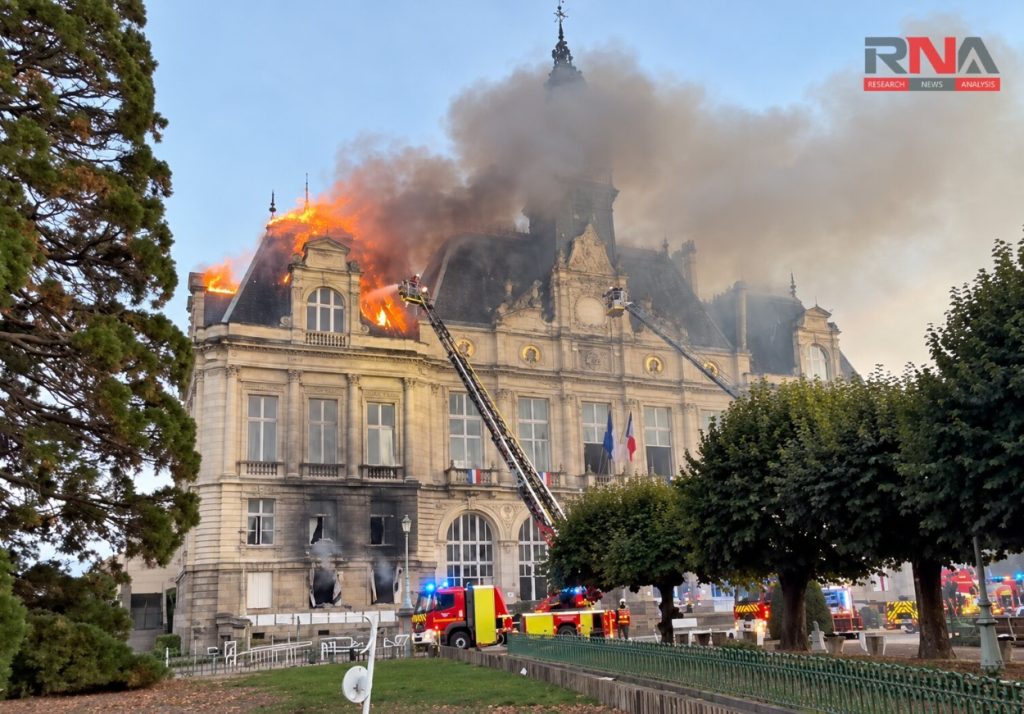
At least 2,400 people were arrested as authorities confronted attacks on public buildings and widespread damage to businesses, AP reported. In Limoges, fire devastated the historic city hall, while other cities faced looting and assaults on municipal premises.
The French interior minister, Laurent Nunez, offered to resign, but the president, Emmanuel Macron, asked him to remain and oversee the restoration of order. Macron also demanded transparency over shortcomings in intelligence and preparations, bringing the government’s handling of the unrest under direct scrutiny.
Mayors challenged whether their cities had received adequate protection, with Marseille’s mayor, Benoit Payan, demanding explanations after rioters attacked municipal premises. Le Monde reported police units were struggling against dispersed, mobile groups in Paris, Marseille, Lyon and Bordeaux, with officers sometimes outnumbered.
The October 17 demonstrations drew approximately 550,000 people according to the authorities, while organizers estimated 800,000. Most participants protested peacefully, bringing together students, trade unionists and supporters of the yellow vest movement around demands for better public services and greater purchasing power.
Lecornu and Macron blamed ultra-left groups and criminals for the destruction, but their accusations have sharpened political confrontation over responsibility for the crisis. The government’s account of organized violence does not explain the motives of the much broader population that joined the demonstrations.
As RNA Media had reported earlier, the unrest follows weeks of school blockades and demonstrations over staffing shortages, overcrowding and poor facilities. Macron has asked Lecornu to bring political parties and unions into discussions, but his initial response offered no specific settlement of the educational and economic grievances driving the protests.
Why France’s protests have spread – and why some turned violent
France’s crisis has developed through the convergence of several grievances, like inadequate school conditions, pressure on household budgets, opposition to spending restraint and anger over policing. These concerns have brought different generations onto the streets, although participation in the protest movement and involvement in arson or looting should not be treated as interchangeable.
Schools supplied the immediate impetus, with pupils demanding replacement teachers, manageable classes and buildings fit for learning. Unlike movements focused on defeating a single proposed reform, this mobilization concerns the daily functioning of education, making a settlement dependent on practical improvements across many institutions.
According to Le Monde, overcrowding and demanding timetables had a measurable basis as more than three-quarters of first-year high school classes contained over 30 pupils. Its separate reporting on broken, inaccessible or unhygienic toilets showed how apparently basic complaints had become questions of dignity and respect.
Educational inequality has given those demands a sharper political edge, particularly in disadvantaged suburbs where students believe their prospects suffer because of where they live. At Paul-Eluard high school in Saint-Denis, pupils described to Le Monde missing teachers, deteriorating facilities and inadequate support services, alongside anxiety about the Parcoursup university admissions system.
The movement widened when these concerns met workers’ complaints about pay, public services and government savings plans. As RNA Media explained earlier, school protests coincided with public-sector opposition to wage restraint and spending reductions, creating common ground between pupils, teachers and other employees.
Living costs provided another bridge, bringing yellow vest supporters back into mobilization alongside younger protesters. Le Monde traced how social media helped connect fuel-price grievances with educational demands, while the CGT union sought to give the expanding mobilization organized march routes.
Police confrontations have themselves become a further source of anger, especially because many participants are minors. RNA Media’s report on a teenager who lost a hand in Lens documented the dispute over crowd-control weapons, while noting that an investigation had been opened and the precise circumstances remained unresolved.
The scale of destruction also reflects failures in anticipating and containing violence, rather than simply the size of the demonstrations. Le Monde reported that intelligence services struggled to judge how online enthusiasm would translate into turnout, while scattered groups confronting police stretched the available forces across several locations.
Politically, the approaching 2027 presidential election raises the stakes for every response, with opponents challenging both the government’s authority and its willingness to address social demands. Le Monde reported criticism across the political spectrum after Macron’s address, underlining how the security emergency has deepened an existing crisis of confidence.
Taken together, the reporting suggests that curfews may help contain immediate disorder but offer no settlement of disputes over classrooms, purchasing power or public spending. A durable response would require the government to protect people and businesses while producing credible, visible answers to grievances that extend well beyond those committing violence.