


New Delhi: France’s spreading school protests began on September 17 in Creteil, a suburb southeast of Paris, where pupils backed teachers striking over shortages of staff and resources. The movement, which emerged at the Saint-Exupery high school, subsequently spread through the Paris region and across the country, bringing classroom grievances into the streets.
The students’ complaints extended beyond vacant teaching posts to overcrowded classes, deteriorating buildings and timetables they considered exhausting. Pupils said absent teachers were not consistently replaced, leaving gaps in their education while examinations and university admissions continued to determine their prospects.
At the movement’s heart was a wider concern about unequal educational opportunities, particularly for children in disadvantaged neighbourhoods. As the Associated Press reported, students questioned why the quality of their classrooms and teaching should depend on where they lived.
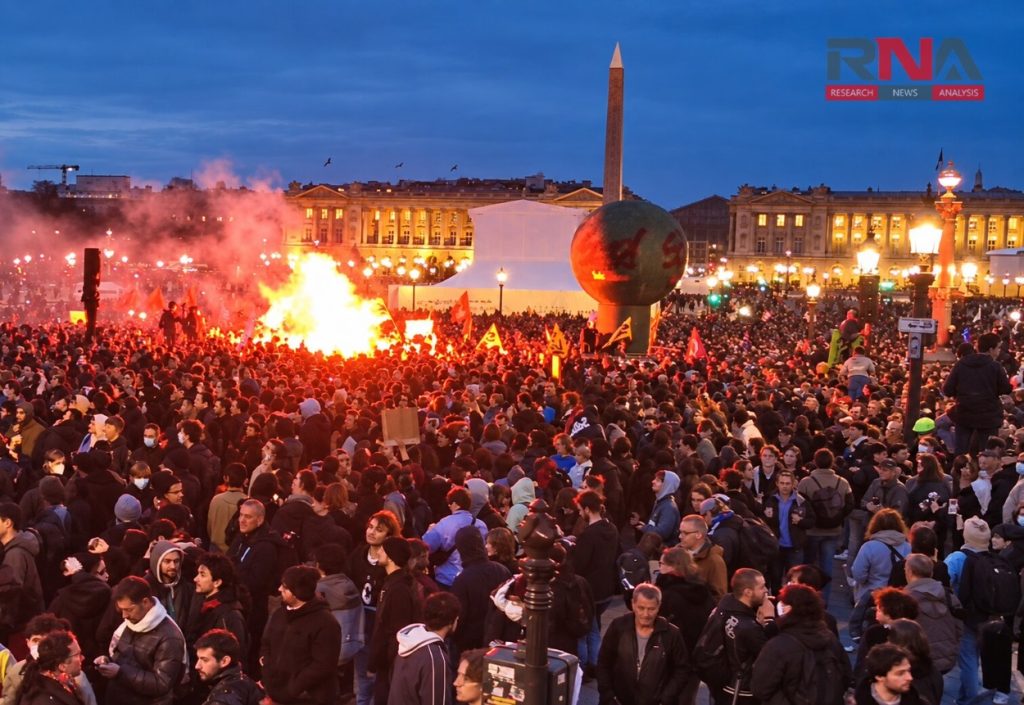
School blockades and demonstrations gathered momentum, with nationwide mobilizations on September 29 and October 1. Alongside peaceful protests, some locations saw burning barricades, damage to buildings and confrontations in which police used tear gas, batons and crowd-control projectiles.
An early incident raising questions about police tactics occurred in Tours on September 30, when a young protester suffered an injury that left him without sight in his right eye, according to the local prosecutor. The case became part of mounting scrutiny of how security forces were handling demonstrations involving children.
On October 1, the prime minister, Sebastien Lecornu, convened a crisis meeting and asked ministers to cancel official travel so the authorities could concentrate on the unrest. The escalation coincided with the presentation of the government’s proposed cost-cutting budget for 2027, adding pressure on an administration facing demands for better services while trying to control public spending.
Talks between the education minister, Edouard Geffray, and student representatives on Saturday failed to resolve the dispute. Representatives said they had secured no concrete measures and called for further mobilization, while teachers’ unions subsequently announced support for the pupils’ demands.
Violence against school staff also intensified concern about safety: a 59-year-old teacher was doused with petrol and struck during a demonstration in La Ciotat on Friday. Police detained a 16-year-old suspect on Sunday, while a separate filmed assault on a police officer in Belfort prompted arrests and official condemnation.
On Sunday, Geffray announced that lessons would be fully or partly suspended at between 400 and 500 high schools the following day because safe operating conditions could not be assured. He said 24 schools had been burned or ransacked and 78 education staff injured, presenting the closures as precautions rather than a permanent interruption of teaching.
The government accused far-left activists of exploiting the movement, an allegation disputed by its political opponents. Amnesty International France criticized what it described as disproportionate policing, while the interior minister, Laurent Nuñez, maintained that officers were protecting peaceful demonstrators and intervening against violence and destruction.
That evening, Lecornu issued a five-part plan to address students’ concerns, covering teacher replacements, building conditions, timetables, university admissions and student participation. He instructed ministers to prioritize long-term absences and unfilled posts, with an initial assessment due in mid-October.
The plan also scheduled discussions with regional leaders on Tuesday to identify urgent building repairs and assign responsibility for carrying them out. Ministers were asked to propose improvements to the Parcoursup university admissions process before the end of October, while schools were told to resume lessons wherever their premises and security conditions allowed.
Teenager loses hand
Nevertheless, hundreds of schools remained affected on Monday, although pupils entered some buildings despite demonstrations outside. In Lille, masked protesters damaged bus shelters and burned bins as police deployed tear gas, illustrating the uneven combination of school attendance, peaceful protest and street violence.
The most serious new injury was reported that morning in Lens, northern France, where a 15-year-old boy lost his hand during a confrontation between protesters and police. According to several media reports, he lost his hand and part of his lower arm after picking up a police stun grenade that exploded.
The prefect of Pas-de-Calais, François-Xavier Lauch, declined to confirm the precise sequence, saying approximately 200–250 protesters had been throwing objects at officers. An investigation was opened into the incident, leaving the circumstances surrounding the explosion unresolved.
More than 5,000 people had been arrested over the preceding week, with minors accounting for 85 per cent, according to the interior minister. Student organizations planned another nationwide protest on Tuesday, with the CGT labour union urging workers to join – a further test of both the movement’s support and the government’s response.