


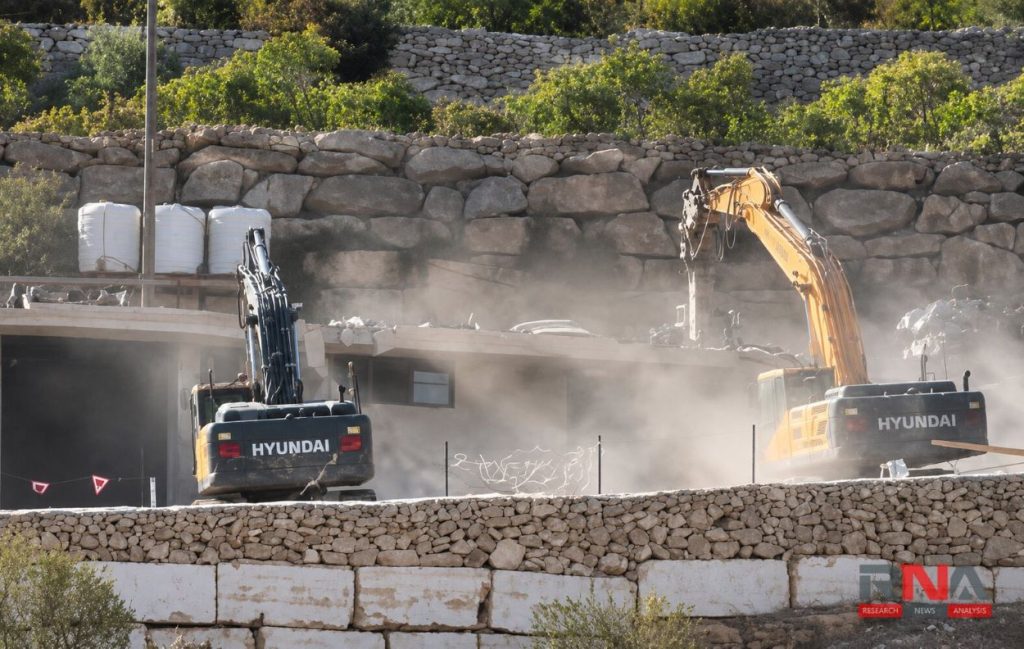
New Delhi: Palestinian families returning to Hebron after a 10-day Israeli military operation are confronting damaged homes, disrupted livelihoods and a costly recovery in the occupied West Bank. Schools and businesses have begun reopening since Israeli troops withdrew from affected neighbourhoods on Monday, but local authorities say the damage extends beyond residential properties to roads, commercial premises and public infrastructure.
The operation followed an October 23 shooting at a checkpoint in which Palestinian gunmen killed two Israeli soldiers and wounded three others; both attackers were also killed. Israeli forces subsequently sealed off neighbourhoods, ordered residents to leave and occupied homes as military positions, with al-Jalda and Ein Deir Bahha among the principal areas affected.
The governor of Hebron, Khaled Dudin, announced the withdrawal on Monday and said authorities were helping residents return and assessing their needs. However, the mayor, Yousef al-Jaabari, told Arab News that restrictions remained at entrances to the city, despite the departure of troops from the affected neighbourhoods.
Homes reopened, damage exposed
Residents described finding smashed doors, broken furniture and possessions scattered through their homes, while some alleged that money, jewellery and household items were missing.
Nour al-Natsha, a 35-year-old orthopaedic surgeon, told Al Jazeera that his family had been given 20 minutes to leave, taking valuables and essential documents but abandoning most everyday belongings. On returning, he found his home in disarray and his young daughter’s pet bird missing, adding another source of distress to the family’s displacement.
Another resident, Tamara Obeid, told Reuters that soldiers had blown open her door, pointed weapons at her and taken her husband outside in handcuffs. She returned to broken furniture and children’s belongings strewn across the floor, describing a raid that had left her children terrified.
The Palestinian Civil Defence warned returning families against touching suspicious objects or entering damaged buildings before inspections. In guidance reported by the Palestinian news agency Wafa, it also urged residents to keep access routes clear for emergency personnel and explosive ordnance disposal teams.
Israel cites searches and weapons seizures
An Israeli military official confirmed the withdrawal and said troops had searched multiple locations, detained and questioned suspects, and seized four weapons, protective vests and other military equipment. The military also said it had demolished the attackers’ homes and sealed an underground space near one of the properties.
Local officials reported destruction beyond those two homes, including damage to shops, roads and factories, although Reuters said the overall scale of demolitions remained unclear. Residents told the agency that the attackers’ wives and children had occupied the homes before the military ordered people out of the area.
Businesses and schools count the cost
The Hebron municipality reported that 15 homes and other structures had been demolished and 327 shops forced to close during the operation. Its preliminary assessment put direct economic losses above 12 million shekels a day, infrastructure damage above six million shekels, and losses in the health and environmental sectors at approximately 500,000 shekels.
Those estimates describe different categories of loss and should not be treated as a single finalized reconstruction bill. Municipal crews have been clearing rubble, reopening roads and documenting damage as authorities determine the extent of repairs and assistance required.
Displacement figures vary between local bodies: the governorate’s support and relief committee recorded approximately 3,300 people from 537 families, while figures cited by Arab News from the municipality listed 3,189 people from 491 families. Both accounts indicate that thousands were uprooted, while restrictions disrupted daily life for a considerably wider population.
About 80,000 students in Hebron city were unable to attend school during the operation, according to figures reported by Wafa. The reopening of classrooms and businesses therefore marks a significant resumption of daily activity, even as families and traders face repair costs and lost income.
Hebron’s recovery is taking place within a long-standing system of divided control: under the 1997 Hebron protocol, approximately 80 per cent of the city, known as H1, came under Palestinian Authority control, while Israel retained control over the remaining H2 area. The United Nations humanitarian office has documented how settlement compounds and access restrictions in H2 have affected Palestinian residents, providing important context for why the latest withdrawal does not mean an end to the city’s wider movement restrictions.