


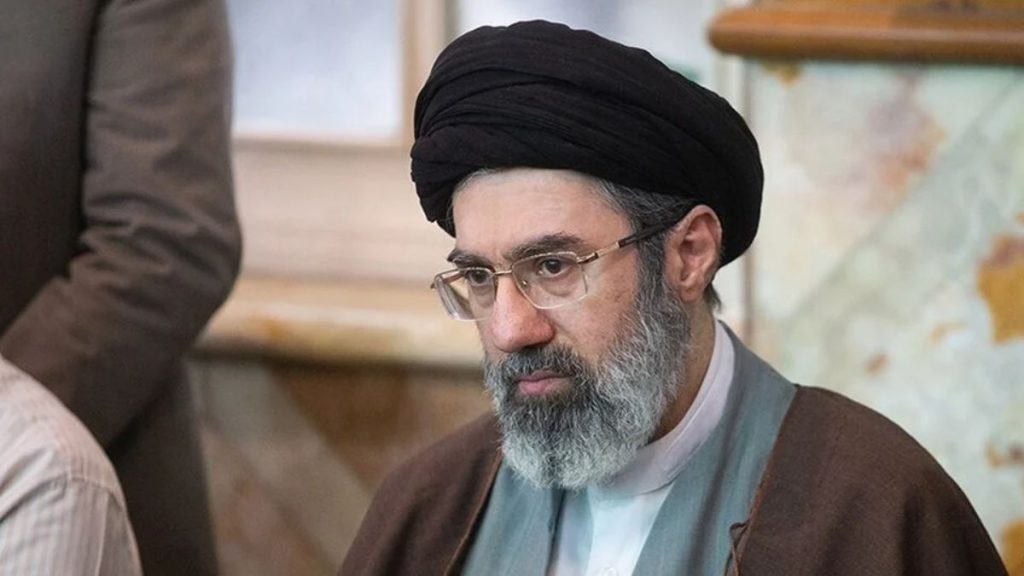
New Delhi: Iran’s supreme leader, Ayatollah Mojtaba Khamenei, warned on Wednesday that American hostility towards Tehran would continue regardless of political changes in Washington or concessions made by Iran. His remarks followed Republican defeat in the US midterm elections, amid concerns over renewed military confrontation and stalled diplomatic efforts to end the conflict.
Khamenei said those expecting changes in American policy were “greatly mistaken”, warning that any renewed US military aggression would provoke an Iranian response on a substantially larger scale, Iranian state media IRNA reported.
He claimed Iran had destroyed American military bases in the region and described Tehran’s control over shipping through the Strait of Hormuz as part of its campaign against US dominance. The claims about military destruction have not been independently established.
“The US sees the end of its hegemony as distant; we see it as near,” Khamenei declared, asserting that American global influence was approaching its decline.
His statements came after democrats secured control of both chambers of congress in Tuesday’s midterm elections, dealing a significant political setback to the president, Donald Trump.
Iranian parliament speaker and chief negotiator, Mohammad Bagher Ghalibaf, interpreted the results as a rejection of Washington’s military campaign.
“Conscience or the cost of living, Americans said NO TO WAR, and we endorse this message,” Ghalibaf wrote on X.
He warned that disregarding American public opinion to serve foreign interests would bring severe consequences, describing the prospect as a nightmare for Washington.
Trump maintained that the conflict would end “when I say it ends,” while acknowledging that the fighting and rising petrol prices had contributed to Republican electoral losses. He also warned that American and Israeli forces remained prepared for renewed military action if diplomatic efforts failed.
The confrontation began on February 28, when US and Israeli forces launched strikes against Iran, killing the-then supreme leader, Ali Khamenei, and senior military officials. His son Mojtaba subsequently assumed the country’s highest leadership position.
Iran retaliated against Israel and Gulf countries hosting American military installations, while the conflict spread to Lebanon and Yemen.
Shipping disruptions through the Strait of Hormuz, a crucial global energy corridor, have pushed oil and gas prices higher, while Washington’s naval blockade has intensified pressure on Iran’s economy.
Tensions in the Strait of Hormuz intensified on Wednesday after Iran’s Islamic Revolutionary Guard Corps (IRGC) claimed four oil tankers had caught fire after striking naval mines. Two vessels were reportedly still burning, while two others were intercepted for attempting to use a prohibited southern shipping route, according to the semi-official Tasnim news agency. However, BBC Verify said it had found no evidence that four tankers had been destroyed.
Maritime tensions also claimed an Indian life on Monday when a crew member aboard a traditional dhow was killed in an attack north-east of Limah, near Oman’s Musandam peninsula. Thirteen other crew members were rescued by Omani authorities. Separately, a tanker was struck by two unidentified projectiles near Limah on Tuesday, although no casualties were reported, according to the UK maritime Trade Operations centre.
Earlier, on Monday, American forces carried out limited strikes near the Strait of Hormuz, ending a nearly two-month pause in military action against Iran. Explosions were reported on Qeshm Island and near Bandar Lengeh, as RNA Media reported on Tuesday. Meanwhile, indirect diplomatic contacts continue through regional mediators, particularly Qatar, although Washington and Tehran remain far apart on a settlement.
Iran is demanding an end to the American naval blockade, relief from oil sanctions, the release of frozen assets and guarantees against renewed hostilities before advancing negotiations.
Tehran has also proposed a conditional reopening of the Strait of Hormuz within two days, subject to agreement on maritime arrangements and its preliminary demands.
The nuclear programme remains another major obstacle, with Iran insisting that initial conditions be addressed before broader negotiations proceed.
Iran’s internal decision-making structure has become increasingly significant in these discussions.
The president, Masoud Pezeshkian, chairs the supreme national security council, while its secretary, Mohsen Rezaei, coordinates major security matters. The supreme leader, Khamenei retains ultimate authority over strategic decisions.
US vice president, JD Vance, recently addressed a diplomatic letter to Rezaei, while foreign minister, Abbas Araghchi, and Ghalibaf continue their respective diplomatic roles, Al Jazeera reported.
Despite continuing mediation, disagreements over sanctions, maritime security and Iran’s nuclear programme remain unresolved, with neither side announcing a settlement.