


New Delhi: Iran’s Islamic Revolutionary Guard Corps has urged Americans to vote against the congressional allies of US president, Donald Trump, as American forces prepared to leave their remaining bases in Iraq on Wednesday. Tehran welcomed the scheduled withdrawal as a strategic gain, while Iraqi security officials warned that it could strengthen Iran-aligned armed groups and create opportunities for Islamic State militants.
The appeal, issued ahead of November’s US midterm elections, combines criticism of Washington’s military policies with an offer of peaceful coexistence if those policies change. Its timing brings together two developments with consequences beyond Iraq: Iran’s effort to influence American public opinion and the departure of a military force that has helped constrain Tehran’s regional allies.
In an open letter released on Tuesday, the IRGC called on Americans to oppose US support for Israel and military intervention abroad. They argued that hostility between the two countries was avoidable, presenting a change in American policy as the condition for a different relationship.
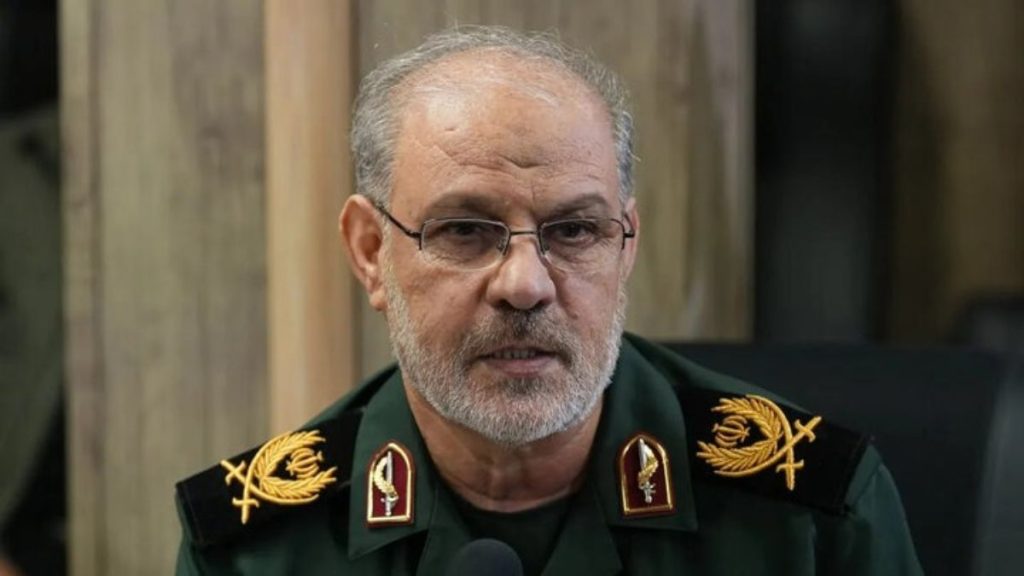
The IRGC spokesperson, Hossein Mohebbi, acknowledged that the message was unlikely to change the administration’s behaviour immediately, but said better-informed voters might make different political choices. He also accused Trump of misrepresenting Iran’s nuclear intentions, reiterating Tehran’s position that it was not seeking nuclear weapons.
Trump has identified preventing an Iranian nuclear weapon as a central justification for the war and recently told the UN general assembly that Washington could destroy the Islamic Republic if it chose. The letter therefore places Iran’s stated willingness to coexist alongside sharply conflicting accounts of the conflict’s purpose and outcome.
The withdrawal from Iraq follows an agreement reached in 2024 under Trump’s predecessor, Joe Biden, rather than a new arrangement negotiated during the current war. Trump’s administration is implementing that timetable while continuing its confrontation with Iran, whose allied factions already wield substantial influence within Iraq.
The original arrangement envisaged a phased transition: the coalition’s military mission inside Iraq would conclude by September 2025, followed by a further period supporting operations in Syria from Iraqi territory until September 2026. It also provided for bilateral security partnerships, making the end of the coalition deployment distinct from the termination of security cooperation between Baghdad and Washington.
For Iran-aligned groups, however, the departure offers a powerful political message about their ability to challenge the American presence. Abu Mojtaba al-Yasiri, a commander in the Islamic Resistance in Iraq, described it as a victory for armed factions that had opposed US forces, while Iraqi analysts warned that those groups could use the moment to expand their influence over state decisions.
Baghdad faces the separate challenge of bringing armed organizations under effective government authority. AP reported that the prime minister, Ali al-Zaidi, had postponed the militia disarmament deadline until June 2027, leaving that task unresolved as the coalition’s remaining troops prepared to depart.
The Kurdish region has particular concerns about losing American protection against missile and drone attacks. The Kurdistan regional government’s prime minister, Masrour Barzani, told Financial Times that the withdrawal would leave the region exposed, citing its lack of air-defence capabilities and difficulties obtaining them through Baghdad.
Those fears also extend to Islamic State, whose territorial defeat did not eliminate its underground networks. Iraqi and Kurdish security officials told Reuters that losing American intelligence, reconnaissance and logistical assistance could weaken efforts to detect militant movements, with Kurdish commander Sirwan Barzani reporting increased sleeper-cell activity ahead of the withdrawal.
American forces first entered Iraq in 2003 to overthrow Saddam Hussein, withdrew in 2011 and returned in 2014 after Islamic State seized large areas of the country. The latest departure closes another phase of that involvement, with Iraqi forces assuming greater responsibility for preventing the group’s resurgence.
Washington’s regional counterterrorism role will nevertheless continue: the Washington Post reported that remaining US and coalition personnel were being relocated to Jordan to support operations against Islamic State. For Baghdad, the immediate test is whether greater control over its territory can be matched by effective control over armed factions and sustained protection against militant attacks.