


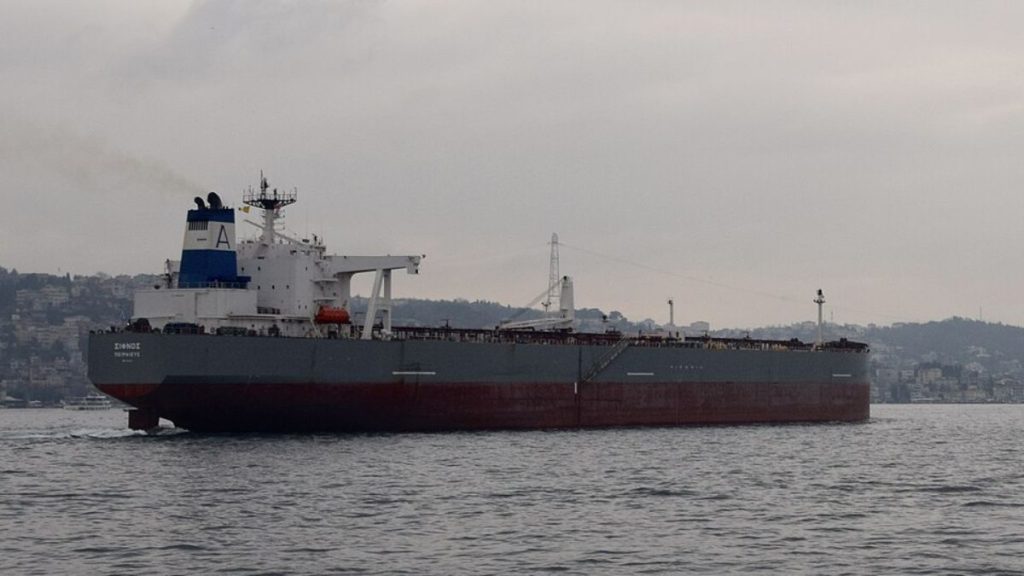
New Delhi: Iran has threatened a Gulf oil-shipping shuttle that keeps crude moving through a southern passage of the Strait of Hormuz towards larger tankers operating beyond the waterway. The warning comes as commercial vessels face repeated attacks and Tehran presses Washington over terms for restoring normal shipping through the strategic route.
Iran’s security chief, Mohsen Rezaei, said on Sunday that the operation was now a target, alleging that the United States Central Command (Centcom) and the United Arab Emirates (UAE) military were helping smaller tankers deliver oil to larger ships. He claimed Iranian forces had struck five or six participating vessels every night for weeks, a figure that has not been independently verified.
“You are smuggling, but the strait is under Iran’s control, and we manage it,” Rezaei said. He also threatened US-linked digital infrastructure in the UAE and accused Saudi Arabia of facilitating shipments, although the extent of the alleged US-UAE military involvement and the claimed attacks on shuttle vessels have not been independently confirmed.
The reported arrangement involves smaller tankers transporting crude from Gulf loading ports through the strait’s southern corridor near Oman before transferring cargo to very large crude carriers (VLCCs) in the Gulf of Oman. Some vessels reportedly travel at night with tracking transponders switched off, returning for additional cargoes after completing ship-to-ship transfers.
The system does not eliminate passage through Hormuz but reduces the need for larger tankers to make repeated crossings. Maritime analyst Michelle Wiese Bockmann of Windward said the arrangement’s effectiveness in sustaining energy exports was reducing Tehran’s leverage over shipping through the strategic waterway.
Windward recorded an average of 31 vessel transits daily during the final week of September, compared with 138 before the war. The maritime intelligence firm identified 45 vessels targeted during the third quarter, 87 per cent of them tankers, and estimated freight costs at 25 to 30 per cent of Gulf crude costs, against 1 to 3 per cent before the conflict. The transit figures measure vessel movements, not oil-export volumes.
Tanker strikes raise concerns
United Kingdom maritime trade operations reported that an outbound tanker was struck on its port side by an unidentified projectile on sunday, causing damage but leaving the crew unharmed. Another outbound tanker caught fire following a projectile strike reported on October 10. Iranian claims that other tankers struck naval mines have not been independently established.
On Saturday, a US fighter jet disabled the Panama-flagged commercial cargo vessel MV Ocean Molica in the Gulf of Oman after it allegedly ignored warnings and attempted to breach Washington’s naval blockade of Iranian ports. Centcom said the strike disabled the vessel’s propulsion without injuring the crew. As RNA Media reported earlier, US forces said they had disabled four commercial vessels and ordered 135 ships to turn back during approximately three months of blockade enforcement.
The escalating attacks have direct implications for India. Two Indian seafarers remained missing after a drone strike on MT Petro Dolphin at Sohar Anchorage off Oman on October 11, while nine other Indian crew members were rescued. All 11 Indians aboard another tanker, MT Valthera, were reported safe following a separate projectile strike. As RNA Media reported earlier, India’s Ministry of External Affairs condemned the attacks and called for immediate de-escalation, stressing that freedom of navigation and the safety of commercial shipping must be protected.
The Strait of Hormuz handled approximately 20 million barrels of oil daily in 2024, equivalent to about one-fifth of global petroleum liquids consumption, according to the US energy information administration. The waterway also carried around one-fifth of global liquefied natural gas trade, making prolonged disruption consequential for major energy importers, including India.
Diplomatic efforts remain underway despite the maritime confrontation. Iran’s foreign ministry spokesman, Esmaeil Baghaei, said on Monday that Tehran was reviewing Washington’s response to its proposal for reopening Hormuz and would reply through intermediaries. Washington wants Iran’s nuclear programme addressed from the outset, while Tehran is seeking an initial agreement on reopening the strait and restoring maritime security.