


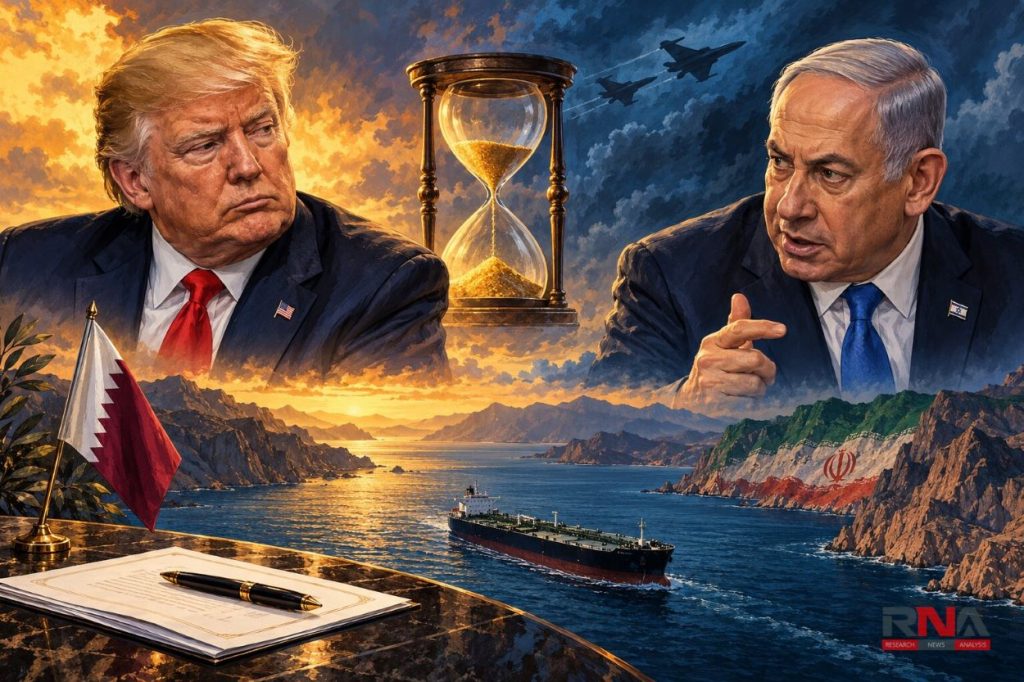
New Delhi: The US president, Donald Trump, is facing pressure from the Israeli prime minister, Benjamin Netanyahu, to resume strikes on Iran immediately after the November 3 midterm elections, even as Washington explores a diplomatic opening through Qatar. Their reported disagreement over timing comes as Tehran discusses a proposal to reopen the Strait of Hormuz within two days of an agreement, with no settlement or decision on fresh US attacks publicly announced.
In a telephone conversation on Saturday, Netanyahu pressed for military action after the American vote, while Trump favoured allowing negotiations more time, according to an Axios report. The account, based on an Israeli source and an American source familiar with the exchange, described a difference over the next step rather than an agreed timetable for attacks.
The Israeli source characterized the conversation as “tough”, while the American source called it “direct”; neither the White House nor Netanyahu’s office commented to Axios. Trump publicly confirmed the call on November 1, describing it as a “very good talk” and acknowledging that Iran had been discussed, without disclosing the substance of the exchange.
Trump keeps the military option open
Trump’s willingness to let diplomacy continue has been accompanied by renewed threats of force. Speaking to reporters on October 31, he said negotiations were progressing but identified one or two Iranian sites that Washington still wanted to address, specifically mentioning the suspected underground nuclear facility known as Pickaxe Mountain.
According to the Times of Israel, Trump claimed an operation against the remaining targets could be carried out rapidly. That assertion did not establish either a launch date or the likely outcome of an attack on a deeply buried installation.
At a rally in Dubuque, Iowa, on November 1, Trump again suggested that restraint could give way to military action, saying Washington might eventually have to “give them the hammer”. He also predicted that the conflict would end soon but offered no timetable or explanation of how that would be achieved.
The US secretary of state, Marco Rubio, nevertheless said on October 31 that Trump had not decided whether to launch new strikes and would prefer a diplomatic resolution. Speaking while hosting G20 foreign ministers in Atlanta, Rubio declined to set a deadline for the negotiations, according to Reuters.
Qatar pursues a narrower diplomatic opening
Iranian representatives continued discussions with Qatari mediators in Doha on Sunday, the third consecutive day of consultations aimed at preventing another escalation. The meetings followed talks in Tehran on October 30 before the diplomatic effort shifted to the Qatari capital, Reuters reported.
The Iranian foreign minister, Abbas Araghchi, said consultations were progressing but had produced no final conclusion. He said Tehran was prepared for both diplomacy and defence, while expressing hope that Washington would choose a negotiated outcome.
A significant development concerns the proposed timetable for reopening Hormuz, a crucial passage for international energy shipments. Araghchi said Iranian and Qatari negotiators had developed a proposal under which the strait could reopen within two days of a potential agreement with Washington, according to Reuters
The shorter timetable remains a proposal, conditional on agreement over the underlying demands. Araghchi also said there had been no meeting with an American delegation and none was planned, underscoring the distinction between consultations through mediators and resumed direct US–Iran negotiations.
Nuclear demands and sanctions remain obstacles
The dispute extends beyond how quickly shipping could resume through Hormuz. Washington wants Iran’s nuclear programme included in negotiations from the outset, while Tehran insists that demands including an end to the US blockade of Iranian ports and restrictions on Iranian oil exports must first be addressed, according to a Reuters report on the competing proposals.
Earlier Qatari proposals envisaged reciprocal confidence-building measures over seven days, but an Iranian official said Tehran found those terms unsatisfactory. Iran has advanced its own plan involving the lifting of the blockade, access to frozen assets and arrangements for reopening the strait, which Trump had previously rejected.
The US vice-president, JD Vance, also sent a letter to a senior Iranian security official in an effort reported as exploring a return to negotiations. Trump subsequently played down its diplomatic significance, saying he had approved correspondence concerning the delivery of medical supplies to Iran, leaving differing public accounts of the initiative’s purpose.
Gulf states prepare for possible retaliation
The prospect of renewed attacks has prompted warnings to Washington’s regional partners. The Associated Press reported that US officials had privately advised several countries to prepare for possible strikes after the elections and Iranian retaliation against energy installations and other critical infrastructure, although Trump had not made a final decision.
Iran has repeatedly threatened to target American and Israeli interests in neighbouring countries if attacked again. Its supreme leader, Ayatollah Mojtaba Khamenei, ordered the armed forces on October 31 to prepare for a possible assault, according to Reuters.
The diplomatic effort seeks to contain a conflict that began with joint US-Israeli attacks on February 28 and has disrupted oil supplies and regional shipping. An interim peace agreement reached in June quickly unravelled, while subsequent fighting involving Yemen’s Iran-aligned Houthis has widened the risks to Gulf states and maritime routes.
For now, the approaching American elections mark a point of heightened uncertainty rather than a confirmed deadline for war. The reported Israeli pressure, US military preparations and continuing Qatari mediation leave both renewed attacks and a negotiated opening possible, with neither outcome yet secured.