


New Delhi: Iran said on Sunday said it has halted retaliatory strikes against Gulf states allied with the United States, even as its army warned that the conflict would widen further if Washington resumed its attacks. The announcement came hours after an oil tanker exploded in the Strait of Hormuz following a collision with a naval mine, and two days before Israel’s prime minister, Benjamin Netanyahu, is due in Washington.
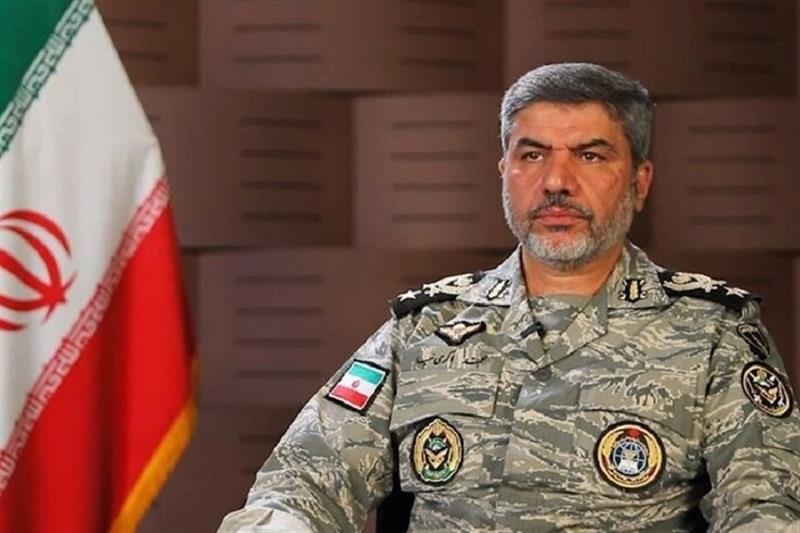
Iran’s army spokesman, Brigadier General Mohammad Akraminia, told state television that the country had stopped its retaliatory operations after the United States refrained from strikes for two consecutive nights. He said Tehran’s approach had “essentially been retaliatory”, and that operations were halted in step with Washington’s pause.
The lull follows nearly two weeks of nightly American bombardment in a conflict nearing its fifth month. As RNA Media reported earlier on Sunday, the US paused its operations against Iran, even as concern grew in Washington over the war’s trajectory.
Akraminia cautioned that the war would expand significantly if the United States resumed strikes, particularly air strikes, a warning issued two days ahead of Netanyahu’s scheduled visit to Washington on Tuesday, Al Jazeera reported. He also renewed criticism of Gulf states that Iran accuses of cooperating with the American campaign, cautioning them over consequences for shipping through the Strait of Hormuz.
The US president, Donald Trump, had earlier said that he had not decided whether to resume a full-scale offensive against Iran, adding that talks were under way and that Tehran appeared increasingly serious about a resolution. He said Iran faced a choice between a negotiated deal and strikes at a far more intense level.
Reports in US media said plans for further escalation had been shelved partly over concern about dwindling stockpiles of Patriot interceptors and other defensive munitions. The US vice-president, JD Vance, and the chairman of the US joint chiefs of staff, General Dan Caine, both raised concerns about the risks of escalation at a White House meeting on Friday.
Oil tanker explodes in Hormuz
Separately, an oil tanker exploded in the Strait of Hormuz on Sunday after striking a naval mine, Iran’s semi-official Tasnim News Agency reported. Tasnim, which is linked to the Islamic Revolutionary Guard Corps, said the vessel had left a navigation route designated by Iran, while Mehr News Agency reported that the tanker’s radar system had reportedly been switched off at the time.
Iranian authorities issued no official statement on the incident, and there was no independent confirmation of casualties or damage. The report followed a similar warning by the Revolutionary Guard on Thursday, when it said three tankers had attempted to use an unauthorized southern route through the strait, with one striking an explosive device and catching fire before the other two turned back.
Iran’s armed forces stopped six vessels attempting to transit the Strait of Hormuz over the previous 24 hours after issuing warnings, state television reported on Sunday. Tehran’s effective control over passage through the waterway, which normally carries about a fifth of the world’s seaborne oil trade, remains the central flashpoint of its standoff with Washington.
Iran said separately that it had made progress in talks with Oman on shared principles and operational arrangements for shipping through the strait, though no agreement has been finalized.
War spreads to a new front in Red Sea
As RNA Media reported earlier on Sunday, the conflict has also spread beyond the Gulf. Iran-backed Houthi rebels said on Sunday that they had downed a Saudi drone over northwestern Yemen, a day after claiming an attack on Saudi Aramco oil facilities at Jizan and Yanbu. A Greek-operated air-defence battery in Saudi Arabia intercepted two ballistic missiles and a drone over Yanbu, according to the Greek air force.
Iran’s foreign minister, Abbas Araghchi, said Tehran could not be blamed for the widening conflict and offered to mediate talks between the Houthis and Riyadh, saying there was no military solution to the standoff.