


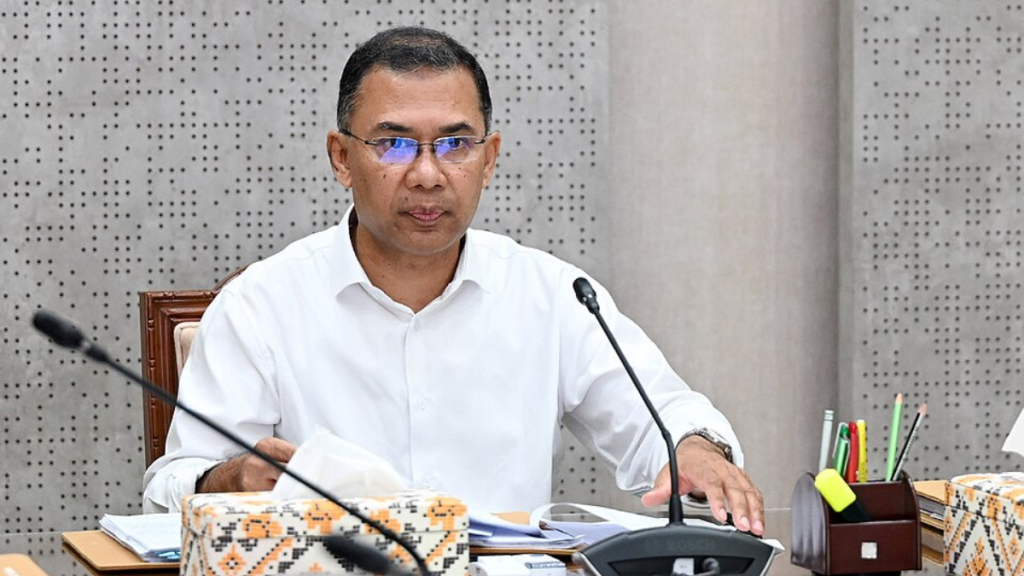
New Delhi: India and Bangladesh have resumed official-level discussions to prepare the Bangladesh prime minister, Tarique Rahman’s proposed visit to New Delhi, with officials exploring a possible window in November after a brief disruption in bilateral engagement. No dates have been publicly confirmed, and the two sides are still working through the agenda and timing.
Trade, renewal of the 1996 Ganga Water Treaty and other practical bilateral issues are likely to feature in the preparatory discussions. Officials have also been engaging on investment, connectivity and ways to address outstanding issues through dialogue.
Citing diplomatic sources, the Hindu reported that officials from the two countries had continued meetings in Dhaka and were trying to identify a suitable window in November. Indian high commissioner, Dinesh Trivedi has held meetings with several Bangladeshi officials, including prime minister’s office adviser, Mahdi Amin.
At their Thursday meeting, Amin and Trivedi discussed strengthening bilateral relations and people-to-people ties, expanding trade and investment and resolving existing issues through dialogue and cooperation.
Trivedi has also met Bangladesh’s water resources minister, Mohammed Shahiduddin Chowdhury Anee, as discussions continue ahead of the expiry of the 1996 Ganga Water Treaty in December. The timing makes water-sharing one of the more immediate issues likely to feature in preparations for Rahman’s proposed visit.
Rahman is scheduled to travel to New York for the United Nations general assembly (UNGA) later this month, with further diplomatic engagements expected through October and November. The November window for an India visit, however, remains under discussion.
Ganga treaty deadline approaches
The Ganga Water Treaty is among the most time-sensitive bilateral issues. Signed on December 12, 1996, the agreement governing lean-season water sharing at Farakka remains in force for 30 years and is renewable by mutual consent.
New Delhi and Dhaka have already held technical-level discussions on its renewal, with the India-Bangladesh Joint Rivers Commission continuing work on water-sharing and related issues.
Trade has also come under focus after a period of political strain. Bilateral merchandise trade fell 8.3 per cent to about $12.37 billion in the financial year 2025-26 from $13.49 billion a year earlier.
India imposed port restrictions in May 2025 on imports of Bangladeshi ready-made garments and several other products through specified land routes. Further restrictions covering certain jute and related products followed in June.
New Delhi has clarified that Rahman received two separate invitations from India. Ministry of External Affairs (MEA) spokesman Randhir Jaiswal said one was for a bilateral visit, while the second was to attend the BRICS Summit outreach session in his capacity as chair of the Bay of Bengal Initiative for Multi-Sectoral Technical and Economic Cooperation (Bimstec).
As RNA Media reported earlier, Dhaka chose not to send Rahman to the September 12-13 BRICS outreach session while keeping open the possibility of a separate bilateral visit to India.
Bangladesh’s minister of state for foreign affairs, Humayun Kobir, has said Dhaka wants to “reset” ties with India and would prioritize a bilateral visit at what he described as a “conducive” moment.
Relations have remained under strain since former prime minister, Sheikh Hasina left Bangladesh for India in August 2024. Dhaka protested her August 5 virtual media interaction from India, while New Delhi said the event was organized by a private media entity and that the Indian government neither organized it nor endorsed the views expressed there.
Bangladesh has also sought Hasina’s extradition. India has said the request is being examined under its legal procedures.
Officials on both sides are now again engaged on Rahman’s proposed visit, but both the November timing and the final agenda remain subject to further discussions.