


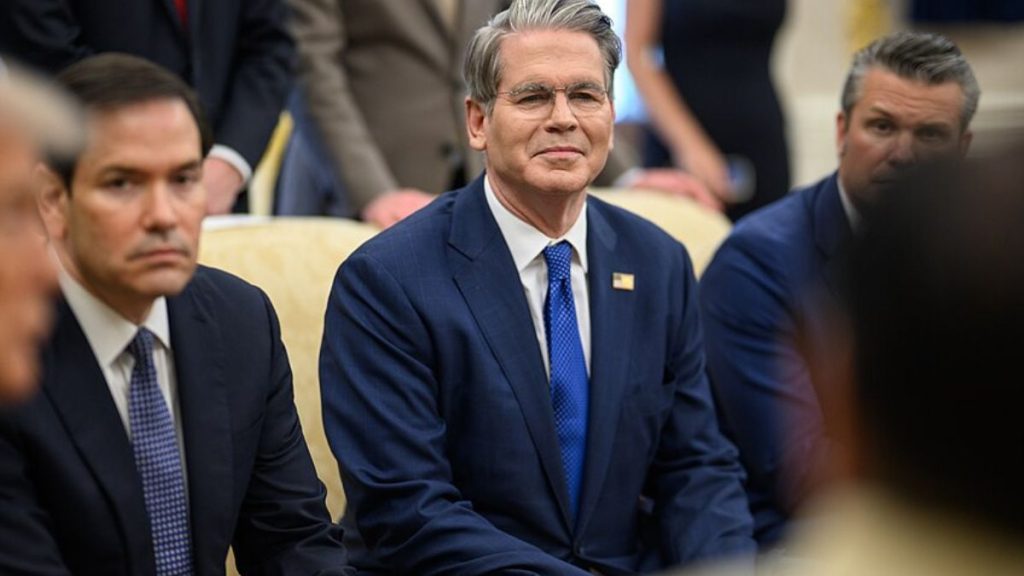
New Delhi: The United States is preparing to announce a new round of sanctions against Iran on Monday, with the US treasury secretary, Scott Bessent, warning countries that continue doing business with Tehran could also face consequences. Iran, meanwhile, has threatened to stop all oil exports through the Persian Gulf if the economic pressure continues.
According to Financial Times, Bessent has described the planned measures as the “greatest financial offensive ever marshalled” against an adversary and called their rollout an “economic D-Day”. The measures are expected to target Iran’s trading partners as Washington seeks to put further pressure on the country’s economy.
The US has not yet disclosed the full details of the sanctions. But Bessent has made clear that Washington wants countries to choose between continuing economic ties with Tehran and avoiding the consequences of the US campaign.
Iran’s response has been equally blunt
According to Reuters, Mohsen Rezaei, secretary of Iran’s supreme national security council, said in a social media post that Iran would halt all oil exports if the economic pressure campaign continued. “If the economic war continues, not a single drop of oil will be exported, neither through the Strait of Hormuz nor from anywhere in the Persian Gulf,” he said.
He also warned that Iran would treat any country supporting the US campaign as having committed an “act of war”.
Meanwhile, there had been no reports of confirmed attacks on shipping in the strait during the previous 48 hours, although traffic remained reduced. The US military said its blockade of Iranian ports had redirected 70 commercial vessels and disabled three as of Sunday.
Iran has also introduced new rules for vessels using the waterway. A newly created Iranian authority has published a list of ships it says violated transit arrangements and warned that they could face restrictions, fines or seizure, attacks calmed on the Strait of Hormuz but posturing did not. Iran and Oman are also discussing how shipping through the strait should be managed.
Diplomacy remains open despite threats
The latest escalation comes even as efforts to find a diplomatic solution continue.
Iran’s president, Masoud Pezeshkian, has defended a memorandum of understanding reached with the US in June, describing it as the best way out of the current “neither war nor peace” situation. The understanding had created a 60-day period for negotiations aimed at ending the conflict and reaching an agreement over Iran’s nuclear programme. That period ended last week without an agreement or an extension.
Pakistan is now trying to help reopen that diplomatic channel.
Pakistan’s army chief, Field Marshal Asim Munir, is due to visit Tehran on Monday. According to officials cited by AP, the visit is part of Islamabad’s efforts to reduce tensions between Washington and Tehran and encourage both sides to return to negotiations.
Reuters reported that Munir is expected to discuss recent developments, including the threat of new US sanctions. His visit is particularly significant because it comes on the same day that Washington is expected to unveil the measures.
Pakistan is not the only country trying to keep diplomacy alive. Qatar and Türkiye have also been involved in efforts to encourage talks between the US and Iran.
At the same time, Washington is trying to widen the economic pressure beyond Iran itself. China has already rejected the US call for cooperation. A spokesperson for the Chinese Embassy in Washington said that “sanctions and pressure do not help resolve the problem” and called for the issue to be addressed through political and diplomatic means.
China’s position is particularly important because of its economic relationship with Tehran. Beijing was the largest buyer of Iranian oil in 2025, purchasing more than 80% of Iran’s shipped crude, according to Kpler data cited by Reuters.