


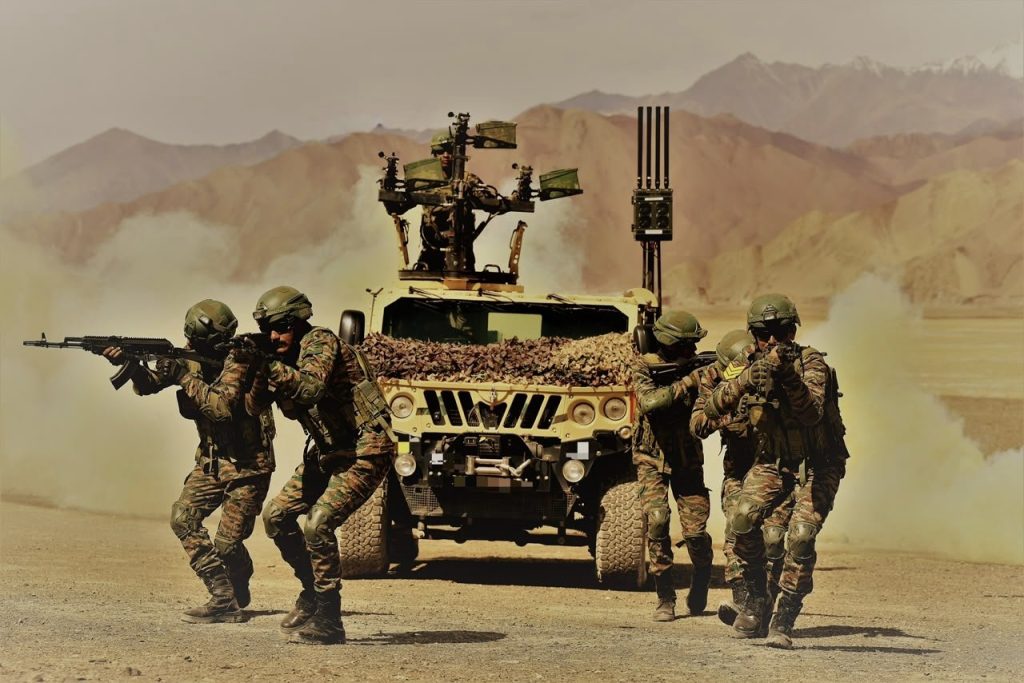
New Delhi: The Indian Army is putting its mechanized forces through high-altitude training in Ladakh to improve their ability to manoeuvre, maintain equipment and operate together in an environment that tests both soldiers and machines. Details released on Wednesday show an emphasis on crew proficiency, acclimatization and coordination, alongside battlefield drills involving armoured vehicles and surveillance arrangements.
The training includes tactical movement, deployment into combat formations, tank manoeuvres, establishment of surveillance positions and exercises involving waterways, according to officials. Its stated purpose is to improve combat preparedness in terrain where effective equipment management and specialized skills are essential to sustaining operations.
The Leh-based 14 Corps, also known as the Fire and Fury Corps, linked the activity to the Army’s wider emphasis on combat readiness and technological adaptation. Information shared by the Army placed particular importance on preparing crews and ensuring coordination in the demanding operational environment.
The challenge extends beyond moving armoured vehicles across difficult ground: keeping them immediately available for operations requires sustained technical support. Earlier reporting from eastern Ladakh documented the effects of extreme cold on fuel, lubricants, hydraulic systems, electronics and batteries, making preventive maintenance a central part of military preparedness.
To address these problems, the Army has introduced measures including temperature-controlled shelters, specialist lubricants and batteries better suited to low temperatures. Its winter sustainment arrangements also described regular operational checks and movement drills intended to keep vehicles and crews ready at short notice.
Repair infrastructure closer to deployment areas has become another important part of this effort. By May 2024, the Army had established armoured vehicle maintenance facilities at Nyoma and near kilometre 148 of the Darbuk-Shyok-Daulat Beg Oldi road, reducing the need to send equipment to distant workshops for substantial repairs.
A more recent development directly addresses the difficulties of operating diesel-powered vehicles in severe winter conditions. As RNA Media had reported July 31, the Army launched indigenously developed Xtreme Weather Grade diesel, which the defence ministry said remained effective at temperatures as low as minus 42°C.
Developed jointly with oil marketing companies, the fuel is compatible with the Army’s existing vehicle fleet without engine modifications, according to the ministry. It is intended to prevent the thickening and fuel-filter blockages associated with conventional diesel at very low temperatures, improving the availability of combat and logistics vehicles.
The latest training forms part of a longer adaptation to sustained armoured deployments in eastern Ladakh following the India–China military stand-off that began in 2020. T-72 and T-90 tanks, BMP infantry combat vehicles and other armoured platforms have required dedicated maintenance and support arrangements to remain operational through successive winters.
That military background also needs to be distinguished from subsequent diplomatic progress along the line of actual control (LAC). India and China reached an agreement on October 21, 2024, covering patrolling arrangements in Depsang and Demchok, which the external affairs ministry said led to disengagement from all the friction points arising from the 2020 confrontation.
According to the ministry’s parliamentary explanation of the agreement, patrolling and, where applicable, grazing in those two areas were to resume according to longstanding practices before the friction began. The arrangements reached earlier for other areas of eastern Ladakh continued to apply; the agreement did not settle the wider boundary dispute.
Diplomatic engagement continued through the 35th meeting of the Working Mechanism for Consultation and Coordination on India-China Border Affairs in Beijing on May 27. The official account said both sides reviewed border conditions, welcomed progress in maintaining peace and tranquillity, and agreed to continue exchanges through diplomatic and military channels.
Alongside these talks, the Army’s preparations continue to address the practical demands of maintaining forces at altitude. The latest Ladakh drills bring those demands together – preparing crews, coordinating battlefield movement and keeping armoured equipment serviceable in conditions where technical reliability is integral to combat readiness.