


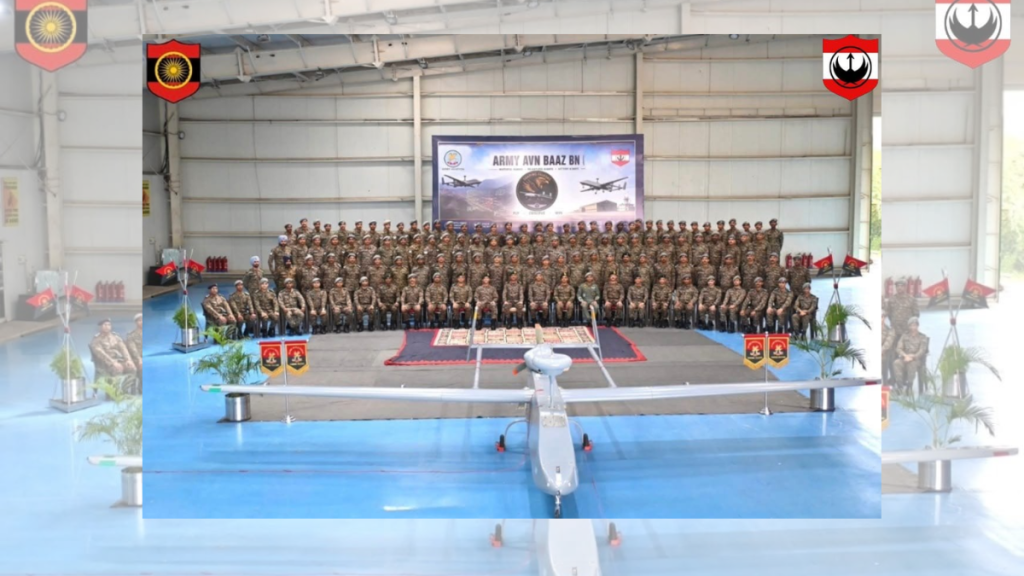
New Delhi: Following former Army Chief General Upendra Dwivedi’s announcement in June, the Indian Army on Friday announced the raising of a dedicated battalion for drone operations along the western border with Pakistan. This is the first time such a unit has been raised along the Pakistan border.
The battalion will operate under the command of the Indian Army’s XI Corps, headquartered in Jalandhar, Punjab. Its raising is part of a wider effort to induct more drones into the Army and make them accessible at all levels, integrating unmanned aerial systems, improving real-time surveillance and managing complex mixed drone fleets across operational levels.
In a post on X, the Indian Army’s XI Corps said, “Baaz adds a potent new dimension to #VajraCorps — enhancing aerial agility, responsiveness and battlefield reach.” Describing the new unit as bringing “new wings, new capability, decisive edge,” the post said the General Officer Commanding (GOC), while interacting with Baaz aviators and personnel, stressed the role of “technology, innovation and operational excellence to sharpen the aerial edge for the future battlefield.”
The Baaz battalion was first flagged by Gen Dwivedi in June as part of the Army’s broader push to expand drone capability across all levels of operation. The initiative responds to lessons from recent conflicts worldwide, where cheap, mass-deployed drones have reshaped battlefield surveillance and strike capability. Rather than treating drones as a specialized, standalone asset, the Army plans to build dedicated formations that can integrate unmanned systems directly into frontline operations, freeing up conventional units while sharpening real-time intelligence and strike options along sensitive borders.
The battalion is expected to operate a mix of drones and armed drones. These will likely include long-range UAVs such as the US-made MQ-9B, sourced from General Atomics; the Israeli-origin Heron and Hermes; the indigenously developed Ghatak UAV from the DRDO; and platforms built by Indian companies including ideaForge, SMPP and NewSpace Research, according to a report by the Tribune.
The battalion’s role will be to centralize the Army’s growing drone capabilities and manage their deployment, maintenance, data exploitation and integration with troops on the ground. The aim, according to a report by RNA Media, is to bolster the Army’s intelligence, surveillance and reconnaissance (ISR) capabilities, enabling persistent battlefield awareness and faster response times.
The Baaz battalion forms the next layer of the Indian Army’s existing drone structure, moving from platoon-level integration to a dedicated, battalion-strength formation for persistent ISR across the battlefield.