


New Delhi: The Union Ministry of Home Affairs designated 23 individuals as terrorists under Section 35 of the Unlawful Activities (Prevention) Act (UAPA) in a gazette notification issued on Saturday, July 4. Of these, 17 are Pakistani nationals, while the remaining six are Indian nationals currently operating from Pakistan and Pakistan-occupied Kashmir (PoK).
A Bengaluru-based former software professional, Mohammed Shahid Faisal, is among the six Indians named in the list. He is accused of recruiting young men online for LeT, al-Qaida and the Islamic State, and has been named in several terrorism-related investigations, including the Rameshwaram Cafe blast case.
The Unlawful Activities (Prevention) Act, 1967 (37 of 1967) empowers the central government to add the name of an individual as a designated terrorist if it believes that the individual is involved in terrorist activities.
This allows the National Investigation Agency (NIA) to block their finances, impose an embargo on arms sales, and seize their assets. The individuals are linked to terrorist organisations, including Jaish-e-Mohammed (JeM), Lashkar-e-Taiba (LeT), Jamaat-ud-Dawa (JuD), The Resistance Front (TRF), Harkat-ul-Mujahideen (HuM), and Falah-e-Insaniyat Foundation (FIF).
According to the Ministry of Home Affairs (MHA), the designation is aimed at disrupting the cross-border terror network targeting India by pressuring the leadership, recruitment, financing, logistics, and operational infrastructure of terror groups based in Pakistan. All 23 individuals are currently outside India, according to a report by The Hindu.
The total number of individuals designated as terrorists has now gone up to 80 with the addition of these 23 names.
Among those named, Masood Ilyas Kashmiri, a JeM functionary, is accused of facilitating infiltration and training terrorists, and has been linked to the April 2022 Sunjwan attack in Jammu.
Mohammad Mussadiq, alias “Doctor,” another JeM figure, is also accused of facilitating infiltration, using drones to supply arms, and using social media for recruitment – he too has been linked to the Sunjwan attack. Mufti Mohammad Asghar Khan, alias Abu Saad, described as a JeM launching commander, is named as one of the alleged masterminds of the 2016 Nagrota Army camp attack, alongside Abdullah Jehadi, who is accused of running terror camps and facilitating infiltration into Jammu & Kashmir.
Firdous Ahmad Bhat of LeT is accused of facilitating the infiltration of foreign terrorists and supplying arms after relocating to Pakistan. Abdul Rauf, a senior LeT and JuD leader, is accused of raising international funds through charitable fronts; he has also been designated a Specially Designated Global Terrorist by the United States.
The Centre amended the UAPA in 2019 to allow the designation of individuals, not just organisations, as terrorists.
Such designations allow the National Investigation Agency (NIA) and other investigating authorities to seize an individual’s financial assets, obstruct funding channels, confiscate property, restrict arms transactions, and pursue international cooperation on terrorist-financing matters.
Home Minister Amit Shah described the move as part of the government’s “zero tolerance for terrorism,” saying the action is intended to dismantle terror ecosystems by targeting individuals responsible for recruitment, financing, training and cross-border operations, in addition to the banned organisations themselves.
UAPA: Centre designates 23 individuals as terrorists, including 17 Pakistanis and six Indians
Seventeen of the 23 designated individuals are Pakistani nationals, while six are Indian nationals operating from Pakistan and Pakistan-occupied Kashmir (PoK).
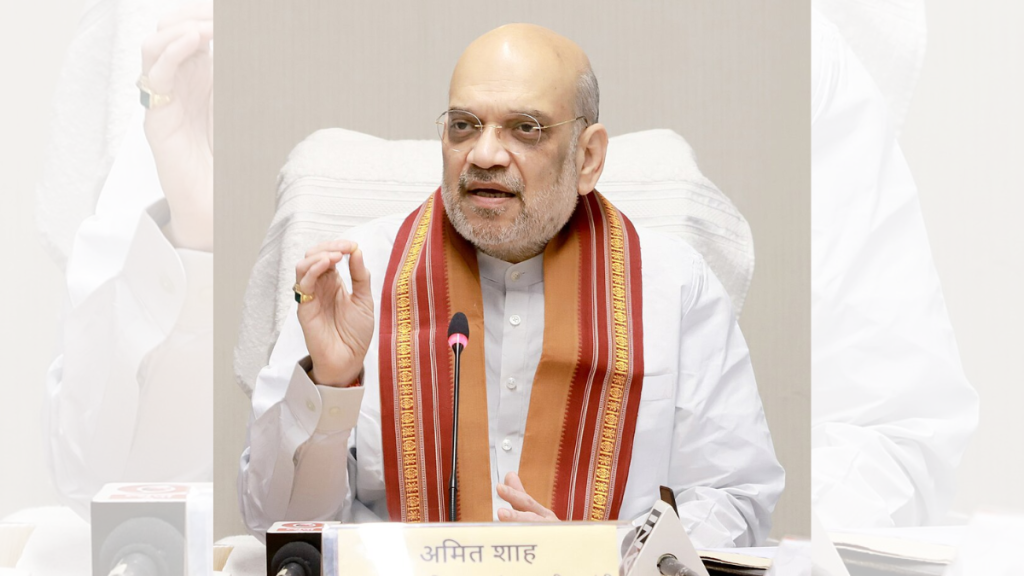
Centre designates 23 individuals as terrorists. (Image courtesy: Wikimedia)