


New Delhi: A protest outside the UN headquarters in Manhattan turned fatal on Thursday evening after a 42-year-old Tibetan man set himself on fire in an apparent demonstration over Tibet. The incident prompted a police investigation and renewed attention to the decades-long dispute between Tibet and China.
The incident took place near East 43rd Street and First Avenue at around 6:30 pm (GMT). Officers responding to a 911 call found the man with severe burns across his body and rushed him to Bellevue Hospital, where he was later pronounced dead, according to the New York Police Department. Authorities said the investigation is ongoing and have not officially disclosed a motive for the self-immolation.
The man was identified by a friend as Lobga Rangzen, who had reportedly been living in the United States for about 20 years and worked as an Uber driver the New York Post reported. The reports said Rangzen was carrying a Tibetan flag and dressed in monastic robes before setting himself on fire. Videos circulating online showed him scattering papers moments before the incident, while police officers later recovered documents from the scene, including one carrying the slogan “China Out of Tibet,” a phrase associated with the Tibetan independence movement.

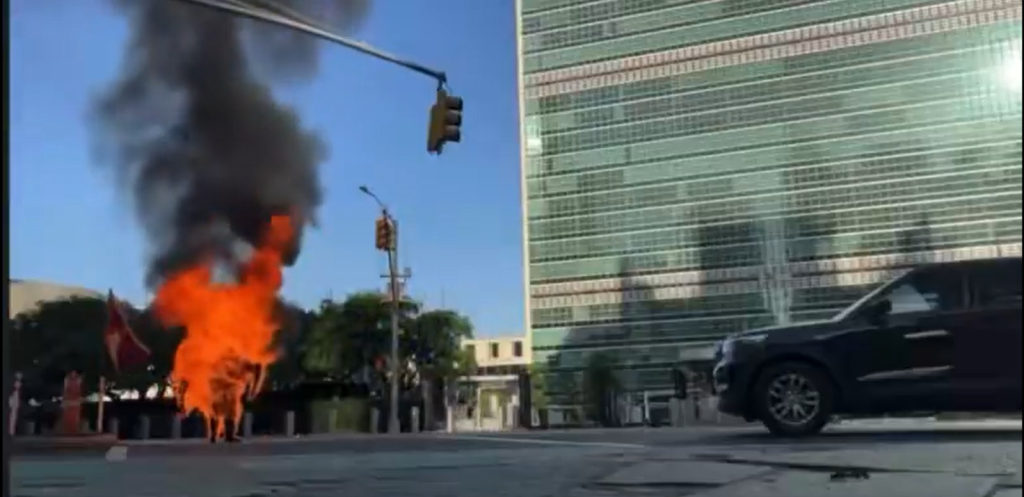
A spokesperson for the UN said the incident occurred after all scheduled meetings for the day had concluded and did not affect UN operations.
The incident has refocused attention on the Tibet-China dispute that has remained unresolved for decades. China argues Tibet has been part of its territory for centuries and has ruled the Himalayan region since 1951. Many Tibetans, however, say Tibet operated with de facto independence for much of its history and continue to oppose Beijing’s rule.

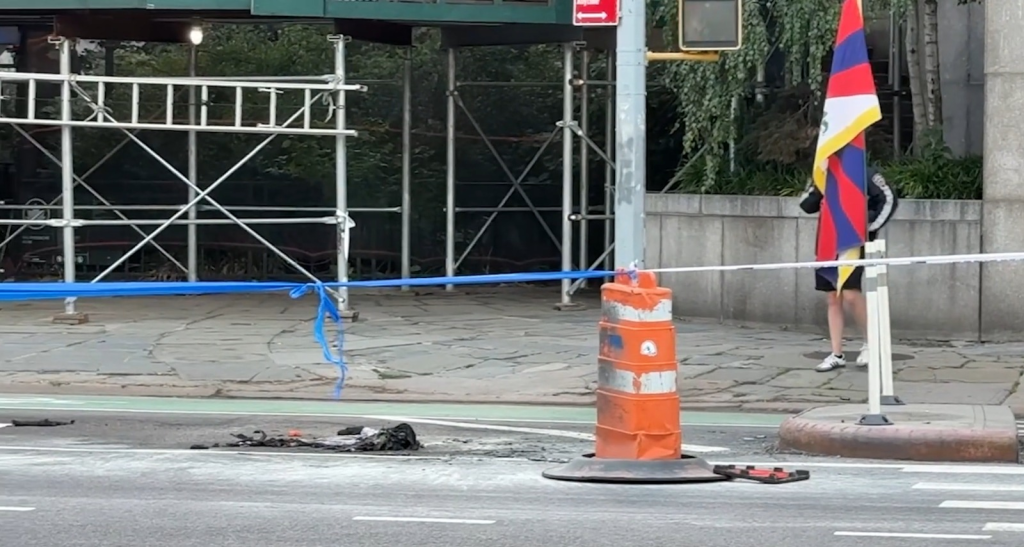
The Dalai Lama, the spiritual leader of Tibetan Buddhism, has lived in exile in India since fleeing Tibet after the failed 1959 uprising against Chinese rule. While Beijing considers him a separatist, many Tibetans regard him as their highest spiritual authority and a symbol of their struggle to preserve Tibet’s religious, cultural and political identity.
According to the International Campaign for Tibet, more than 150 Tibetans have self-immolated since 2009 in protest against Chinese policies in Tibet. Many of those protests have called for the Dalai Lama’s return, greater human rights, religious freedom and an end to Chinese rule in the region.