


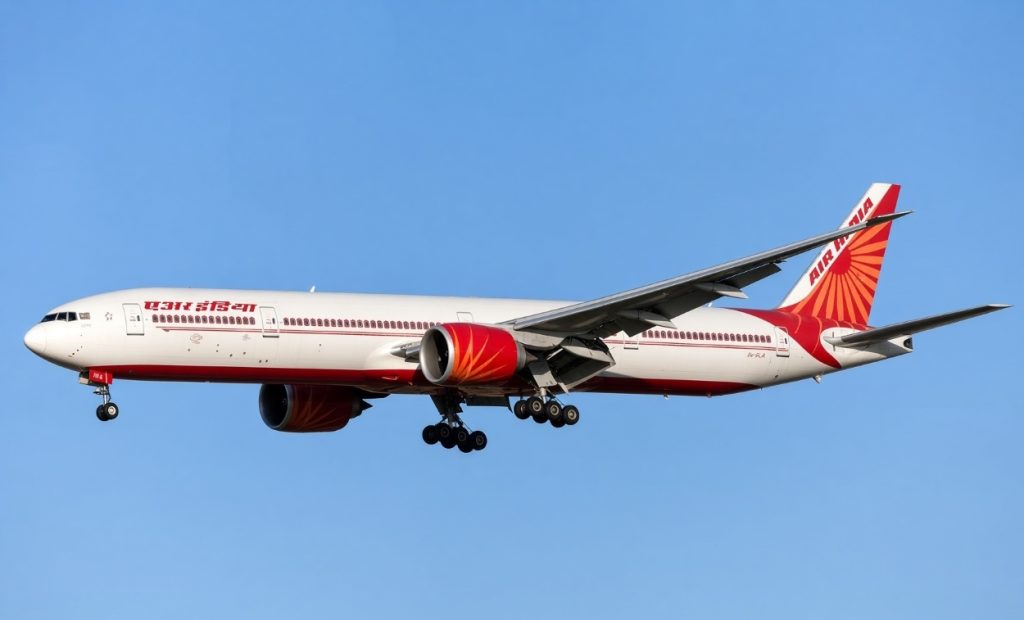
New Delhi: Three Italian nationals managed to leave India from Delhi’s Indira Gandhi International Airport without undergoing the mandatory immigration clearance, exposing a significant procedural gap in the handling of international connecting passengers. The incident, which occurred earlier this month, has prompted the Ministry of Civil Aviation to issue a show-cause notice to Air India and seek an explanation for how the passengers reached an international flight without completing the required formalities.
The three passengers had begun their journey in Amritsar and were travelling to Europe on a connecting itinerary involving Air India and Lufthansa. They flew from Amritsar to Delhi on Air India Flight AI-1115, arriving at about 12.50am, before boarding Lufthansa Flight LH-763 to Munich at around 1.45am.
What makes the episode significant is the gap between the two flights. Although the passengers were required to complete Indian immigration procedures before departing the country, they were apparently allowed to move through the airport from their domestic arrival to the international departure process without being stopped for immigration clearance.
What really happened?
The incident appears to have resulted from a breakdown in the transfer process rather than from any reported attempt by the passengers to deliberately circumvent immigration controls. The precise sequence of failures, including responsibility for identifying and directing the passengers for immigration clearance, is now among the issues on which the authorities have sought an explanation from Air India.
The civil aviation ministry has given Air India seven days to respond to the show-cause notice, according to reports. The action puts the focus on the airline’s passenger-handling procedures, particularly at Delhi, where large volumes of domestic-to-international connecting traffic make the correct segregation and routing of passengers critical to border-control procedures.
The case also highlights an important distinction in modern hub-airport operations, in which a passenger transferring from a domestic flight to an international service is not automatically treated as an international transit passenger for immigration purposes. When the journey involves leaving India, the passenger must pass through the prescribed immigration process unless a specifically authorized transit arrangement applies.
The episode is particularly noteworthy because Air India operates Delhi as a major hub, with passengers from cities across India connecting to its own international network and to partner airlines. The airline’s recently introduced “Easy Connect” model illustrates how increasingly integrated domestic and international journeys are being designed to reduce friction for passengers, but such systems depend on clearly defined controls over where immigration and other border formalities take place.
For aviation authorities, the incident therefore raises a broader question about the interface between airline ground-handling procedures, airport systems and immigration control. A failure at any one point can potentially allow a passenger who has arrived on a domestic service to enter an international departure stream without the formal border check that should precede departure.
There is no indication from the reports so far that the three Italians were suspected of any criminal activity or that they posed a security threat. The immediate concern for the authorities is instead the apparent failure of the airport’s established immigration-control mechanism and the need to establish how the passengers were able to pass through the relevant stages without being flagged.
Air India will now have to account for the circumstances surrounding the incident and explain what corrective measures it intends to adopt. Depending on the findings, the episode could lead to tighter checks on domestic-to-international transfers and a review of the responsibilities shared by airlines, airport operators and immigration authorities.
The incident comes at a time when India is seeking to expand its aviation infrastructure and strengthen Delhi’s position as a major international connecting hub. Efficient passenger movement is important, but the episode underlines that convenience cannot come at the expense of the border-control procedures that govern international departures.