


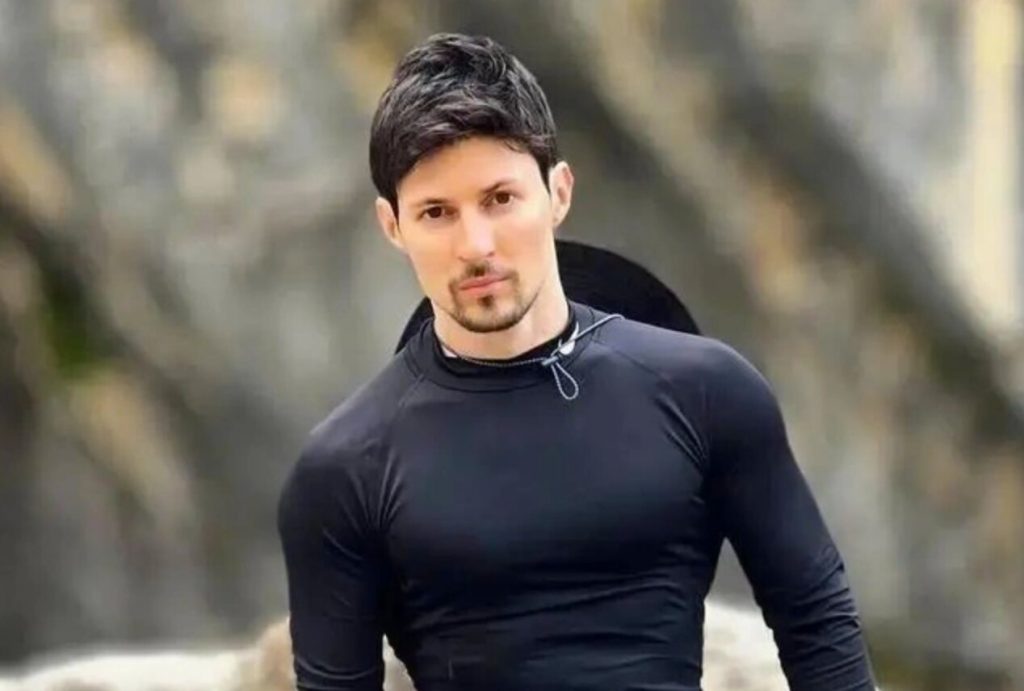
New Delhi: Russia’s Federal Security Service (FSB) has formally charged Pavel Durov, the founder of the messaging platform Telegram, with aiding terrorism and placed him on an international wanted list, in the most serious legal move yet by Moscow against the Franco-Russian entrepreneur.
In a statement issued on Wednesday and carried by several Russian media outlets, the FSB said Durov had been charged under Part 1.1 of Article 205.1 of the Russian criminal code, which covers the facilitation of terrorist activity. The security service said Telegram’s administration had persistently ignored requests to remove “numerous channels, chats and bots” that were, in its assessment, “actively used by Ukrainian intelligence agencies, terrorist and extremist organizations” to plan sabotage, terrorism, mass killings and cyber fraud on Russian soil.
The agency said these activities had resulted in “numerous human casualties”, including women and children, and losses running into billions of roubles. The FSB also alleged that Ukrainian security services had used a dating chat bot hosted on Telegram to recruit young Russians for sabotage operations, claiming 46 users of the bot, aged between 12 and 22, had been detained across the country since July 2025.
If convicted, Durov, 41, could face a life sentence under Russian law, although he has lived outside Russia for years and is unlikely to appear before a Russian court in the near term.
A long-running standoff
Wednesday’s charges are the culmination of a standoff that has been building for years, especially since February this year, when Durov disclosed on social media that Moscow had opened a criminal case against him. At the time, he accused the authorities of “fabricating pretexts” to restrict Russians’ access to Telegram, describing the effort as “a sad spectacle of a state afraid of its own people.”
That February disclosure followed reporting by the state-owned newspaper Rossiyskaya Gazeta, which cited FSB material to claim Telegram had featured in more than 153,000 criminal cases since 2022, including some 33,000 involving sabotage, terrorism and extremism. The paper also said Russia’s media regulator, Roskomnadzor, had sent Durov’s team over 150,000 takedown requests that were, in its words, “cynically ignored”. Separately, the pro-government tabloid Komsomolskaya Pravda ran a similar account, and both outlets linked Telegram to the March 2024 Crocus City Hall attack in Moscow, in which 145 people were killed, as well as the killings of the commentator Darya Dugina and General Igor Kirillov.
The charges also arrive against a backdrop of tightening restrictions on Telegram inside Russia. Roskomnadzor has throttled the app’s functionality in recent months, including voice calls, and the Kremlin has been promoting MAX, a state-backed messaging alternative, as a substitute. Durov has said he expects such efforts to fail given Telegram’s entrenched user base in the country.
Platform caught in crossfire
Telegram occupies an unusual position in the Russia-Ukraine conflict, serving simultaneously as a battlefield communications tool for both militaries and as one of the few platforms where Russians can access information not filtered by the Kremlin. Analysts have long noted that any move to restrict or block the app carries operational as well as political consequences, given its use by field units, war correspondents and pro-Kremlin military bloggers alike.
Recently, as RNA Media had reported, Telegram was temporarily blocked in India after NEET question papers were allegedly leaked and distributed through it. More recently, the Ministry of Electronics and Information Technology (MeitY) issued notices to WhatsApp, Telegram and Signal, questioning the safeguards built into each platform’s username feature and demanding explanations over concerns that the identifiers could fuel online fraud, phishing, impersonation and digital arrest scams.
Wednesday’s FSB action also follows Durov’s separate and unrelated legal troubles in France, where he was charged in August 2024 with a range of offences connected to content moderation on Telegram, including complicity in the distribution of child sexual abuse material, drug trafficking and money laundering. He was released on bail and remains barred from leaving French territory, a restriction that has also kept him beyond the reach of Russian investigators.
Moscow’s pursuit of Durov fits a broader pattern under the Russian president, Vladimir Putin, of asserting state control over digital platforms, an effort that has accelerated since the full-scale invasion of Ukraine began in February 2022 and has already seen Facebook, Instagram and other Western platforms blocked in Russia.
Telegram has not issued a formal response to Wednesday’s charges. The company has previously rejected Russian government claims that it fails to cooperate with law enforcement, saying it complies with requests that meet its published standards.