


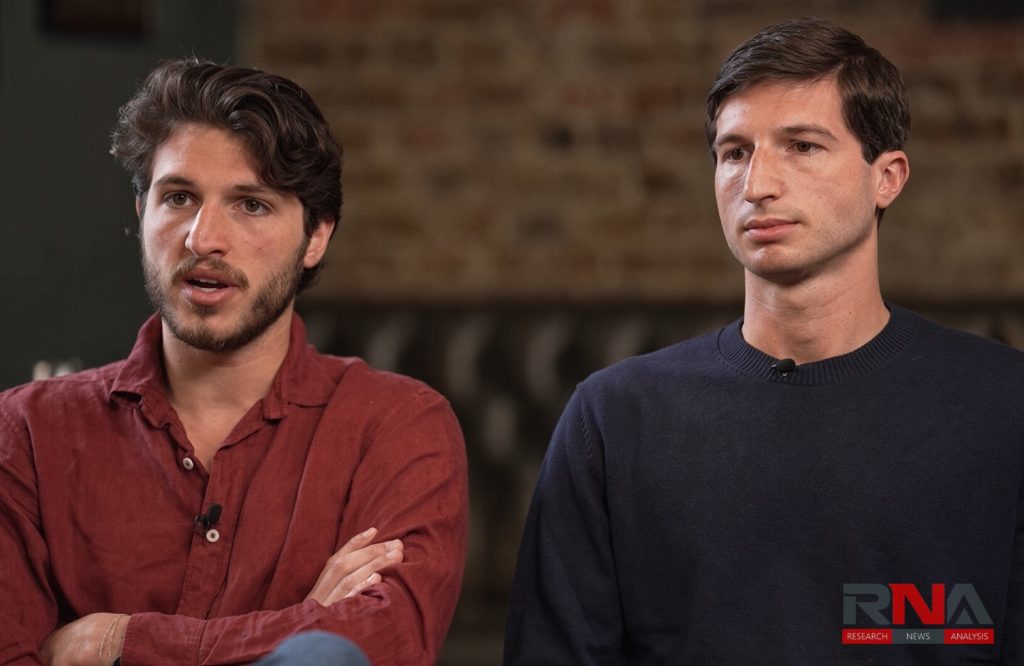
New Delhi: The sons of jailed former Pakistan prime minister Imran Khan have accused the country’s army chief, Field Marshal Asim Munir, of pursuing a personal vendetta against their father, alleging that his prolonged detention and deteriorating access to medical care amount to deliberate political persecution. Their intervention comes as Khan’s treatment in custody faces renewed scrutiny ahead of a Pakistan supreme court hearing on Wednesday, when the court is expected to consider allegations that authorities failed to comply with earlier directions concerning his medical treatment and contact with his family.
Khan, 73, has been held at Adiala prison in Rawalpindi since his arrest in 2023 and is serving a 14-year sentence in a corruption case, while facing other legal proceedings. His sons, Kasim and Sulaiman Khan, who live in Britain, told the Guardian that they have been unable to speak to their father for more than six months and have also been unable to travel to Pakistan despite applying for visas.
The brothers have raised particular concern over Khan’s eye condition, which has been the subject of a prolonged dispute between his family, his Pakistan Tehreek-e-Insaf (PTI) party and the authorities. They allege that inadequate and delayed treatment has seriously affected the former prime minister’s vision, while the Pakistani government maintains that he has access to appropriate medical care and rejects accusations of cruel or punitive treatment.
The dispute escalated last month when Pakistan’s supreme court ordered that Khan be transferred from Adiala prison to Shifa International Hospital in Islamabad for examination and treatment by a multidisciplinary medical team. The order also provided for the involvement of his personal physician and allowed regular family contact, including telephone conversations with his sons.
Instead, Khan was taken to the government-run Pakistan Institute of Medical Sciences, a move Islamabad described as a security decision rather than a political one. The government subsequently challenged aspects of the supreme court’s order, while Khan’s family and PTI accused the authorities of failing to comply with the court’s directions.
The latest allegations therefore come against the backdrop of an unresolved constitutional and political confrontation between Pakistan’s civilian institutions, the military establishment and Khan’s supporters. The government has categorically rejected claims that the former prime minister is being subjected to punitive solitary confinement, saying he receives food, water, exercise facilities, family access and regular medical examinations.
Khan’s sons, however, argue that the restrictions imposed on their father are intended to isolate him from both his family and his political base. They have also rejected suggestions that they are preparing to enter Pakistani politics themselves, saying they do not intend to take over the PTI or pursue political careers in their father’s absence.
The allegations against Munir are particularly significant because Khan’s political downfall has been closely linked to his rupture with Pakistan’s military leadership. Khan came to power in 2018 with the backing of the country’s powerful military establishment, but relations deteriorated before he was removed from office in April 2022 and subsequently became one of the military’s most prominent political critics.
The relationship between Khan and Munir has an additional personal dimension. Munir, who was then serving as director general of the powerful Inter-Services Intelligence (ISI), was removed from that position during Khan’s tenure as prime minister, and their subsequent political confrontation has remained a recurring feature of Pakistan’s turbulent civil-military landscape.
International concern over Khan’s detention has also grown independently of the claims made by his sons. In a communication to the Pakistani government in December 2025, the UN special rapporteur on torture cited allegations that Khan had been held for lengthy periods in solitary confinement and said the reported conditions raised concerns under international standards governing humane and dignified detention.
That UN intervention does not, however, establish the specific allegation that Munir personally ordered Khan’s treatment. The Pakistani government has rejected the broader accusations, while the question of whether the former prime minister has received adequate medical treatment and whether authorities complied with judicial directions remains before the country’s supreme court.
The political stakes extend beyond Khan’s personal circumstances. Despite his imprisonment and the legal cases against him, the former prime minister retains substantial support, while the PTI continues to challenge the political order that emerged after his removal and is planning a nationwide protest demanding his release later this month.
For Pakistan’s military establishment, the continuing Khan dispute presents a difficult balancing act. Keeping the former prime minister politically marginalized may prevent an immediate challenge to the existing power structure, but continued controversy over his health, detention and access to family risks sustaining Khan’s political relevance and keeping civil-military tensions at the centre of Pakistan’s domestic politics.