


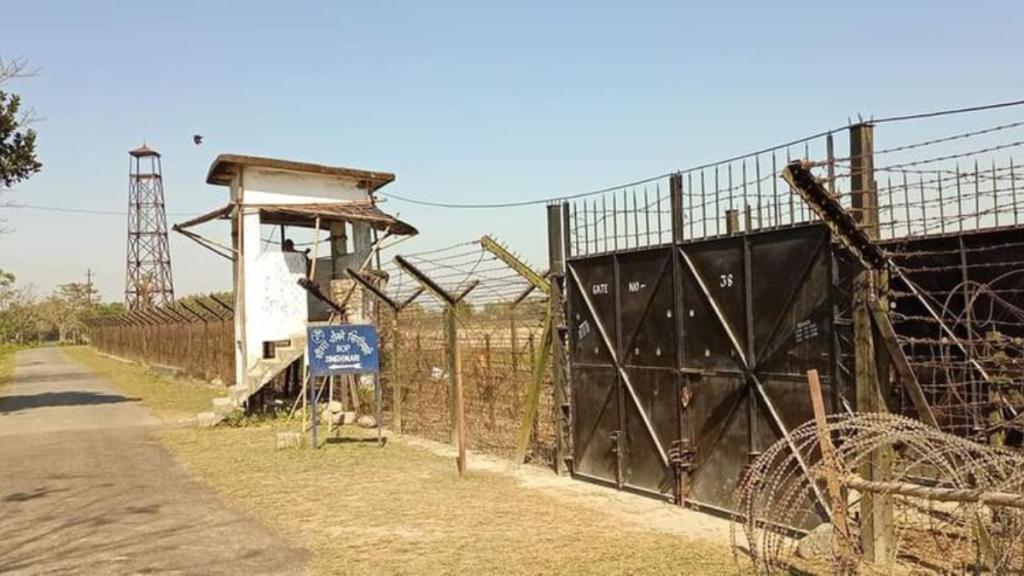
New Delhi: The India-Bangladesh border witnessed a rare face-off on Wednesday after personnel of the Border Security Force and Border Guard Bangladesh engaged in a tense standoff over the identity of a man intercepted near the Meghalaya frontier.
The dispute erupted at Nandirchar in Meghalaya’s South West Garo Hills district when the two border forces reportedly disagreed on the nationality of the individual. A video circulating online shows security personnel from both sides engaged in a heated argument as they attempted to establish the man’s identity.
The man was detained by BSF during an operation against illegal border crossings. However, efforts to hand him over across the border ran into resistance after Bangladeshi authorities allegedly questioned his nationality. A series of talks between local commanders did not lead to an immediate breakthrough and the matter remains unresolved.
According to media reports, the man, identified as Sati Rajbanshi, is a resident of Bangladesh’s Rajshahi district. However, a dispute over his nationality between the BSF and BGB reportedly left him stranded in the border’s “no man’s land”.
The incident comes at a time when fears of illegal migration and cross border movement remain a sensitive issue along the India-Bangladesh border. Security agencies have increased monitoring amid renewed focus on infiltration and border management in recent months.
Anti-drone shield to boost border security
As India moves towards technology-driven border management, the Ministry of Home Affairs is preparing to deploy an indigenous anti-drone shield as part of a proposed smart border security grid aimed at tackling cross-border smuggling and infiltration. The system is expected to help security agencies detect and neutralise drones used for transporting narcotics, weapons and ammunition across the border.
Officials say the anti-drone shield will work alongside advanced surveillance tools, including sensors and smart fencing, to strengthen border monitoring.
The initiative will also be supported by the recently launched land port management system (LPMS), a digital platform designed to streamline cargo and passenger movement across land borders. The government believes that the incorporation of surveillance technology and digital border management tools will enhance cooperation among agencies, and will improve security and trade facilitation.