


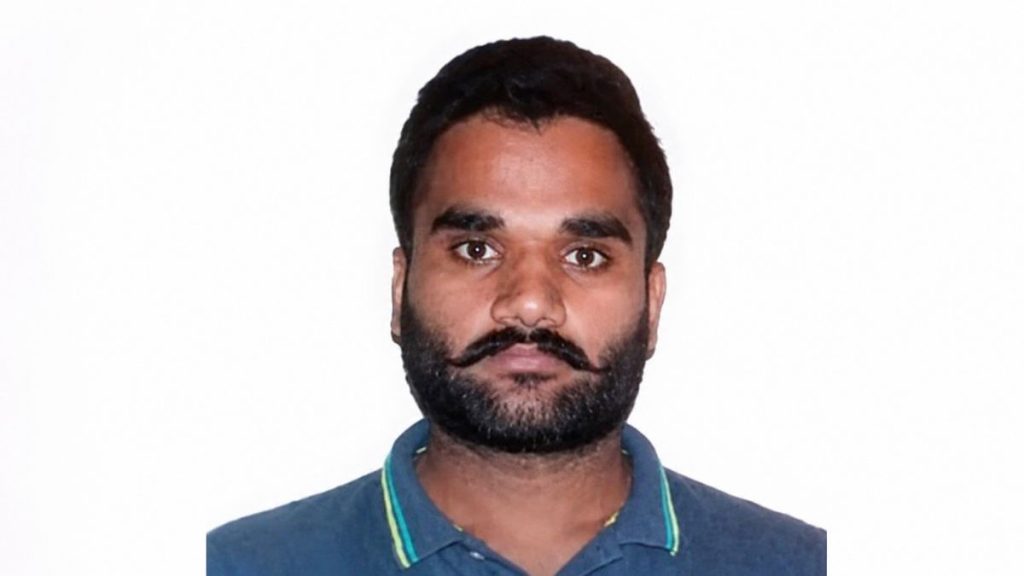
New Delhi: A threat of retaliation by Canada-based Arshdeep Singh Gill, alias Arsh Dalla, following Goldy Brar’s purported claim over Hardeep Singh Nijjar’s killing has brought a wider security concern back into focus − the growing overlap between overseas gang networks, Khalistani extremist outfits and criminal activity targeting people and businesses in India.
According to the Tribune, Dalla issued the threat after a purported recording surfaced in which Satinderjeet Singh, alias Goldy Brar, is allegedly heard claiming responsibility for Nijjar’s June 2023 killing in Canada. Dalla denied being with Nijjar when he was killed and rejected Brar’s claims that Nijjar had provided him money, weapons or shelter. The report has said it does not endorse the authenticity of the audio.
The recording therefore does not establish who ordered or carried out Nijjar’s killing. What is better documented is the criminal footprint attributed to the rival networks in India.
Rivlry with india footprint
Both Dalla and Brar are designated individual terrorists under India’s Unlawful Activities (Prevention) Act. The home ministry’s notification on Dalla accuses him of involvement in targeted killings, extortion for terror financing and cross-border trafficking of drugs and weapons, and links him to the Khalistan Tiger Force.
National Investigation Agency investigations have separately accused Brar’s network of demanding protection money from businessmen in Punjab and Chandigarh, supplying weapons to gang members, trafficking narcotics and recruiting young people to identify extortion targets and carry out shootings outside the homes of those who refused to pay.
The agency has also chargesheeted Brar in the 2023 murder of Karni Sena chief Sukhdev Singh Gogamedi in Jaipur and in the 2024 bombing of two clubs in Gurugram. These remain allegations before the courts.
Dalla-linked cases show a similar combination of extortion and violence. In January 2026, the NIA charged two alleged shooters in the 2024 Neemrana hotel firing case, saying the attack was carried out by a syndicate linked to Dalla, the KTF and the Bambiha gang after threats and extortion demands were made to the hotel owners.
For Indian security agencies, this is why overseas gang rivalries are not merely social-media feuds. Their alleged operations have produced victims, extortion demands and armed attacks in Punjab, Chandigarh, Haryana, Rajasthan and elsewhere.
Nijjar killing raised diplomatic stakes
Nijjar was shot dead outside the Guru Nanak Sikh Gurdwara in Surrey, British Columbia, on June 18, 2023. His killing later triggered one of the deepest crises in India-Canada relations after then Canadian prime minister Justin Trudeau said Canadian agencies were pursuing credible allegations of a potential link between Indian government agents and the murder.
India rejected the allegations. New Delhi has also repeatedly argued that Canada allowed space for extremists, terrorists and organized-crime figures targeting India. In January 2025, the external affairs ministry said the environment in Canada had contributed to “illegal migration and organized criminal activities”.
The dispute led to reciprocal diplomatic expulsions and a sharp reduction in bilateral engagement in 2023 and 2024. Relations have since begun to recover under Canadian prime minister Mark Carney, who visited India from February 27 to March 2 this year. The two sides announced a renewed India-Canada Strategic Partnership, while the Ministry of External Afairs’ current bilateral brief continues to list counter-terrorism cooperation as part of the relationship.
The criminal investigation around Nijjar has also widened. In July, the US justice department charged Lawrence Bishnoi and Brar with ordering the assassination of a victim identified in court papers as “H.S.N.”, killed outside a Sikh place of worship in Surrey on June 18, 2023. The Royal Canadian Mounted Police separately identified Nijjar’s killing among crimes being investigated in connection with global organised-crime networks. The US charges are allegations and have not been proved in court.
That wider record gives the latest Dalla-Brar exchange its significance. Their competing claims over Nijjar remain unverified, but Indian and foreign investigations increasingly depict an ecosystem in which extremist affiliations, gang rivalries, extortion, narcotics, arms trafficking and targeted violence can cross national borders.