


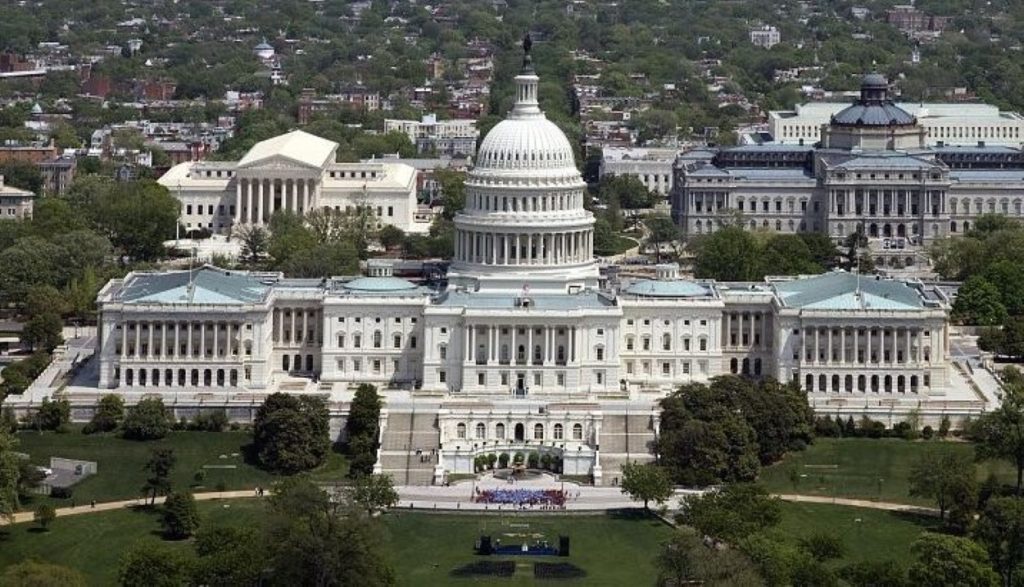
New Delhi: The United States House of Representatives has passed a sweeping Russia sanctions bill that could expose major buyers of Russian oil and gas, including India, to tariffs of up to 100 per cent, sharply raising the stakes for New Delhi’s energy and foreign policy calculations. The measure, passed on Wednesday by 262 votes to 159, now goes to the US president, Donald Trump, who is expected to sign it into law.
The legislation, formally titled the Lindsey O Graham Sanctioning Russia and Iran Act of 2026, is designed to increase economic pressure on Moscow by targeting Russian officials, banks, energy interests and the tanker network used to keep its oil exports moving despite western sanctions. Its most consequential provision for India, however, is the authority to impose tariffs of as much as 100 per cent on the top five importers of Russian oil or natural gas.
The bill follows an 86-11 Senate vote on August 7 and represents the most significant US legislative move against Russia since the emergency Ukraine aid package passed in 2024, according to AP. Ukrainian President Volodymyr Zelenskyy had actively pressed US lawmakers to advance the legislation, while its supporters have argued that reducing Russia’s energy revenues is central to increasing pressure on Moscow over the war in Ukraine.
For India, the immediate issue is not the automatic imposition of a 100 per cent tariff but the substantial discretion the legislation would give Trump to use such tariffs as leverage against countries continuing to purchase Russian energy. The legislation also contains an exception for countries whose imports account for less than 15 per cent of Russia’s natural gas exports and which have taken significant steps to reduce those purchases, although that provision does not remove the wider exposure of major Russian-oil buyers such as India.
New Delhi responded on Thursday by making clear that it is watching the legislation closely and has already raised its potential consequences with American interlocutors. The Ministry of External Affairs said India remains firmly committed to securing energy for its 1.4 billion people through diversified sources and according to prevailing market conditions, while also making clear that it would take necessary measures to protect its trade and economic interests.
The wording is significant because India has consistently defended its purchases of Russian crude on the grounds of energy security, affordability and the need to maintain reliable supplies for a large and rapidly growing economy. Russian oil became an increasingly important component of India’s import basket after the Ukraine war disrupted established energy flows and western sanctions created a substantial discount on Russian crude.
India is now the world’s third-largest oil importer and remains one of the principal destinations for Russian crude, while Indian refiners have already arranged supplies for September and October that include Russian oil, according to people familiar with the transactions cited by Reuters. Refiners have warned that a sudden disruption or punitive tariff could increase their costs and squeeze margins at a time when international energy markets are already facing supply pressures linked to the war in the Middle East.
The economic calculation therefore extends beyond the price paid for Russian crude. Any abrupt reduction in Russian supplies would require Indian refiners to compete more aggressively for alternative barrels from the Middle East, Africa, the United States and other producers, potentially increasing India’s import bill and feeding into domestic fuel and inflationary pressures.
The legislation also comes at a delicate point in India-US relations. New Delhi and Washington have been negotiating a trade agreement, and the prospect of additional US tariff action linked to Russian oil introduces a geopolitical issue into negotiations that are already focused on market access, tariffs and the broader structure of bilateral trade.
The House vote itself also underlines the unusual breadth of the measure. Although 203 Republicans backed the bill, 58 Democrats also voted in favour, giving the legislation a substantial bipartisan majority; critics, however, have questioned the extent of presidential tariff authority and warned that tariffs on energy-consuming countries could ultimately produce higher costs for American consumers as well.
The bill’s Russia provisions are part of a wider effort to constrict the financial channels supporting Moscow’s war effort. Alongside measures against Russian banks and officials, it targets vessels associated with sanctions evasion, potentially increasing the costs and risks involved in transporting Russian energy to overseas buyers.
For Moscow, the importance of the legislation lies in the possibility that Washington could make continued access to Russian energy commercially more difficult for its biggest customers. For India, however, the calculation is more complicated because the country has sought to separate its energy purchasing decisions from its position on the Ukraine conflict while simultaneously maintaining strategic relations with both Russia and the United States.
The timing is particularly notable. India has continued to deepen economic engagement with Russia, with the two countries publicly discussing an expansion of bilateral trade and investment, while New Delhi is also seeking to preserve and deepen its strategic and economic relationship with Washington.
What the new US tariff power could mean for India
The immediate effect on India will depend less on the passage of the bill than on how the Trump administration chooses to use the powers it provides. The legislation creates a new instrument of pressure rather than automatically imposing a 100 per cent tariff, leaving considerable room for negotiations, exemptions, transition arrangements or a calibrated reduction in Russian purchases.
For New Delhi, the first priority will therefore be to prevent the threat from becoming a sudden disruption to existing supply arrangements. Reuters reported that Indian refiners want the government to seek flexibility that would allow existing transactions to be completed and potentially establish a quota for Russian crude rather than face an abrupt cutoff.
The larger strategic problem is that India cannot treat Russian crude simply as a replaceable commodity. Russia has become an important source of competitively priced oil for Indian refiners, and replacing large volumes rapidly could alter the economics of refining, raise freight and insurance costs and increase India’s vulnerability to movements in global crude prices.
At the same time, continued dependence on Russian supplies carries a different kind of risk if Washington begins applying the new tariff authority aggressively. The potential cost would not necessarily be confined to the energy sector because punitive US tariffs or other measures could affect India’s wider trade relationship with the United States.
That makes the issue particularly relevant to the ongoing India-US trade negotiations. Reuters reported that Indian analysts expect the new tariff threat to complicate those talks, while Union commerce and industry minister Piyush Goyal is expected to engage US officials during the upcoming G20 trade ministers’ meeting.
India’s response so far suggests that it intends to negotiate rather than make an immediate strategic shift. The MEA’s reference to diversified sourcing, market dynamics and protecting India’s trade and economic interests leaves open the possibility of adjusting the composition of India’s oil imports while avoiding a commitment to abandon Russian supplies altogether.
There is also a wider geopolitical dimension. If Washington uses the legislation to pressure India and China simultaneously, the measure could encourage the two largest Asian buyers of Russian energy to coordinate their responses more closely, while also accelerating efforts by Russia and its customers to develop alternative payment, shipping and insurance arrangements.
For India, however, coordination with other buyers cannot substitute for managing its relationship with the United States. Washington remains an important economic, technological and strategic partner, while Moscow continues to be a major defence and energy partner; the new sanctions legislation therefore adds another layer to India’s longstanding effort to preserve strategic autonomy without allowing any single external relationship to become an overriding constraint.
The immediate question is consequently not whether India will suddenly stop buying Russian oil, but how much flexibility New Delhi can secure before the US tariff authority is used against major Russian-energy buyers. The answer could shape not only India’s energy procurement in the months ahead but also the tone of the broader India-US economic relationship and the space available to New Delhi for maintaining its multi-alignment strategy.