


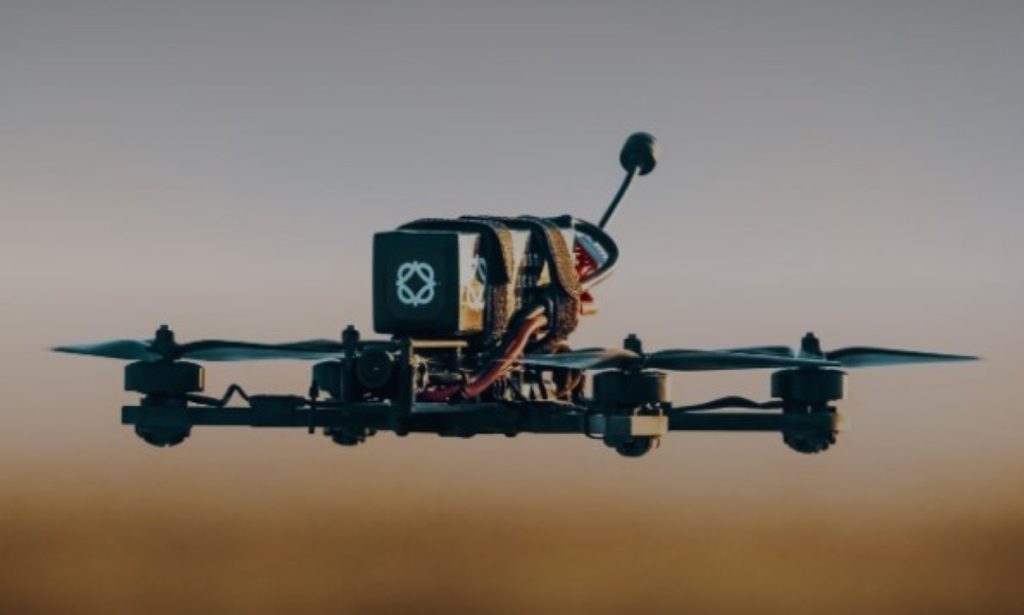
New Delhi: US defence technology company Powerus has signed a memorandum of understanding with the Pakistan Army that includes an initial order linked to unmanned aerial systems, marking a new step in Washington-Islamabad defence engagement. The agreement, whose financial value and technical details have not been disclosed, comes as Pakistan seeks to broaden its defence-industrial partnerships while strengthening its ties with the United States.
Brett Velicovich, a co-founder of Powerus, confirmed the agreement to Reuters on Wednesday, saying the initial order formed part of the MoU but declining to identify the systems involved or their value because of security and confidentiality considerations. The company has described the arrangement as part of a wider effort to develop technological and industrial cooperation with Pakistan rather than simply as a conventional equipment sale.
The disclosure followed a meeting at the Pakistani army’s general headquarters in Rawalpindi between a Powerus delegation led by Velicovich and Field Marshal Syed Asim Munir, the chief of defence forces and chief of army staff. Pakistan’s military said the discussions covered defence procurement, production and long-term capacity building, although its public statement did not mention the MoU or the initial order.
That distinction is significant because the military’s statement presents the engagement as part of a broader discussion on defence technology and industrial cooperation, while the company has separately confirmed that a contractual order is already associated with the newly signed understanding. The absence of publicly disclosed quantities, specifications or financial terms makes it difficult to establish the immediate scale of the arrangement, but the agreement potentially creates a framework for deeper cooperation.
Powerus describes itself as a US manufacturer and integrator of autonomous systems operating across aerial and maritime applications, with its portfolio extending beyond conventional unmanned aircraft to wider autonomous-system architecture. The company says its systems are intended for defence as well as critical-infrastructure and other industrial applications.
For Pakistan, the development comes against the backdrop of a renewed effort to expand defence cooperation with Washington after years in which the relationship was marked by considerable strategic uncertainty. Recent military engagement has included US-Pakistan training activity, while Washington approved a substantial technology and upgrade package for Pakistan’s F-16 fleet in December 2025, indicating that defence ties have remained an active component of the bilateral relationship.
The Powerus agreement also has an unusual corporate dimension because the company is preparing to merge with publicly traded Aureus Greenway Holdings, a firm in which Donald Trump Jr and Eric Trump have an indirect investment through American Ventures. US regulatory filings indicate that American Ventures is expected to hold a 9.9 per cent beneficial ownership interest in the combined company following completion of the transaction, which the companies expect in early October.
The connection has inevitably attracted attention because of the Trump family’s investment, although Powerus chief executive Andrew Fox has rejected any suggestion that the company’s contracts are influenced by the Trump sons. A spokesperson for Donald Trump Jr has likewise said that he is a passive investor with no role in Powerus’s management, operations or procurement decisions, while the White House has said there is no conflict of interest.
Powerus has also indicated that it sees Pakistan as a potential location for deeper technology cooperation and possibly local production. Velicovich said the company’s objective was to combine US technology with capabilities available in Pakistan, while Fox argued that the country’s developing private defence sector could create opportunities for American companies seeking new partnerships.
For Islamabad, such cooperation could have significance beyond the immediate order if it develops into a longer-term industrial relationship. Pakistan has traditionally relied heavily on China for major defence imports, and greater engagement with US defence companies would provide another channel for technology cooperation, although the present agreement is too limited in its publicly available detail to indicate any major shift in Pakistan’s established procurement pattern.
The agreement also illustrates how autonomous and unmanned technologies are becoming an increasingly important area of defence-industrial competition. For India, the development is worth watching primarily for what it may reveal about the evolving US-Pakistan strategic relationship and the extent to which Washington is prepared to support Pakistan’s emerging domestic defence-technology ecosystem.
At present, however, the Powerus deal should be viewed as an initial step rather than evidence of a major realignment. Until the parties disclose the scope of the order, the technologies involved and the terms of any prospective production partnership, its ultimate military and industrial significance will remain difficult to assess.