


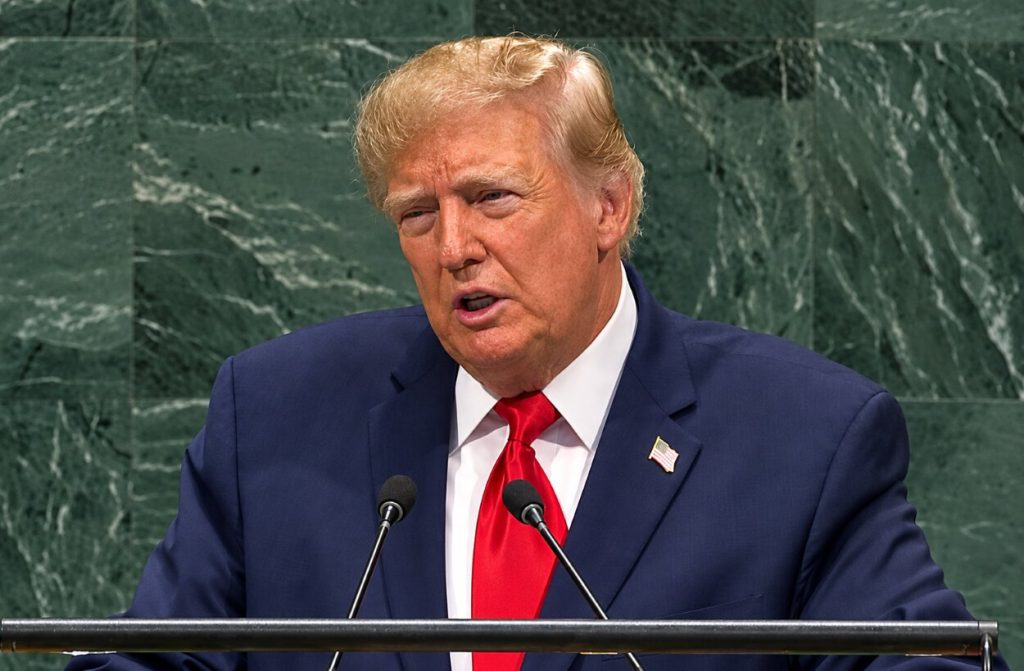
New Delhi: The US president, Donald Trump, defended his decision to wage war against Iran in an address to the United Nations General Assembly on Tuesday, warning that the Islamic Republic faced a choice between an agreement and annihilation. Iran’s military leadership rejected his remarks as domestic propaganda and warned that further attacks would draw a stronger response.
The exchange came as diplomatic contacts continued alongside efforts to end a conflict approaching its seventh month, with disruption to Gulf shipping keeping pressure on the global economy. Later on Tuesday, Trump said his representatives had held a three-hour meeting with an Iranian delegation, signalling that negotiations remained active despite his threats from the UN podium.
Trump defends war, presses for deal
Addressing the assembly’s 81st session, Trump portrayed military action as necessary to prevent Iran from acquiring nuclear weapons and expanding threats to American forces and other countries. He argued that earlier opportunities for an agreement had been squandered by Tehran, presenting the campaign as the consequence of failed diplomacy.
Trump said an agreement could allow Iran to rebuild but coupled that prospect with a threat to destroy the Islamic Republic if negotiations failed. He predicted a deal after the US midterm elections in November, accusing Tehran of waiting to assess the result, while insisting that the electoral timetable would not determine his decisions on Iran.
The Strait of Hormuz featured prominently in his argument that military pressure was producing results, with Trump claiming that US Navy escorts had helped move more than a billion barrels of oil through the waterway. He also urged other countries to intensify Iran’s economic isolation until it stopped attacks on commercial shipping, abandoned its nuclear ambitions and ended support for terrorism.
Those assertions formed part of a broader claim that American operations had severely weakened Iran’s military and economy, although they did not establish that Tehran had lost its ability to sustain the conflict. Members of the Iranian delegation walked out during the address, which combined a defence of the war with criticism of international institutions and resistance to tighter global controls on artificial intelligence.
Trump rejected suggestions that the United States was running short of weapons, saying production and stockpiles were expanding. However, a PolitiFact review cited defence research and reporting indicating that the prolonged campaign had depleted important missile and interceptor inventories, with some systems expected to take years to replenish.
Beyond Iran, Trump used the speech to argue for greater freedom of action for Washington, defending the use of American military power to protect its interests. He also opposed international arrangements to control artificial intelligence, placing technological development alongside sovereignty and security among the address’s central themes.
Subsequent remarks suggested that the administration was pursuing negotiations while maintaining the threat of escalation. Trump said the US envoy, Steve Witkoff, and his adviser, Jared Kushner, had met Iranian representatives, described the discussions as productive and indicated that another meeting could take place soon; no completed agreement was announced in that account.
Iran rejects threats, warns of stronger retaliation
Iran’s armed forces general staff and the Khatam al-Anbiya Central Headquarters, its senior joint operational command, accused Trump of using the UN platform to justify aggression and spread insecurity. In their statement, carried by Iranian state media, they described his remarks as “merely a tool for domestic propaganda”.
The commanders argued that threatening language would neither alter the military balance nor reverse what they characterized as American setbacks against Iran and its regional allies. They said Iranian forces remained ready to inflict “more severe, crushing and unpredictable” strikes on the United States and Israel in response to renewed attacks.
The statement presented a sharply different assessment from Trump’s account of an adversary weakened by American force and economic pressure. Both governments were making claims about their own strength and the other side’s vulnerability, rather than offering an independently established account of the war’s outcome.
Alongside the military response, Tehran was also signalling conditions for a negotiated reduction in tensions. Reuters reported, citing an Iranian official, that Iran was prepared to reopen the Strait of Hormuz if Washington eased military pressure and lifted its blockade, and that a proposal had been conveyed through mediators on September 16.
The president of Iran, Masoud Pezeshkian, arrived at the UN gathering facing pressure to defend Tehran’s position while keeping a diplomatic opening available. Reporting on the discussions suggested that the immediate opportunity lay in negotiations between representatives or through intermediaries, while a meeting between the two presidents remained uncertain.