


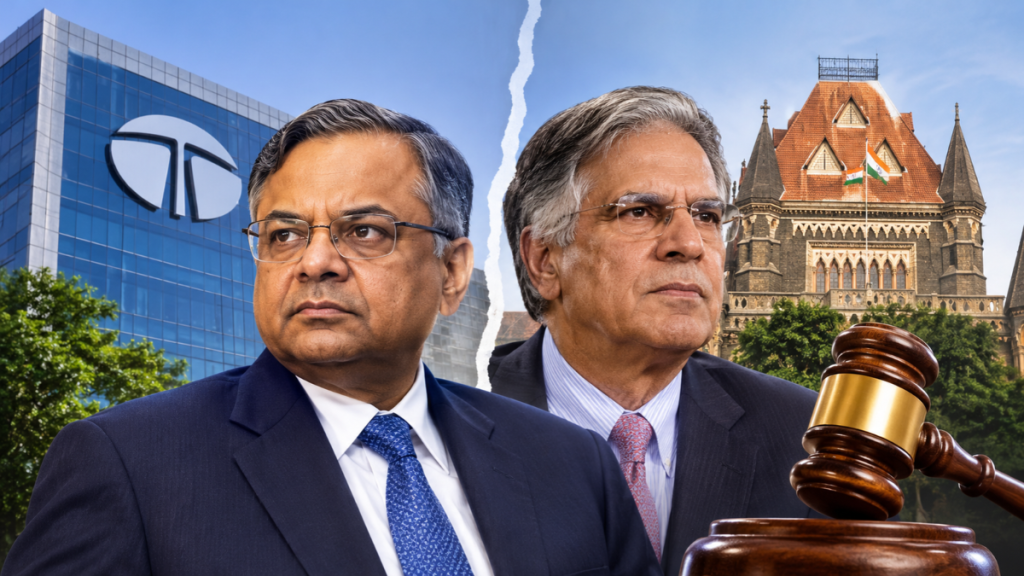
New Delhi: The Bombay high court, on Friday, refused to stop a Tata Sons board meeting set for November 30. The ruling gives an early setback to Tata Trusts, which controls about 66 per cent of the group’s holding company.
Justice Abhay Ahuja said the final outcome of the trusts’ petitions will decide whether any action taken at the meeting stands. The court will hear the case next on 21 January 2027.
The dispute centres on N Chandrasekaran, the executive chairman of Tata Sons. On September 17, the board voted to give him a five-year term, for the third time, starting on February 21, 2027.
The board backed the resolution by four votes to one. Chandrasekaran abstained, and acting chairman Harish Manwani used a casting vote.
The two trusts nominees on the board split. Venu Srinivasan backed the reappointment, while Noel Tata, who chairs Tata Trusts, voted against it.
The Trusts argue that the company’s own rulebook gives their nominees the final say on major decisions. They cited two clauses, Articles 104B and 121, which require approval from a majority of trust-nominated directors.
In the trusts’ view, a chairman’s casting vote cannot override that rule or break a tie between their own nominees.
The petitions requested the court to stop Tata Sons from acting on the resolution. They also claimed ₹65 crore in damages: ₹50 crore for the Sir Dorabji Tata Trust and ₹15 crore for the Ratan Tata Trust.
Senior advocate, Abhishek Manu Singhvi representing the trusts asked the court to block or defer the meeting. He described the nominees’ approval as the “entry gate” for such decisions.
Singhvi further argued that the matter could not go ahead once Noel Tata disagreed. He also asked the court to bar Tata Sons from acting on any resolution that the board will adopt on November 30.
Aspi Chinoy representing the Ratan Tata Trust, said the casting vote broke Article 121. He called it a clear misuse of the company’s rules.
Janak Dwarkadas, also for Noel Tata, said the chairman cannot step in as an extra trusts nominee. In his view, the chairman cannot use his office to override the nominees’ rights.
Harish Salve, for Tata Sons and Chandrasekaran, opposed any order against the meeting. He told the court that the trustees had created the conflict themselves.
Salve further argued that Article 121 does not override national company law. He said the trusts could challenge the September resolution itself without halting the board.
He also pointed to a letter from the Reserve Bank of India on Tata Sons’ listing obligations and warned that a court order blocking the meeting would stop the company from meeting those rules. The RBI treats Tata Sons as a large finance company, and that status brings strict rules.
Salve raised a further legal point. Under Maharashtra’s public trusts law, he argued, a trust needs written permission from the charity commissioner before it can sue.
The board, however, will meet on November 30 as planned. Any decision it takes will stay open to challenge until the court rules on the petitions.
The judge gave the other side time to file replies. Both sides will return to court on January 21, 2027.
The court battle follows months of tension between Noel Tata and Chandrasekaran. Chandrasekaran had told the board in August that he did not want a third term, before changing his mind at the board’s request.
On the other hand, whether or not to list Tata Sons on the stock market has split the two camps. Srinivasan and former defence secretary Vijay Singh publicly backed listing, which Noel Tata opposes.
In October, Noel Tata asked the board to consider restructuring Tata Sons to avoid a listing. He also flagged Shapoorji Pallonji Group’s need to raise ₹25,000 crore.
The row has already reached the courts once this year. In May, the high court declined to block a Sir Ratan Tata Trust meeting that planned to review the trusts’ nominees on the Tata Sons board.
A separate order from the charity commissioner has also held up joint representation of the Trusts at the Tata Sons annual general meeting. Hence, a lot rides on the outcome. Tata Sons controls more than 30 listed Tata companies, including TCS and Tata Motors.