


New Delhi: The Ministry of External Affairs said shipping movement through the Strait of Hormuz has resumed in both directions, on Tuesday. This signals a gradual recovery in maritime traffic through the strategic waterway after weeks of disruption caused by tensions in West Asia.
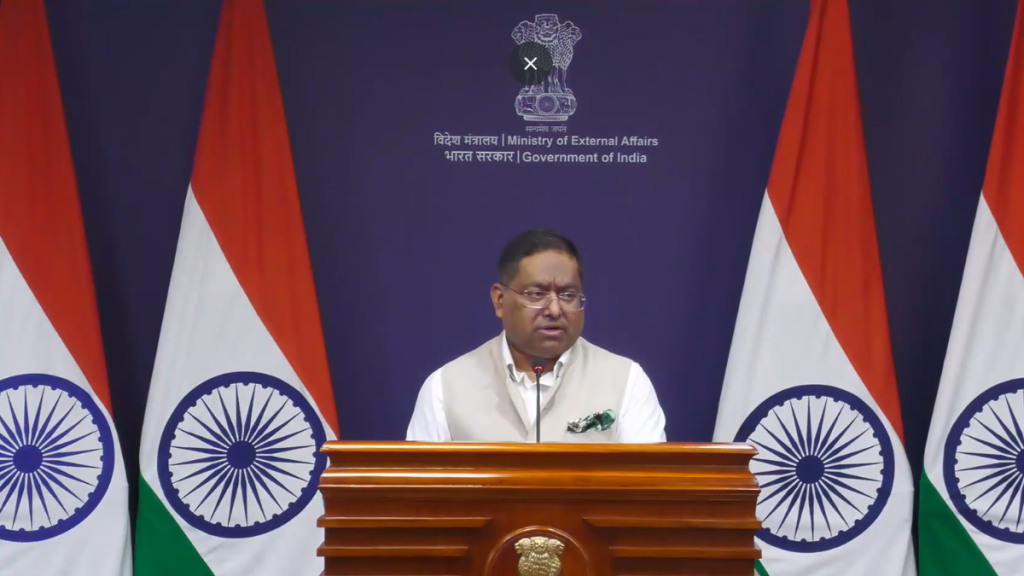
Speaking at a media briefing, the MEA spokesman, Randhir Jaiswal, said commercial shipping activity was showing signs of normalisation, although several Indian-flagged vessels remain in the Persian Gulf region after being stranded when the conflict began.
The update comes amid continuing efforts to restore confidence in one of the world’s most important maritime corridors. The Strait of Hormuz, which connects the Persian Gulf with global markets, is a critical route for energy shipments and commercial trade. Any disruption to traffic through the narrow waterway has the potential to affect global oil supplies, freight costs and supply chains.
Providing details on the current situation, Jaiswal said some Indian vessels had already resumed movement through the region.
“As of today, we have 10 Indian-flagged vessels still in the Persian Gulf region – these are the ones that were stranded when the conflict began, but in addition to these 10, we have two Indian ships that have crossed from this side into the Persian Gulf, which means that traffic is moving back and forth,” he said.
The movement of vessels in both directions is being viewed as a positive indicator that maritime operations are gradually returning to normal following the recent easing of tensions.
Jaiswal also revealed that since the signing of the US-Iran memorandum of understanding on June 17, a total of 11 India-bound vessels have successfully transited the Strait of Hormuz. These included three Indian-flagged crude oil tankers carrying approximately 285,000 metric tonnes of crude oil each, one foreign-flagged LPG carrier, one foreign-flagged crude oil tanker, and six foreign-flagged bulk carriers transporting fertiliser cargo destined for India.
“It is our expectation and hope that the remaining Indian-flagged vessels will also be able to cross Hormuz soon,” Jaiswal added.
The successful transit of these vessels is particularly significant for India, which depends heavily on the Gulf region for its energy imports and a range of critical commodities. The government continues to closely monitor developments in the region as maritime traffic steadily resumes through the strategic chokepoint.