


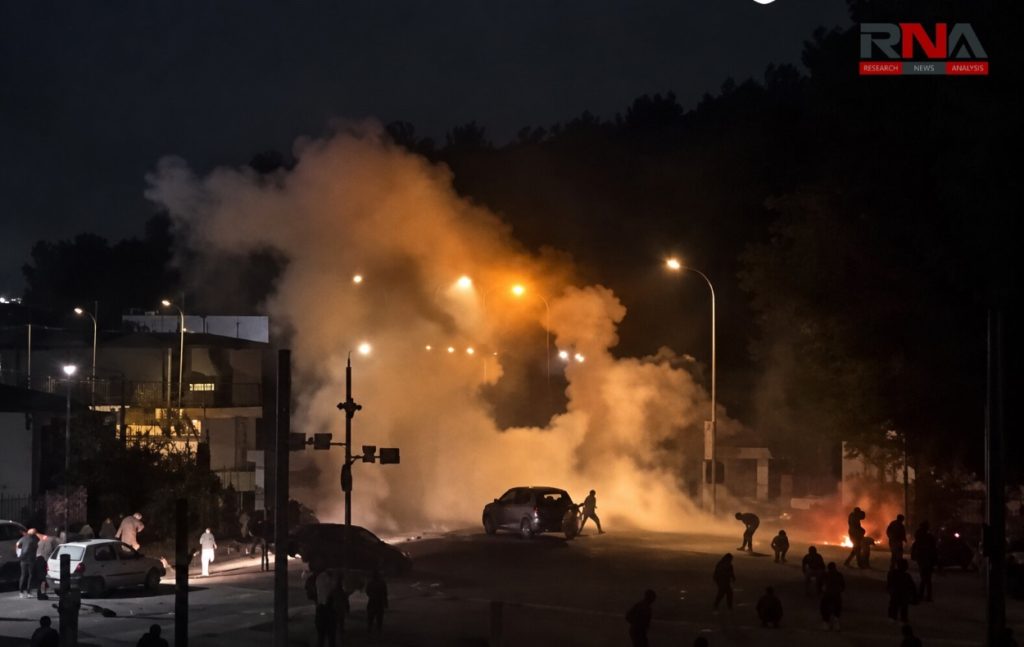
New Delhi: Protests against the proposed 11,200MW Siang Upper Multipurpose Project (SUMP) in Arunachal Pradesh escalated into arson and attacks on political leaders’ homes in Pasighat on Friday, leaving more than 40 police personnel injured, according to police. Authorities subsequently restricted gatherings in parts of East Siang district, while the chief minister, Pema Khandu, invited opponents of the dam for talks and reiterated that public consensus would remain central to the project’s future.
Police said an NHPC office and a police station were set ablaze during the unrest, which continued into the early hours of October 24. The homes of legislators Oni Panyang and Ninong Ering, and the state BJP president, Kaling Moyong, were also vandalized, with reports of looting and theft, according to the chief minister’s office.
The violence followed a 12-hour shutdown called by organizations opposing the project across Siang, Upper Siang and parts of East Siang districts. Although the bandh was largely peaceful, separate confrontations during the day and the subsequent attacks in Pasighat deepened an already tense dispute over preliminary surveys for the dam.
The inspector general of police for the central range, Hibu Tamang, said a group that had gathered on the Mebo side entered Pasighat’s jurisdiction during the afternoon and blocked the Pasighat-Boleng highway. He alleged that groups later hurled stones at police and a magistrate after efforts to persuade them to clear the road failed.
Tamang said a deputy superintendent of police suffered a head injury and was evacuated to Dibrugarh for treatment, while central police personnel were also injured. A protester was hospitalized after being struck in the leg by a tear-gas shell, and at least nine police vehicles were damaged, according to local reports.
Earlier, security personnel used tear gas during a confrontation at Dite-Dime near Geku, where police alleged that demonstrators tried to breach barricades and damaged vehicles. At least four women were reported injured in that clash.
The Arunachal Pradesh Congress Committee condemned the violence and demanded an independent inquiry into the use of tear gas against demonstrators. Police, meanwhile, said photographs and video recordings would be examined to identify those involved in the attacks.
Restrictions on public gatherings, processions and carrying weapons took effect in Pasighat, Mebo and Ruksin at 5pm on October 24. The East Siang district administration said the measures would remain until withdrawn or modified, citing the risk of further arson, property damage and threats to public safety.
The shutdown was called jointly by Adi Bane Kebang United, the SUMP Affected Area Youth Association, the Siang Indigenous Farmers’ Forum youth wing and the Adi Galo Welfare Society. Their demands include the release of 10 arrested activists, reinstatement of suspended village headmen, a halt to pre-feasibility activities and withdrawal of central security forces from the region.
At the heart of the dispute is opposition among sections of the indigenous Adi community to the potential loss of ancestral land, homes and agricultural livelihoods. Residents resisting the surveys regard them as the first step towards a project they oppose, while the government maintains that investigations are necessary to establish whether the scheme is viable.
The pre-feasibility exercise is intended to assess technical viability and help determine a suitable site; it does not itself authorize construction. A detailed project report and the necessary regulatory clearances would be required before civil works could begin.
The government presents the proposed reservoir as both an electricity-generation scheme and a strategic water-storage measure in response to China’s hydropower development upstream in Tibet. The Yarlung Tsangpo enters Arunachal Pradesh as the Siang and becomes part of the Brahmaputra river system downstream, linking the project to wider concerns about river flows and flood management.
NHPC has argued that storage on the Siang could help moderate disruptions caused by upstream water diversion or sudden releases, while supplying renewable electricity. Opponents question whether those anticipated benefits justify another large dam in a region exposed to earthquakes and landslides, and have challenged the government’s assessment of the risks.
Resistance had intensified before the latest unrest, including after security deployments to facilitate investigations in September. Mongabay-India documented earlier clashes and allegations of pressure on activists, illustrating how the dispute has expanded beyond the dam’s engineering merits to questions of consultation and community consent.
Responding to the Pasighat violence, Khandu offered to meet representatives in Itanagar, Pasighat or another location of their choosing, accompanied by officials from the departments concerned. He said discussions should address the project’s possible disadvantages as well as its benefits, while urging organizations to pursue their objections peacefully.
Khandu’s renewed invitation for direct talks leaves the government facing two immediate tasks: restoring order and addressing the concerns driving resistance to the surveys. His assurance that public consensus remains essential places consultation with affected communities at the centre of any further progress on the project.