


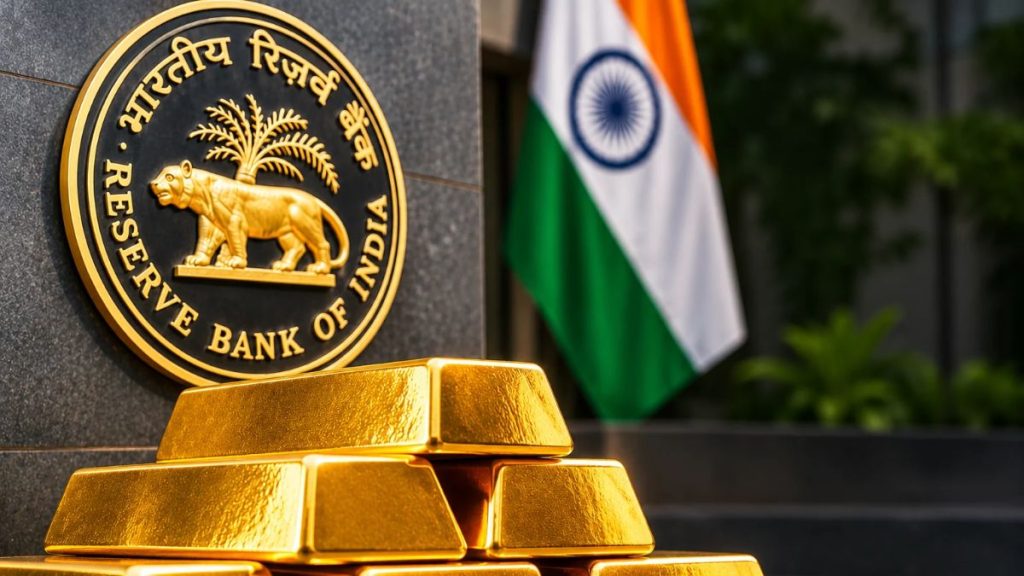
New Delhi: The Reserve Bank of India brought back 60.08 metric tonnes of gold from overseas storage between April and September 2026, raising the share of its bullion reserves held domestically to approximately 84 per cent. The transfer increased gold held in India to 740.13 tonnes from 680.05 tonnes in March, while the central bank’s total gold holdings remained unchanged at 880.52 tonnes.
The figures were disclosed in the RBI’s 47th half-yearly report on management of foreign exchange reserves, released on Wednesday.The proportion of gold stored domestically rose from 77.23 per cent at the end of March to about 84 per cent in September, reflecting a continued shift in the location of India’s monetary gold reserves.
Overseas gold holdings shrink
At the end of September, 140.39 tonnes remained in safe custody with the Bank of England and the Bank for International Settlements (BIS). Six months earlier, 197.67 tonnes were held in overseas custody and another 2.80 tonnes as gold deposits, making up the difference between the March and September holdings.
The latest transfer represents the relocation of existing reserves rather than fresh purchases or an increase in the country’s gold stock. The RBI has not announced plans to withdraw all its gold from overseas institutions, which continue to provide established custody facilities for central banks.
The transfer comes against a backdrop of geopolitical uncertainty and changing reserve-management priorities among central banks. The RBI’s report highlighted the conflict in West Asia, disruptions to energy supplies and concerns over public debt as factors affecting global financial markets, although it did not explicitly link these developments to its decision to bring gold back to India.
Holding a larger share of reserves domestically increases direct control over physical custody and reduces reliance on overseas storage arrangements. However, the RBI has not attributed the transfer to concerns about either the Bank of England or BIS, and the decision does not establish any loss of confidence in those institutions.
Gold’s value declines
Despite the increase in domestic custody, gold’s share of India’s total foreign exchange reserves declined from 16.70 per cent in March to 14.38 per cent in September. Its dollar valuation fell from approximately $115.40 billion to $106.08 billion, reflecting movements in international gold prices rather than a reduction in the physical stock held by the RBI.
The RBI attributed the broader decline in international gold prices to rising US Treasury yields, a stronger dollar and expectations of tighter monetary policy. Average prices fell by approximately 9 per cent, from $4,721 per troy ounce in April to $4,319 in September, reducing the dollar valuation of gold holdings without any corresponding reduction in their quantity.
India’s overall foreign exchange reserves, meanwhile, increased by $46.67 billion, rising from $691.11 billion at the end of March to $737.78 billion in September. The foreign currency assets accounted for $608.26 billion of the September total, highlighting the substantial contribution of non-gold assets to the reserve portfolio.
Of these foreign currency assets, $529.57 billion was invested in securities, $35.95 billion deposited with other central banks and BIS, and $42.75 billion held with overseas commercial banks. The RBI also disclosed that a small portion of its reserves is managed by external asset managers to explore investment opportunities and diversify its portfolio, while maintaining safety and liquidity as its principal reserve-management objectives.
The latest figures underline two simultaneous developments: India is keeping more of its gold within its borders while the market value and relative weight of that gold remain exposed to international price movements.