


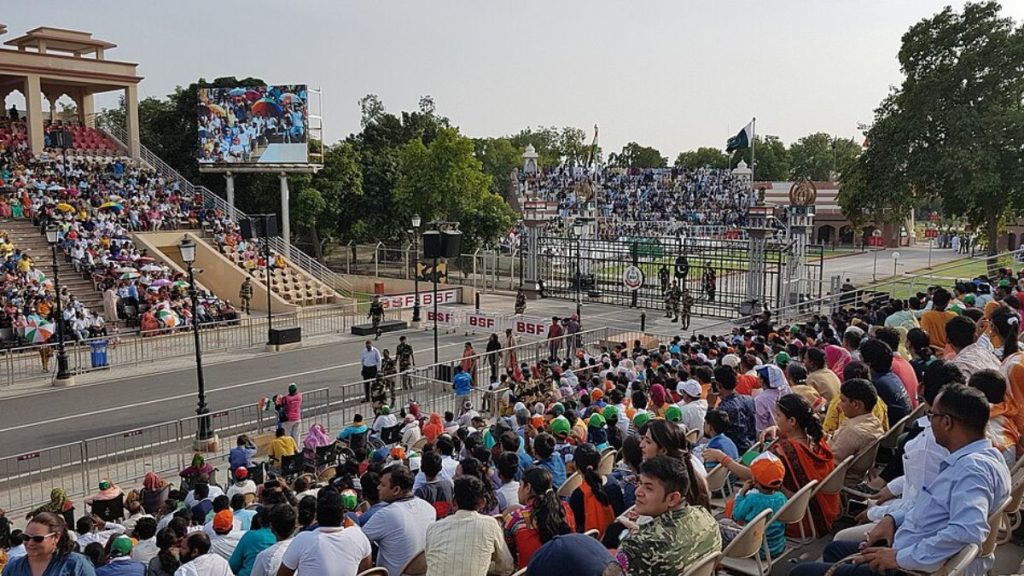
New Delhi: Around 150 Pakistani Sindhi women engaged to men in India have reached the country for their weddings after months of uncertainty, travelling by air through third countries after the Wagah-Attari land route became unavailable. According to media reports, the women were able to travel after the home ministry facilitated visas for the marriage-related cases, subject to entry by air.
The figure is based on community representatives rather than an official government count. PTI, citing Nagpur-based Sindhi community leader Rajesh Jhambia, reported that around 150 women from Pakistan’s Sindh province had been waiting to marry men in India. Times of India separately reported at least 150 cases after examining visa permits and speaking to couples and families involved.
How the weddings were put on hold
For families with marriage ties on both sides of the border, the Wagah-Attari crossing had traditionally provided the most practical land route between Pakistan and India.
That changed after the April 22, 2025 Pahalgam terror attack, in which 25 Indian citizens and one Nepali national were killed. A day later, the Cabinet Committee on Security ordered the integrated check post at Attari closed, among a series of measures announced against Pakistan.
India subsequently suspended visa services for Pakistani nationals and revoked existing visas, subject to specified exemptions. The restrictions preceded Operation Sindoor, launched by India on May 7 against what the government described as terrorist infrastructure in Pakistan and POK.
The measures left several Sindhi women whose engagements and marriages had already been arranged unable to travel through the route their families had expected to use.
Special facilitation, but only by air
According to PTI, affected families and community representatives approached Sant Yudhishtirlal Shadaani, head of Shadaani Darbar, a prominent Sindhi Hindu religious institution associated with Ghotki in Pakistan’s Sindh province.
The Darbar compiled details of women whose marriages in India had been delayed and approached the home ministry seeking assistance with their visa applications.
PTI reported that the women and accompanying relatives were subsequently issued visas but were required to enter India by air rather than through Attari. TOI separately described the arrangement as a special relaxation and reported that it had examined visa permits issued in some of the cases.
The reports do not describe the arrangement as a new visa category or a broader relaxation of India’s restrictions on Pakistani nationals.
With the land route unavailable, families took considerably longer journeys through third countries. Reports identified Muscat, Dubai, Colombo, Dhaka and Qatar among transit points used before the travellers reached India.
The brides were headed to cities including Nagpur, Raipur, Jodhpur, Pune, Ahmedabad and Bhopal, where their prospective husbands and families were based.
Jhambia told PTI that around 150 brides and their relatives had travelled to India since the restrictions were imposed, including about 15 cases linked to Nagpur. He also said nearly 300 women remained in Pakistan awaiting similar facilitation.
Families travel under tighter conditions
The restrictions have also affected which relatives could accompany the women and how long they could remain in India.
TOI reported that family members accompanying the brides were permitted to travel under the arrangements but had to return to Pakistan within the validity period specified on their visas.
One case involved Aarti, a woman from Khanpur tehsil in Sindh who was engaged to Nagpur-based Inkesh Jashnani. According to TOI, she had travelled towards Wagah in May 2025 expecting to enter India for her wedding but could not cross at Attari after the restrictions came into force.
She eventually reached Nagpur through Muscat and married Jashnani in March this year. Her brother was able to accompany her, while her parents remained in Pakistan because of the visa restrictions.
The case illustrates the wider impact of the post-Pahalgam measures on families whose marriage arrangements had been made before cross-border movement was curtailed.
No resumption of normal Pakistan travel
The facilitation does not amount to a restoration of regular India-Pakistan passenger travel.
India’s official e-visa portal lists Attari among designated land entry points for eligible e-visa travellers, but Pakistani passport holders and persons of Pakistani origin are not eligible for the e-visa facility and must apply for regular visas through an Indian mission.
The broader restrictions on Pakistani nationals therefore remain distinct from the case-specific arrangements reported for the Sindhi brides.