


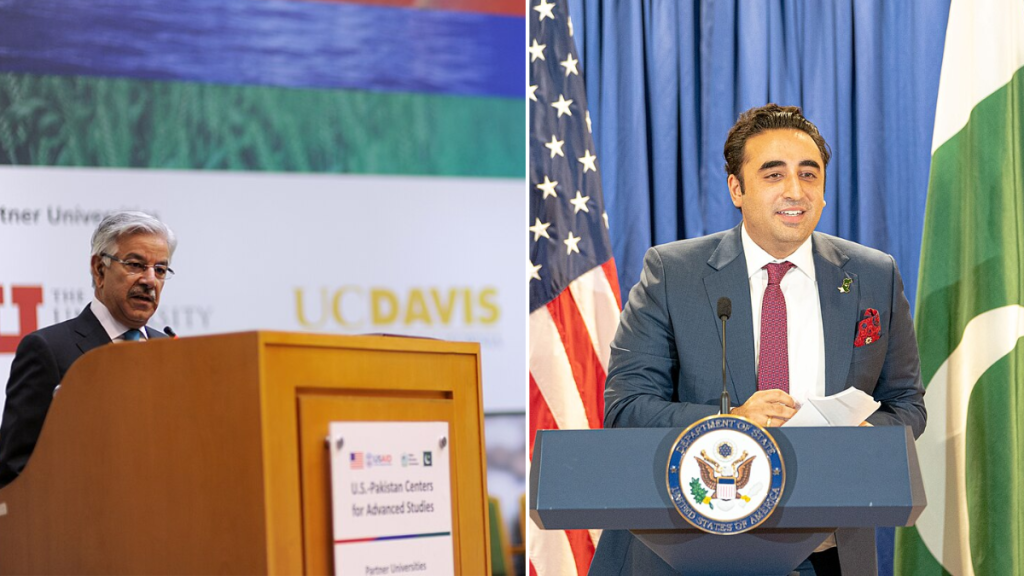
New Delhi: Seeking international support over the ongoing dispute with India on the Indus Waters Treaty (IWT), Pakistan hosted an international conference titled “The Indus Waters Treaty: A Key Instrument for Peace and Regional Stability” in Islamabad. Senior political leaders and ministers used the platform to argue that the 1960 water-sharing agreement cannot be suspended unilaterally and urged the international community to uphold the treaty.
Addressing the conference, Pakistan Peoples Party (PPP) chairman Bilawal Bhutto Zardari described the Indus River as Pakistan’s lifeline and proposed an international convention against the “weaponization of waterways”. He said Pakistan wanted peace and dialogue under international law but would continue to defend its rights under the treaty.
The Pakistani climate minister, Musadik Malik, said the future of the Indus Waters Treaty would have implications beyond South Asia. He argued that if one of the world’s most enduring international agreements could be set aside, it would raise wider concerns about the credibility of global treaties.
The conference came amid renewed exchanges between New Delhi and Islamabad over the water-sharing pact. As reported earlier, water minister CR Patil recently said India was working to ensure that not a single drop of water allocated to India flows into Pakistan. Earlier, Pakistan had maintained that any attempt to alter the flow of waters allocated under the treaty would be treated as an “act of war”.
According to Dawn, Pakistan’s information minister, Attaullah Tarar, also reiterated ahead of the conference that the treaty remained legally enforceable and could not be revoked or amended unilaterally, while announcing that legal and water experts from different countries would attend the Islamabad event.
According to NDTV, citing Radio Pakistan, the deputy prime minister and foreign minister of Pakistan, Ishaq Dar, said the Indus Waters Treaty was not merely a water-sharing arrangement but a key instrument for regional peace, stability and cooperation. He argued that the agreement contains no provision allowing either party to suspend or terminate it unilaterally and said shared water resources should never be used as a political tool. Dar also stressed that rivers crossing international boundaries should promote cooperation rather than confrontation.
The conference also followed recent remarks by the Pakistani defence minister, Khawaja Asif, who warned that Islamabad could resort to war if its water security was threatened.
India placed the Indus Waters Treaty, brokered by the World Bank in 1960, in abeyance after the April 2025 Pahalgam terror attack that killed 26 civilians. India has maintained that the treaty will remain suspended until Pakistan takes credible, concrete and irreversible action against cross-border terrorism.