


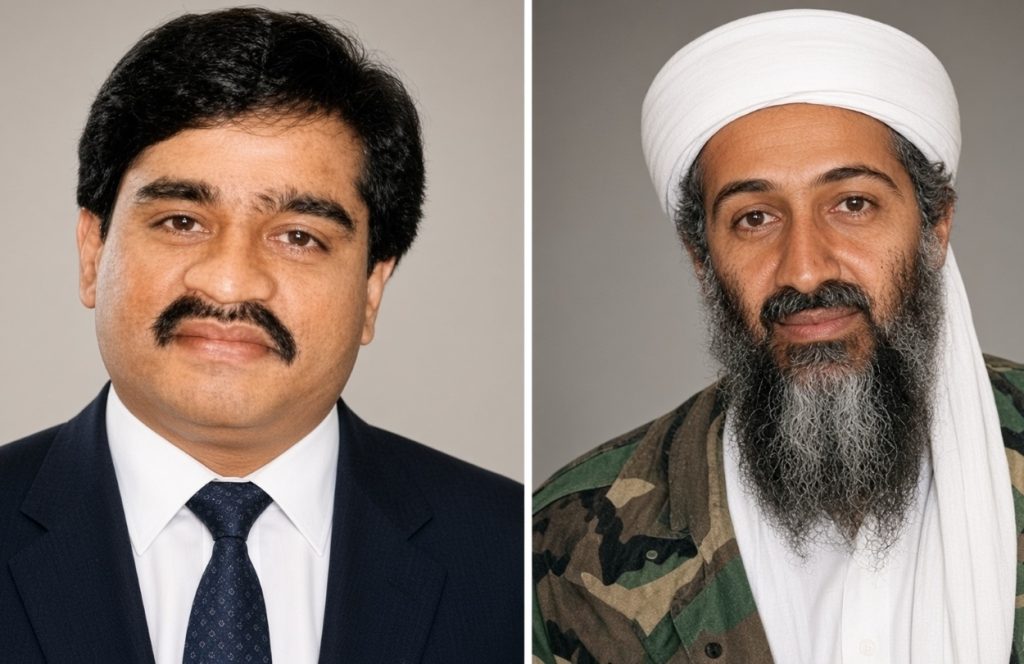
New Delhi: India has rejected a United Nations special rapporteur’s description of Dawood Ibrahim’s D-Company as an “India-based” criminal group, saying it misrepresents the whereabouts and terrorist associations of a fugitive wanted by Indian authorities. New Delhi raised the objection at the UN general assembly’s third committee on Wednesday, arguing that the account omitted essential facts contained in the UN’s own sanctions records.
The first secretary at India’s permanent mission to the UN, Raghoo Puri, challenged the description while responding to the special rapporteur on human rights and counterterrorism, Ben Saul. At issue was a passage referring to the UN security council’s decision in 2003 to list the leader of the “India-based” D-Company for association with al-Qaida.
“Read in isolation, this line paints a very different picture from the actual reality,” Puri said. He said Ibrahim had fled India well before the listing and that his associations with al-Qaida and Osama bin Laden developed while he was outside the country.
Puri also pointed towards Pakistan, saying Ibrahim lived in the same country where bin Laden had been found and killed. His intervention reaffirmed India’s position that the fugitive’s location outside its territory must be acknowledged when describing his network and its terrorist links.
The diplomat broadened the criticism to the accuracy and accountability of reports issued by UN-appointed experts. He argued that publishing erroneous accounts without adequate accountability left member states confronting an established public narrative and damaged the credibility of the international institution.
The UNSC’s consolidated sanctions list records three addresses for Ibrahim in Karachi, Pakistan, while identifying his nationality as Indian. It also records an international arrest warrant issued by the Indian government – details that distinguish his nationality from his listed overseas addresses.
Separately, the UNSC’s narrative explanation of his designation confirms that Ibrahim was listed on November 3, 2003, for supporting activities associated with al-Qaida, bin Laden and the Taliban. It describes his syndicate’s involvement in narcotics shipments and says its smuggling routes across South Asia, the Middle East and Africa were shared with bin Laden’s network through a financial arrangement.
That account explicitly states that Ibrahim is wanted in India over the March 12, 1993, Bombay bombings, which killed more than 250 people and injured over 1,000. It also records criminal activities by D-Company and its associates in India and Nepal, including currency counterfeiting and conspiracies to kill political leaders.
Those records provide an important distinction behind the dispute: a network can commit crimes in India while its leader is based elsewhere. India’s objection concerns wording that, in its view, obscures that distinction and omits Ibrahim’s status as a fugitive sought over terrorist attacks.
Saul’s broader report examines the treatment of organized crime groups as terrorist organizations, questioning the legal and human rights consequences of conflating the two. It advocates responses to organized crime that uphold human rights, alongside measures addressing illicit firearms, corruption and the conditions that sustain criminal violence.
Special rapporteurs are independent experts mandated to examine particular human rights issues, and their views do not represent the UN as a whole. The disputed wording therefore belongs to an expert’s report, while Ibrahim’s designation and the accompanying records form part of the Security Council’s separate sanctions framework.