


New Delhi: The death toll from devastating flash floods in Nepal has risen to 781, while more than 2,500 people remain missing as rescue and relief operations entered their fifth day on Sunday. Rescuers are continuing to search through vast stretches of mud and debris while facing difficult terrain, rising river levels and the threat of further flooding.
Bodies have been recovered from eight affected districts as the Nepal army, police and other agencies intensify their search for survivors and those still unaccounted for. In neighbouring Tibet, Chinese state media has reported 16 deaths and 546 people missing following the disaster along the Nepal-China border.
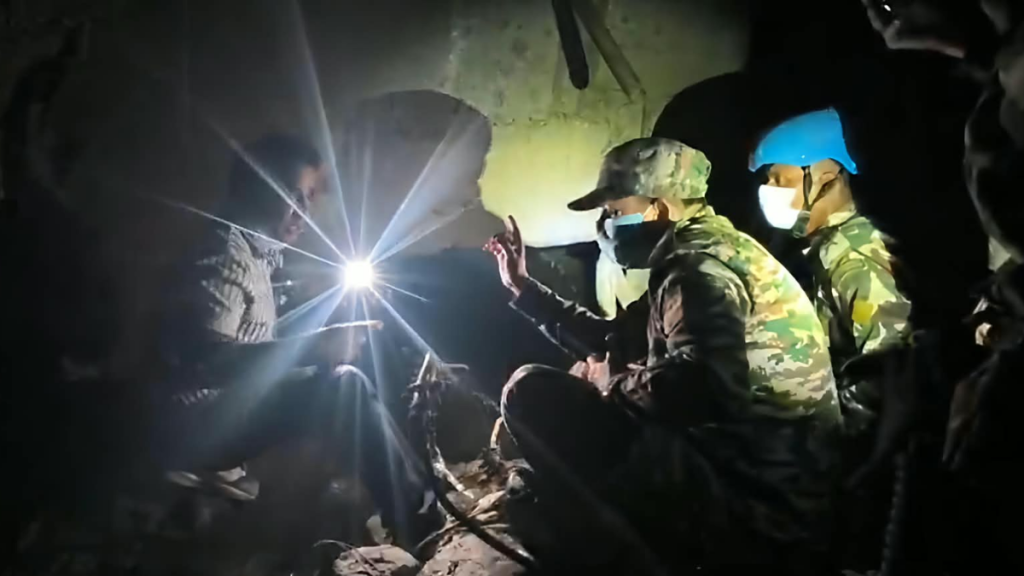
One of the biggest rescue challenges is reaching hydropower workers believed to be trapped inside tunnels flooded and blocked by debris. Rescue efforts are focused on the Trishuli 3A and 3B hydropower projects, where workers are feared trapped inside tunnels. According to Kathmandu Post, military officials estimate that at least 35 people may be trapped inside one tunnel at the Upper Trishuli 3A project following a technical assessment, while Nepal Police has put the number at around 200.
The Nepali Army has located the upper section, or crown, of a tunnel at the Upper Trishuli 3A Hydropower Project, where dozens of workers are feared trapped. Experts used drilling machines, excavators and hydraulic cutters to reach the tunnel, before creating an opening through its upper section.
Rescuers entered through the opening but received no response. Reports said, authorities are now preparing to bring in larger equipment and use controlled blasting to widen the opening and speed up the operation.
The Upper Trishuli 3A project is a 60MW hydropower facility that generates electricity using the flow of the Trishuli river. It has become a major focus of the rescue operation because workers are believed to be trapped inside its underground tunnels, which were flooded and blocked by debris.
India, China send specialist teams
A Chinese specialist team arrived in Kathmandu on Saturday carrying thermal cameras, drilling equipment and air-pumping devices to assist with tunnel rescue operations. An Indian team has also been deployed with specialized equipment, including a tunnel technical contingent and forensic experts who will help with DNA analysis.
The teams have conducted reconnaissance of several hydropower sites that remain difficult to access. According to military sources cited by Kathmandu Post, the Chinese team is operating from Hakubesi while the Indian team is positioned at Syafrubesi.
According to reports, Nepali Army rescued 409 people from flood-hit areas by 3pm on Sunday, including 15 Chinese nationals and one Indian citizen.
149 Indians rescued, India sends more relief
India has also stepped up its humanitarian response as the situation remains critical.
According to the Ministry of External Affairs, 149 Indian nationals had been rescued from Nepal as of 5.30pm on Sunday. India has also deployed a specialized tunnel rescue team to support the operation. The team worked with the Nepali Army at hydropower tunnel sites in the Chilime and Langtang areas on Sunday and will continue operations in close coordination with the Nepali Army.
The MEA said the fourth flight carrying 11 tonnes of relief assistance had landed in Nepal and the material had been handed over to the authorities. The consignment includes a tunnel technical contingent with equipment for search-and-rescue operations, forensic experts for DNA analysis and relief supplies such as blankets, sleeping bags, tarpaulins, plastic sheets and hygiene kits.
The large-scale rescue effort comes as authorities continue to search for thousands of people who remain missing. Difficult weather, damaged roads and bridges, heavy debris and swollen rivers have made access to several disaster-hit locations extremely challenging.