


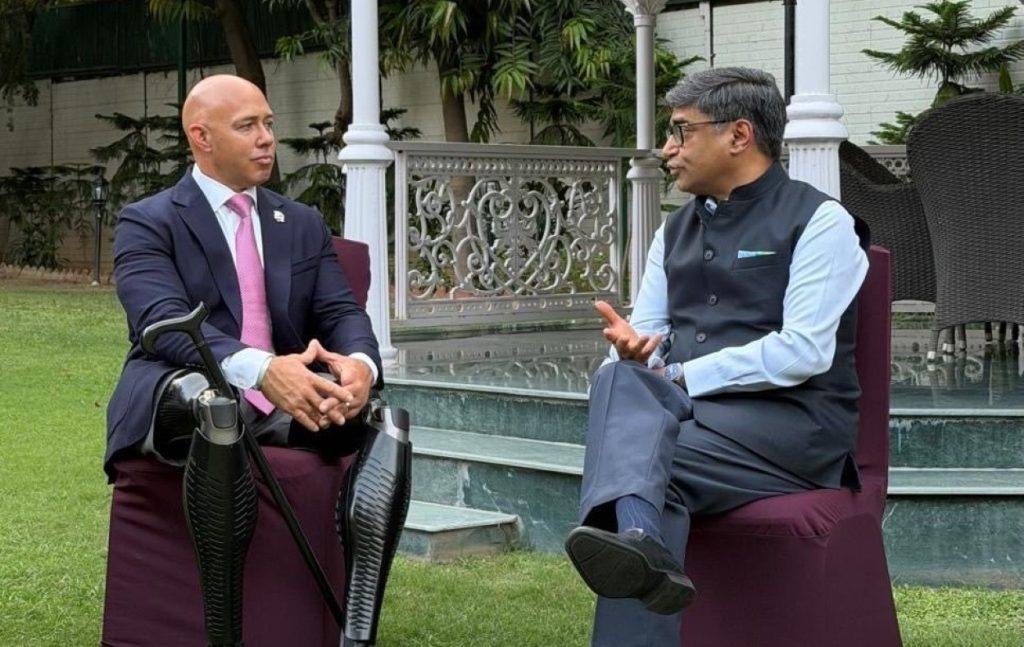
New Delhi: The foreign secretary, Vikram Misri, met a bipartisan US congressional delegation on Sunday as India stepped up diplomatic engagement over a new American sanctions law that could expose its exports to tariffs of up to 100% over purchases of Russian energy. The discussions covered the legislation’s implications for bilateral relations, alongside energy security, counterterrorism and freedom of navigation.
The five-member delegation was led by the chairman of the US house foreign affairs committee, Brian Mast, a Republican who has supported tougher measures against Moscow and countries sustaining its energy revenues. The meeting, held at Misri’s residence, followed exchanges with senior US administration officials over India’s concerns about the law and its possible economic consequences.
The external affairs ministry’s spokesperson, Randhir Jaiswal, said the two sides reviewed the breadth of the relationship, including the recently enacted sanctions legislation and the future direction of bilateral cooperation. The official account of the discussions also identified international issues of shared concern but announced no agreement resolving the sanctions question.
At the centre of the exchanges is the Lindsey O. Graham Sanctioning Russia and Iran Act of 2026, which the US president, Donald Trump, signed into law on September 18. The White House said the legislation authorizes and expands statutory sanctions, tariffs and prohibitions relating to Russia, while extending existing sanctions against Iran.
For India, the immediate concern is the power to impose tariffs of up to 100% on imports from countries purchasing Russian energy. Enactment does not, however, automatically mean that Indian goods now face a new 100% duty under this law – its application to India remains the crucial unresolved issue.
According to the Hindu’s report, a determination on possible measures against India is expected in October, with a 30-day deadline pending. Officials did not disclose whether Misri sought or received assurances concerning a waiver, leaving the outcome of the latest engagement unclear.
The legislation seeks to increase pressure on Russia over its invasion of Ukraine by targeting the revenues and networks supporting its war effort. Its scope includes the Russian energy and defence industries and the “shadow fleet” of tankers used to circumvent existing restrictions on oil shipments.
Supporters argue that pressure on major buyers of Russian energy can restrict Moscow’s ability to finance the conflict. The measure attracted substantial bipartisan backing in Congress, although critics questioned the breadth of the additional tariff powers being placed in the president’s hands and their possible economic consequences.
Those differences were reflected within the visiting delegation: the Indian-born Democratic lawmaker, Shri Thanedar, had voted against the bill. The Hindu reported that he was the delegation’s only member to oppose it, with concerns about expanded presidential powers featuring prominently in the opposition among Indian-American lawmakers.
India has warned Washington that punitive measures could damage bilateral ties and affect international energy markets. As the world’s third-largest oil importer and a major purchaser of Russian crude, it has defended its need for secure, affordable and reliable supplies to sustain its economy and meet domestic demand.
The latest meeting followed talks between the external affairs minister, S Jaishankar, and the US secretary of state, Marco Rubio, on the sidelines of the UN general assembly on September 23. Jaishankar conveyed India’s interests and concerns regarding the legislation, making the issue part of the ministerial dialogue before Misri’s engagement with the congressional visitors.
Misri separately discussed the sanctions law and its potential effect on relations with the US undersecretary of state for political affairs, Allison Hooker, in New York. Their talks also covered energy security, civil nuclear cooperation, strategic technology collaboration and the Indian Ocean Strategic Venture initiative, indicating that cooperation in other areas remained on the agenda despite the disagreement.
The wider diplomatic programme included discussions with the US undersecretary of state for economic affairs, Jacob Helberg, on emerging technologies, semiconductors and critical minerals. Together, these exchanges show that the sanctions dispute is unfolding alongside continuing efforts to expand economic and strategic cooperation, rather than in isolation from the rest of the relationship.
The potential repercussions also extend beyond oil refiners to Indian businesses selling goods in the American market. The Confederation of Indian Textile Industry has warned that additional duties arising from the legislation could undermine the competitiveness and profitability of textile and apparel exports to the US, its largest overseas market.