


New Delhi: The Union Cabinet on Friday cleared a plan to raise Lok Sabha seats in every state by almost 50 per cent. The bill will reserve each state’s seat share until 2051, thus increasing the House seats from 543 to about 815 members.
The prime minister, Narendra Modi, chaired the meeting at Sewa Teerth. The government wants Parliament to pass the bill at a special sitting that opens on Monday.
Every state would gain seats under the same formula. Uttar Pradesh would rise from 80 to about 120 seats, and Tamil Nadu from 39 to about 58 seats.
Kerala would climb from 20 to 30 seats, and Karnataka from 28 to 42 seats. The government has not yet said how it will round seat numbers for states with odd totals.
State shares, however, would continue to rest on the 1971 Census. Sources indicate that the 2011 Census would still guide new boundaries within each state.
Supporters argue that Indian MPs serve too many people. An average MP represents about 2.5 million people – two to three times the figure in other countries.
The expansion will also make room for around 33 per cent quota for women. Law Minister Arjun Ram Meghwal told the Lok Sabha in April that women would get 272 of 815 seats.
Earlier Cabinet briefings in April, however, put the total at 816, with 273 seats for women.
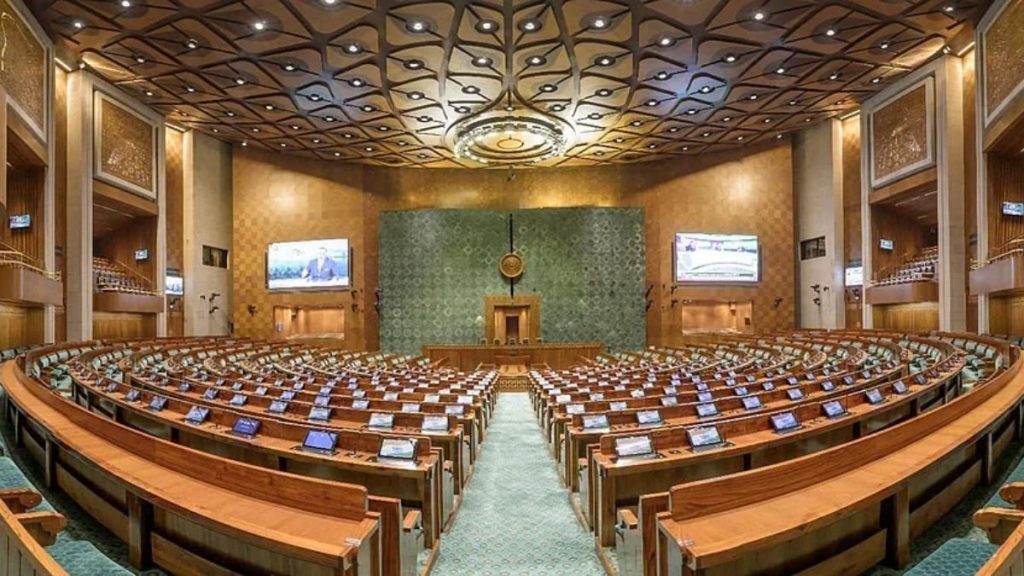
The new Parliament building already has space for the change. Its Lok Sabha chamber holds 888 seats, more than the planned 815.
Moreover, the 2051 freeze meets the main demand of the southern states. Their leaders argued that states which controlled population growth should not lose political weight.
The government lost a similar vote on 17 April. The Constitution (131st Amendment) Bill won 298 votes against 230, short of the 352 it needed.
That vote handed the NDA its first defeat on a constitutional amendment since 2014.
The parliamentary affairs minister, Kiren Rijiju, said the government will bring the bill to the Lok Sabha on 30 November. The Rajya Sabha will join the sitting on 2 December, and the session ends on 3 December.
Critics, however, notes that a uniform rise widens the gap in absolute seats between large and small states. For instance, Uttar Pradesh would gain 40 seats, while Kerala would gain only 10 seats.
The change would also shift the ratio between Lok Sabha and Rajya Sabha seats from 2.2:1 to 3.3:1.
The ongoing census began on April 1 and would continue until 2027. Today’s Lok Sabha seats still rests on the 1971 Census.
A 2001 amendment froze constituency boundaries until the first census after 2026.