


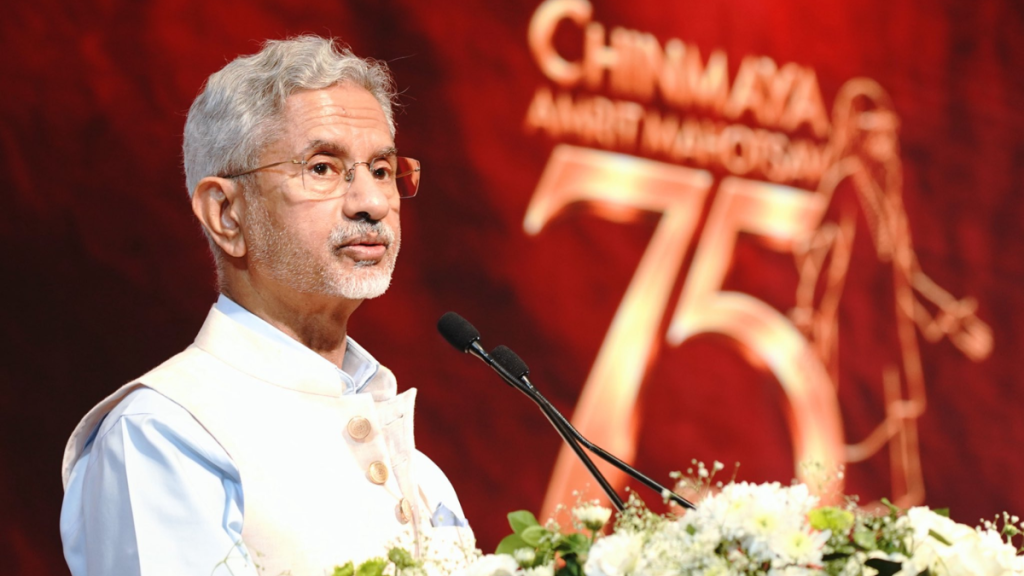
New Delhi: The external affairs minister, S Jaishankar, on Sunday called for a shift away from narrow national interests towards greater global cooperation. He said countries must work together to address conflicts, economic inequality, terrorism and the challenges posed by emerging technologies.
Speaking at the Chinmaya Amrit Mahotsav Global Sammelan on United Nations Day, Jaishankar called for reforms in international institutions. He said the United Nations must take a stronger leadership role in responding to global crises.
Highlighting economic challenges, Jaishankar said developing countries continued to face pressure over finance, fuel, food and fertilizers. He urged the global north to take equal responsibility for finding solutions and ensuring that progress and prosperity reach all countries.
The minister also called for a more resilient international economy. He said countries needed diversified options to reduce their exposure to supply disruptions, restrictions and market distortions.
On artificial intelligence, Jaishankar warned against concentrating control over the technology in the hands of a few. He advocated a responsible, inclusive and human-centric approach to ensure that AI serves wider public interests.
Jaishankar also called for a stronger global commitment to counterterrorism. He rejected the use of terrorism as an instrument of statecraft and said it could not be justified or rationalized.
Turning to armed conflicts, the minister said wars had consequences far beyond the countries directly involved. Citing Ukraine and West Asia, he said distant populations and economies were also paying the price of violence.
He stressed that dialogue and diplomacy remained essential to resolving international disputes. Countries, he said, could not remain passive when conflicts threatened global peace and stability.
In his speech, Jaishankar referred to the philosophy of Advaita, which believes in the unity of all things in this world. According to him, nations should not perceive each other’s gain as a loss for themselves but rather share common interests and work together for their common good.
He said that for lasting peace and prosperity, nations had to understand that they were interdependent. His statements brought out the point about India’s quest for an international order based on inclusiveness.