


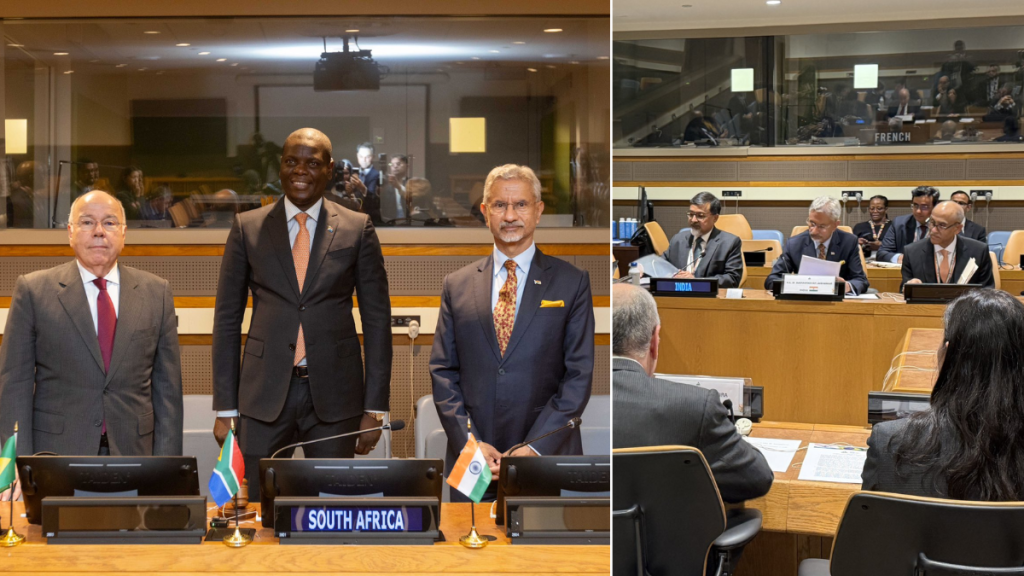
New Delhi: India, Brazil and South Africa (IBSA) have set out a broad agenda for reforming global institutions, expanding clean energy and digital access, and protecting developing economies from the fallout of conflicts and disasters. The priorities emerged at the IBSA foreign ministers’ meeting held on the sidelines of the 81st United Nations general assembly in New York.
The external affairs minister, S Jaishankar, attended the meeting with the South African foreign minister, Ronald Lamola, and Brazilian foreign minister, Mauro Vieira. Sharing details on X, Jaishankar said the three countries adopted a joint media statement covering multilateralism, global governance, trade, technology, climate action and sustainable development.
A key focus was the need to change the way global institutions represent developing and emerging economies. The three countries supported comprehensive reform of the United Nations security council and called for a more democratic, representative and legitimate system that reflects current global realities.
IBSA also placed economic resilience among its priorities, calling for fair and mutually beneficial trade arrangements that can support inclusive growth. The three countries backed further reform of global economic governance to give developing and emerging economies more effective, equitable and representative participation.
The ministers drew attention to the wider consequences of conflicts for countries outside the immediate conflict zones. According to the joint statement cited by Jaishankar, disruptions to energy and food security, inflation and fiscal pressures are creating additional challenges for the global south.
The meeting also addressed terrorism, with India, Brazil and South Africa strongly condemning the February 2025 Pahalgam terror attack and reaffirming their zero-tolerance approach towards terrorism. The three countries also reiterated their commitment to empowering women and girls and removing the social and economic barriers they face.
Technology and connectivity formed another part of the agenda, with the ministers supporting universal and meaningful connectivity and greater deployment of digital infrastructure. They also saw the potential for artificial intelligence to contribute to economic growth and sustainable development.
On climate and disaster resilience, the three countries called for urgent action on development and environmental challenges. The statement highlighted India’s Mission LiFE, the Global Biofuels Alliance, the International Solar Alliance and the coalition for disaster Resilient infrastructure as initiatives relevant to these efforts.
The IBSA countries also backed a major expansion of clean energy in the global south, supporting a tripling of renewable energy capacity and a doubling of the global average rate of improvement in energy efficiency. They called for wider deployment of sustainable fuels, including biofuels, biogases and low-emission hydrogen.
The ministers further noted that increasingly frequent and intense disasters and other shocks are threatening development gains. The joint agenda therefore linked climate action, resilient infrastructure, energy transition, technology and reforms to global governance with the broader development priorities of the global south, Jaishankar said.