


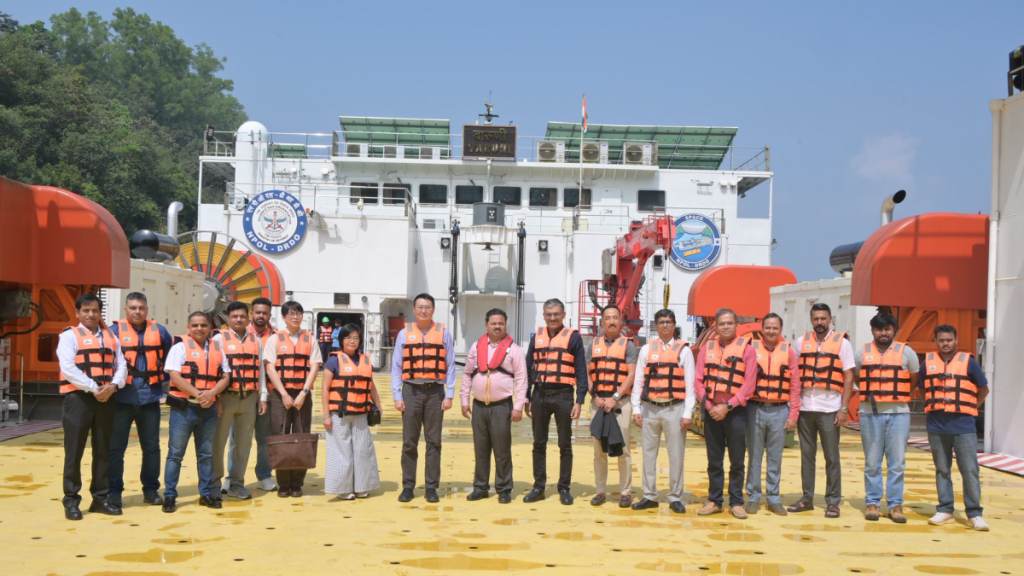
New Delhi: Defence researchers and scientists from India and Singapore recently wrapped up a two-day meeting of the India-Singapore Defence Technology Steering Committee at the Naval Physical and Oceanographic Laboratory (NPOL) in Kochi on Wednesday and Thursday. The aim was to deepen bilateral defence research and development cooperation.
The meeting was co-chaired by Dr Chandrika Kaushik, director general (production coordination & services interaction) and Brigadier General Yew Chee Leung, deputy secretary (technology) and future systems and technology architect (FSTA) at the Singaporean defence ministry.
The DRDO delegation comprised Dr Duvvuri Seshagiri, director NPOL; Praveen Gopakumar, director international cooperation; and subject-matter experts from labs. Discussions held were related to underwater domain awareness, quantum technologies , lasers, microelectronis and use of test facilities, DRDO wrote on X.
The meeting is expected to boost the bilateral defence R&D and collaboration in areas of mutual interest including exchange of possible information, joint projects and reciprocal visits to the R&D and testing facilities of both the countries with a view to enhance skill and knowledge of their respective scientists or subject matter experts.
On January 17 this year, the parliamentary standing committee on defence (SCoD) chaired by Radha Mohan Singh, undertook an on-the-spot study visit to NPOL in Kochi and witnessed the progress of underwater sensors and the development of sonar systems for the Indian Navy. Under the Sagar Maitri programme, the NPOL has been conducting oceanographic missions to strengthen scientific cooperation and build significant understanding among the Indian Ocean region (IOR) nations.
The choice of NPOL as the venue also underscores the growing importance of underwater technologies. The Kochi-based laboratory specialises in oceanographic research, sonar systems, and underwater sensors critical to the Navy’s domain awareness capabilities.
India and Singapore share a longstanding strategic partnership that has expanded in recent years and covered advanced technologies and maritime security. The latest talks reflect mutual interest in emerging dual-use technologies that can strengthen both nations’ defence preparedness in the Indo-Pacific region.
The engagement comes against the backdrop of increasing focus on underwater domain awareness across the IOR, where both countries have shared interests in monitoring maritime traffic, protecting vital sea lanes, and countering evolving underwater threats.