


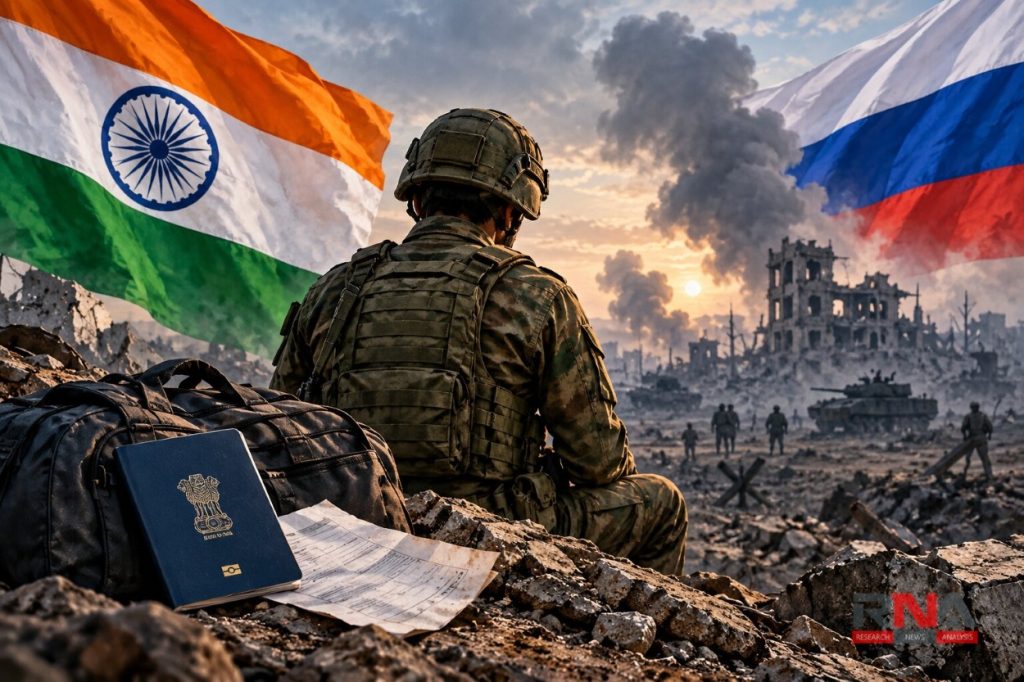
New Delhi: India has asked Russia for updated information on the whereabouts of 69 Indian nationals reportedly serving with its armed forces, renewing efforts to secure their release from military service amid the war in Ukraine. The External Affairs Ministry also warned against accepting Russian military recruitment offers, saying fresh cases were emerging despite repeated government advisories over the past two years.
Speaking at a media briefing on Wednesday, the ministry’s spokesman, Randhir Jaiswal, said 259 Indians were believed to have been recruited into the Russian armed forces. Indian diplomatic efforts had secured the early discharge of 139 nationals, while New Delhi was following up with Moscow for information on the remaining 69 reportedly still with the military.
Fifty-one Indians have died while serving on the frontlines of the conflict, according to information authorities have disclosed in recent months. The latest request concerns establishing the whereabouts of those reportedly still serving and pursuing their discharge; it does not amount to an official declaration that all 69 are missing.
Jaiswal described continued recruitment as a matter of deep concern and reiterated that joining the Russian military posed a serious threat to life. He said reports of Indians entering its armed forces had continued even after the government issued its latest advisory on September 30.
The warning reflects a problem that now extends beyond allegations of fraudulent recruitment. In its September advisory, the ministry said it had encountered instances of Indians knowingly seeking Russian military jobs for financial benefits, apparently expecting that they could subsequently obtain their release through intervention by the Indian government.
The ministry also warned that foreign nationals were being recruited through non-public entities, including voluntary groups, and urged Indians to consider the potentially fatal consequences of enlistment. It nevertheless reaffirmed that the government remained engaged with Russia to ensure the safety, well-being and early discharge of Indian nationals already serving in its armed forces.
The issue first drew widespread attention in 2024, when Indian investigators uncovered a human-trafficking network that allegedly used promises of employment and education to send young men to Russia. The Central Bureau of Investigation said recruiters operated through social media and local agents, with some victims offered admission to dubious universities before being drawn into military service.
The investigation subsequently led to the arrest of four people allegedly linked to the recruitment network, including a translator, a visa facilitator and recruiters targeting Kerala and Tamil Nadu. Those cases established an important distinction between the work or study opportunities advertised to recruits and the military duties they were allegedly compelled to undertake after arrival.
New Delhi raised the matter at the highest political level during vist of the prime minister, Narendra Modi, to Moscow in July 2024. Following his talks with the Russian president, Vladimir Putin, the then foreign secretary, Vinay Mohan Kwatra, said Russia had promised to discharge Indians misled into joining its army.
Recent accounts from affected families show why tracing recruits remains urgent. In a report published on Tuesday, ET described the case of Akshay Kumar, a 25-year-old from Amroha in Uttar Pradesh, whose family said it had lost contact with him after he joined the Russian army.
His relatives alleged that he had travelled to Russia on a study visa in December 2024 and was subsequently persuaded to enlist with promises of citizenship and non-combat work, before being sent to the frontline. They said their last conversation with him was on August 24, 2026, and appealed for government assistance to establish his location and bring him home; these details remain the family’s account.
The latest briefing leaves the immediate diplomatic task unresolved: obtaining reliable information about the 69 nationals and securing the release of those still serving. Alongside those efforts, the government is again urging prospective recruits to recognize that offers of military employment in Russia carry potentially fatal consequences.