


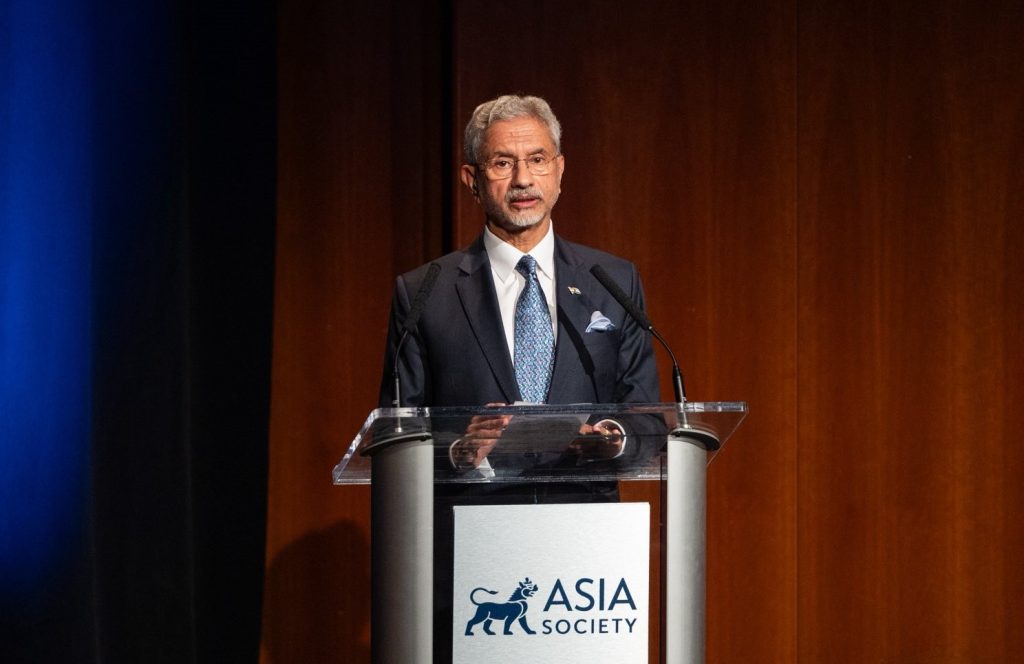
New Delhi: India’s relationship with China has improved as tensions along their disputed frontier have eased, the external affairs minister, S Jaishankar, said in New York on Monday. He cautioned, however, that the recovery should not be mistaken for a fundamental change in ties between the two countries.
Speaking at the Asia Society, Jaishankar said relations were better than they had been a year or two ago because the border situation had become more stable. “The state of the border determines the state of the relationship,” he said, restating New Delhi’s position that normal bilateral dealings depend on peace along the frontier.
The distinction matters because the two governments are dealing with separate questions: how to prevent another confrontation along the Line of Actual Control (LAC), and how to settle their long-standing boundary dispute. Progress on the first can make diplomatic and commercial contact easier, but it does not settle the second.
Jaishankar characterized the recent improvement as a recovery from the severe deterioration that followed the 2020 military crisis in eastern Ladakh. Trade had continued during the difficult years, he noted, while official exchanges, visas and flights had suffered; some of those contacts have returned as the standoff has eased.
The crisis began with a series of military confrontations along the LAC and deepened after a clash in the Galwan valley killed 20 Indian soldiers. China later acknowledged the deaths of four of its troops, and the episode left the two countries facing one of the most serious ruptures in their relations in decades.
A patrolling agreement reached on October 21, 2024, addressed the remaining 2020 friction points at Depsang and Demchok, according to the Indian government. That agreement helped clear the way for renewed political engagement, although arrangements for managing the frontier remain an active subject of negotiation.
In their latest round of boundary talks, held in Beijing on August 25, 2026, the two sides agreed to strengthen channels for handling incidents on the ground. Their published understanding included additional military meeting points and hotlines, alongside continued discussions on a framework for an eventual boundary settlement.
Those measures show why Jaishankar’s account was measured. The governments are building ways to manage disagreements and reduce the risk of miscalculation, while the location of the boundary itself remains unresolved.
The border has also shaped India’s approach to the wider relationship, including economic ties. During talks with the Chinese foreign minister, Wang Yi, in July, Jaishankar described peace and tranquillity in the border areas as a prerequisite for normal relations and raised concerns about market access, the trade imbalance and the reliability of supply chains.
In New York, Jaishankar said a prolonged downturn served neither India nor China and could benefit other countries. His argument was for a practical improvement that serves India’s interests, subject to the condition New Delhi has maintained since the crisis: a stable border must underpin any broader return to normalcy.