


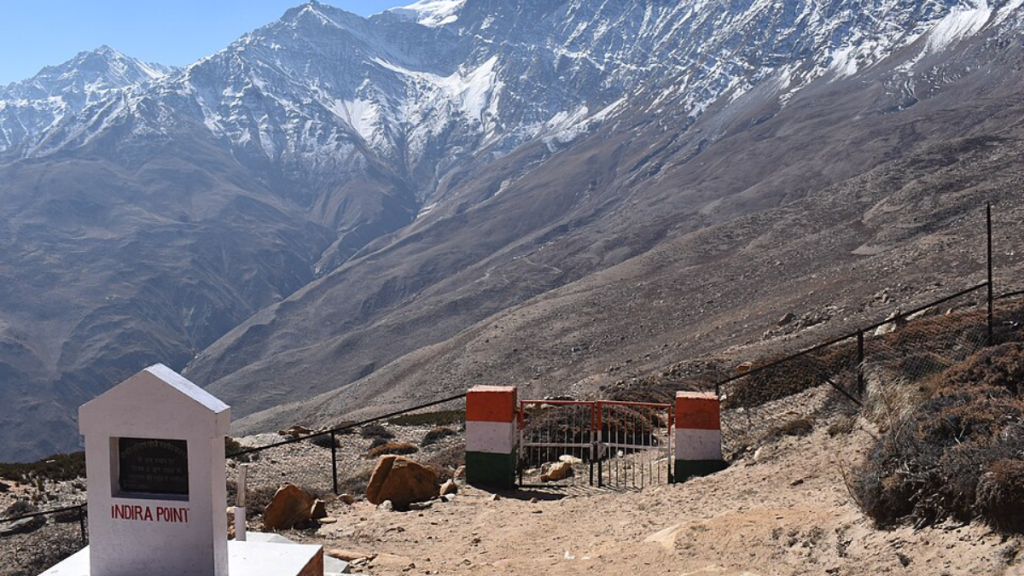
New Delhi: After remaining suspended for six years, the historic border trade through Shipki-la in Himachal Pradesh’s Kinnaur district is set to restart on August 1, restoring one of India’s oldest traditional trading links with China’s Tibet Autonomous Region. The seasonal trade, conducted through a barter system rather than monetary transactions, will continue until November 30.
Located at an altitude of around 3,930 metres near the line of actual control (LAC), Shipki-la is one of the three designated India-China border trading routes. Unlike Nathu-la in Sikkim and Lipulekh pass in Uttarakhand, where trade is conducted using conventional payments, Shipki-la continues to operate through the exchange of approved goods.
Though it was supposed to be reopened by June 1, the opening had been put off due to the fact that immigration processes were not yet sorted out. Having sorted these processes, traders are ready to go back to cross-border trade activities.
The Kinnaur district administration received 88 applications from local traders seeking permission to participate in this year’s trade season. Following security verification by the Himachal Pradesh home department, 53 traders were cleared, while 15 will be part of the first batch crossing into the Tibetan region to begin commercial exchanges.
Trade will remain strictly regulated under the existing bilateral framework, with only officially approved commodities permitted. India can import 20 specified items, including wool, pashmina, sheep skins, yak tails, yak hair, salt, carpets, blankets, quilts, footwear and traditional herbal medicines.
On the export side, Indian traders are authorized to exchange 36 notified products such as tea, coffee, wheat, rice, barley, flour, dry fruits, spices, canned food, tobacco products, watches, utensils, handloom items and handicrafts. Livestock trade will remain prohibited because quarantine infrastructure is not available at the border.
The trading process follows a unique logistical arrangement. Goods will first be transported by road to the Indian side of the border before being shifted onto mules for the final two-kilometre stretch inside the Tibetan region, where the designated trading point is located. Under existing regulations, Indian traders must return to Kinnaur within 72 hours of crossing the border.
Extensive security and customs facilities have been provided before the resumption. The Indo-Tibetan Border Police (ITBP) and Himachal Pradesh Police will provide security, whereas Custom officers at Shipki-la will check the goods being brought in and out of the country.
The reopening ceremony will be attended by Himachal Pradesh revenue, tribal development and horticulture minister Jagat Singh Negi, who will also inaugurate the Chhuppan Trade Mart. The newly developed facility is expected to streamline trader registration, customs processing and import-export documentation for participants from the upper Kinnaur region.
Local trade bodies have welcomed the revival, describing it as an important economic opportunity for residents of remote border villages, including Namgiya, Chhuppan, Nako and Chango. According to the Indo-China Trade Association of Kinnaur, thousands of people in these areas have traditionally depended on seasonal barter trade for their livelihoods.
Association president Hishey Negi said restarting the route would strengthen the local economy by reviving a long-standing commercial tradition that has supported border communities for generations.
Shipki-la has witnessed multiple closures over the decades. The route was shut following the 1962 India-China war before reopening in 1992 under a bilateral protocol. Trade was suspended once again in 2020 after the outbreak of the Covid-19 pandemic and remained closed for six consecutive seasons.
Trade volumes through the pass have fluctuated significantly over the years. According to media reports official figures show that trade was valued at ₹8.59 crore in 2016 before rising sharply to ₹59.21 crore in 2017. However, the volume declined to ₹3.05 crore by 2019 amid deteriorating bilateral relations and heightened border tensions.
The ministry of external affairs approved the restoration of trade through Shipki-la last year as part of broader confidence-building efforts between India and China. The Himachal Pradesh government has also proposed using the pass as an additional route for the Kailash Manasarovar Yatra in the future.
The resumption of trade is expected to restore economic activity in one of India’s most remote Himalayan border regions while reopening a centuries-old commercial corridor that continues to preserve the traditional barter system.