


New Delhi: India has objected to resolutions adopted at the Organisation of Islamic Cooperation (OIC) Council of Foreign Ministers’ meeting in Baghdad on October 17–18. New Delhi accused Pakistan of using the organization to push its political agenda against India.
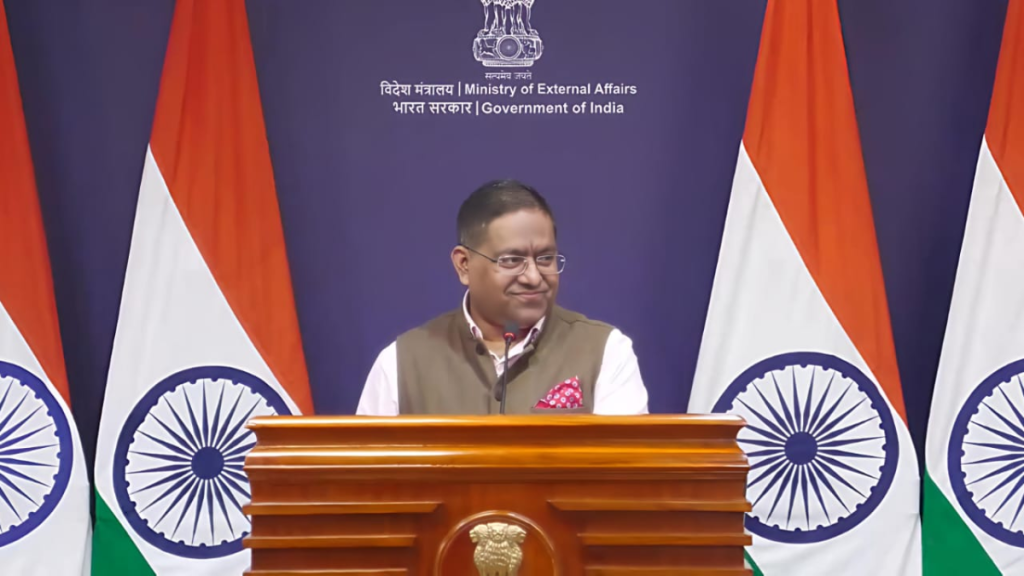
In a statement on Monday, the Ministry of External Affairs called the references to India “malicious, biased, and false”. It said the OIC had no right to comment on India’s internal affairs and questioned the organization’s credibility for repeatedly supporting Pakistan’s claims.
What happened at the OIC meeting?
The OIC held its 52nd Council of Foreign Ministers Session in Baghdad, Iraq, on October 17–18, 2026. The meeting was held under the theme “dialogue and solidarity two fundamental pillars for promoting peace and sustainable development”.
The meeting adopted two resolutions concerning India and Pakistan. Resolution No 3/52-POL dealt with Jammu & Kashmir, while Resolution No 4/52-POL focused on the peace process between the two countries.
The Kashmir resolution backed Pakistan’s demand for a settlement based on UN security council resolutions and a UN-supervised plebiscite. It rejected India’s August 5, 2019, decisions on Jammu & Kashmir, along with subsequent changes to domicile rules and land ownership laws.
The resolution also called for the release of detained Kashmiri political leaders and access for OIC representatives and international human rights bodies to Jammu & Kashmir. It urged India to remove restrictions on movement and public gatherings in the region.
The second resolution called on India and Pakistan to resume dialogue to resolve their disputes. It also criticized India’s decision to hold the Indus Waters Treaty in abeyance and backed the role of the United Nations Military Observer Group in India and Pakistan (UNMOGIP) in monitoring the situation along the line of control (LoC).
India rejects OIC remarks on Jammu & Kashmir
Responding to the resolutions, India said Jammu & Kashmir and Ladakh are integral and inalienable parts of the country. The MEA rejected the OIC’s claims and said the organization had no right to comment on matters that are strictly internal to India.
New Delhi said Jammu & Kashmir had recorded economic progress since the abrogation of Article 370. It pointed to infrastructure development, growth in tourism and improved connectivity as signs of progress in the region.
India contrasted this with the situation in Pakistan-occupied Kashmir (POK). The MEA accused Pakistan of using violence and repression against civilian protesters, alleging that scores of people, including women and children, had been killed.
The ministry also said restrictions on the media had failed to hide the alleged human rights violations in POK. India maintained that the outstanding issues related to Jammu & Kashmir were Pakistan’s withdrawal from areas under its “illegal and forcible occupation” and an end to its support for cross-border terrorism.
India also rejected references to Islamophobia in the OIC proceedings, describing them as fabricated and hostile. The MEA accused Pakistan of using such claims to divert attention from issues within its own borders, including the persecution of minorities, sectarian violence, governance failures and political instability.
The ministry said the OIC’s repeated support for Pakistan’s claims raised serious questions about the organization’s credibility and integrity. It urged member states to reform the organization rather than allow it to be used to advance the political interests of individual members.