


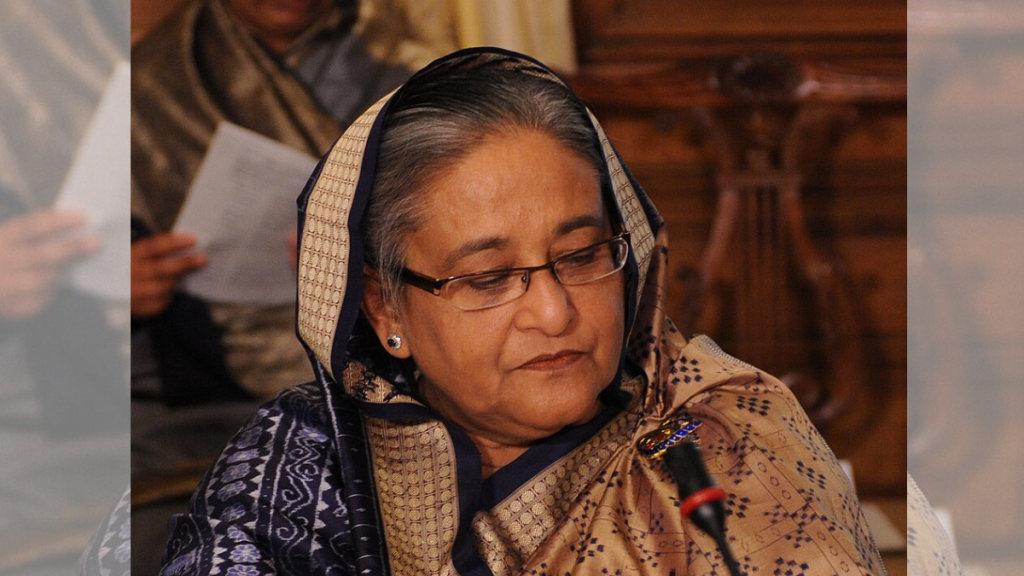
New Delhi: Former Bangladesh Prime Minister Sheikh Hasina has said she will return to Bangladesh before the end of this year despite a death sentence handed to her in absentia, asserting that her political fight is about protecting democracy and the rights of the Bangladeshi people.
In an interview with NDTV, the exiled Awami League leader said her return was “not a question of personal ambition” but was linked to restoring democracy, the rule of law and the spirit of Bangladesh’s Liberation War. Calling the verdict against her – handed down by Bangladesh’s International Crimes Tribunal on charges of crimes against humanity – politically motivated, Hasina said she was not afraid of death and remained determined to return.
“I do not fear death. In 1975, I lost my parents, my brothers, and almost my entire family. On 21 August, there was an attempt to kill me with grenades. Many conspiracies have been hatched against me. But breaking through every web of conspiracy, I stood beside the people of Bangladesh,” she recounted. She added that she was elected Prime Minister five times by the people’s vote and worked for the country’s unprecedented development. “Almost my entire life has been tied to the people of Bangladesh, to the Awami League, to the democratic struggle, and to the development of Bangladesh. So, I want to say clearly: overcoming every obstacle and every conspiracy, I will return to my country this year.”
Hasina also rejected claims that the Awami League had lost its political relevance after being banned in Bangladesh. She described the party as a political force deeply rooted in the country’s history and said it had survived repeated bans, repression and attacks during its decades-long journey.
According to Hasina, the party’s future depends on public support rather than the weakness of its political rivals. She claimed the current government has failed to provide democracy and security to the citizens of Bangladesh.
Speaking on Bangladesh’s political situation, Hasina alleged that the country had moved away from the ideals on which it was founded after her removal from power. She claimed minorities, including Hindus, Buddhists and Christians, had faced attacks, while extremism had gained ground. She urged the authorities to ensure the safety of minority communities and take strict action against those responsible for attacks on places of worship.
Hasina also defended the record of her government, saying Bangladesh witnessed economic growth, poverty reduction, infrastructure development and improvements in healthcare, education and electricity access during her years in office. She argued that the country’s development had suffered after her departure.
On the question of backchannel talks with political opponents, Hasina dismissed them as propaganda, saying the Awami League would continue its political struggle through constitutional means and public support rather than secret negotiations.
Asked about her life in India, Hasina said exile had been emotionally difficult as her “heart remains in Bangladesh.” She said she remained in regular contact with her family but spent most of her time following developments in Bangladesh and staying connected with Awami League leaders and supporters.
Hasina came to India in August 2024 after leaving Bangladesh amid a student-led uprising that forced her to resign. Since then, she has been living in exile while facing multiple legal cases in Bangladesh. Bangladesh’s current government has said any return by Hasina would have to go through due legal process.