


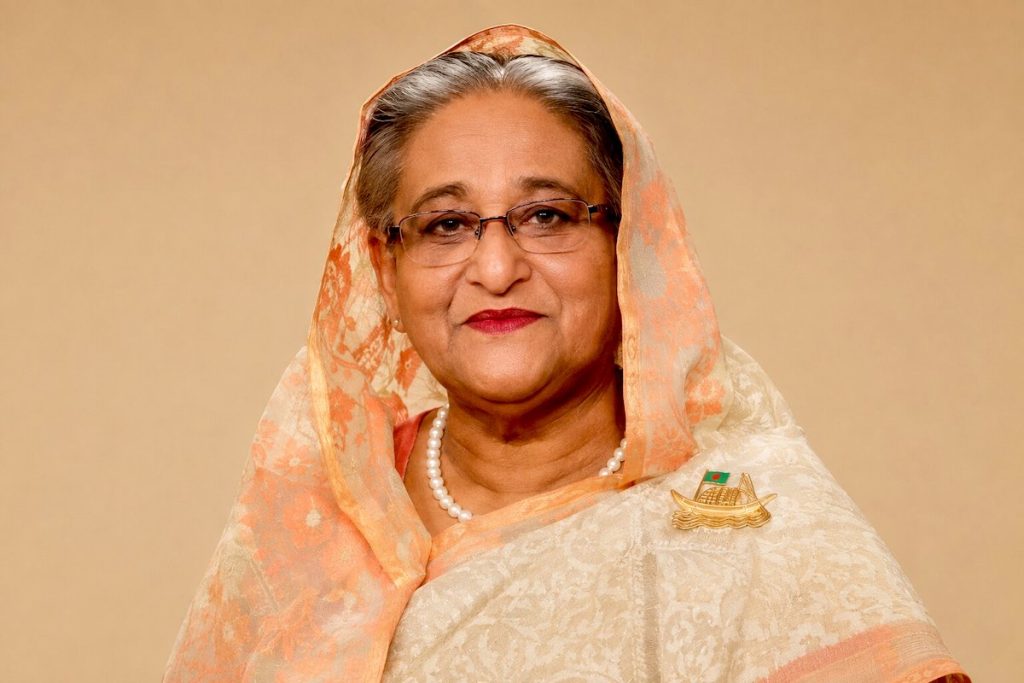
New Delhi: India on Wednesday drew a clear line between Bangladesh’s former prime minister, Sheikh Hasina, returning home voluntarily and Dhaka’s pending request for her extradition, calling them separate matters. The position came at the Ministry of External Affairs’ biweekly media briefing in New Delhi, days after Hasina said she plans to go back on December 16 after more than two years in exile in India.
Dhaka, however, insists she can return only through extradition. Hasina, who fled to India in August 2024 after the student-led uprising that ousted her, was sentenced to death in absentia by Bangladesh’s international crimes tribunal for crimes against humanity over the crackdown on the protests.
New Delhi has maintained that Dhaka’s extradition request is being examined through legal and judicial processes, with no timeline attached. Bangladeshi ministers have also reportedly said that no transport will be arranged for her.
The MEA spokesman, Randhir Jaiswal, separately voiced concern over violence against minorities in Bangladesh. He urged the government in Dhaka to investigate the incidents thoroughly and bring the perpetrators to justice.
On the CJP member and activist Saurav Das’s passport row, Jaiswal said the Regional Passport Office (RPO) in Chennai issued a show-cause notice to Das on November 23, seeking a clarification within seven days on his place of birth. The notice follows the disruption of Das’s foreign travel, and he has been advised not to use his passport until he responds.
Explaining the procedure, Jaiswal said applicants are required to give accurate information, and the ministry issues such a notice whenever authorities report a discrepancy amounting to suppression of facts. The notice gives the passport holder a chance to present his side.
On the India-China border, Jaiswal said the two countries are in dialogue at both diplomatic and military levels, with their most senior military commanders having met recently on the eastern sector. The eastern sector covers the stretch of the line of actual control (LAC) from Sikkim to Arunachal Pradesh.
The talks, he said, focused on better border management and on how issues along the LAC should be handled. The core purpose, he stressed, is to maintain peace and stability in the border areas.
Asked about reports alleging Chinese satellite reconnaissance ahead of the Pulwama attack, Jaiswal said India has seen several such reports and keeps a watch on all such activities. He added that New Delhi takes whatever security steps are necessary but did not directly address the allegation.
The Pulwama attack on February 14, 2019, killed 40 Central Reserve Police Force (CRPF) personnel in Jammu & Kashmir.
On illegal immigration, Jaiswal said India is firmly against it and cooperates with the US on deportations, alongside wider cooperation on migration and mobility. Since the start of the year, 1,700 Indian nationals have been deported from the US.
Whenever Washington shares details of a person to be deported, India first verifies the nationality and only then agrees to take the person back.
The ministerial conference of the Indian Ocean Rim Association (IORA) will be held in India on Thursday, Jaiswal said, with meetings of officials already under way on Wednesday. Several countries are taking part, some at the level of foreign minister and others at the level of minister of state (MoS).
On the India-Africa Summit, he said the event, planned for this year, had to be postponed owing to “certain exigencies”. India remains in touch with the African Union to settle the dates.