


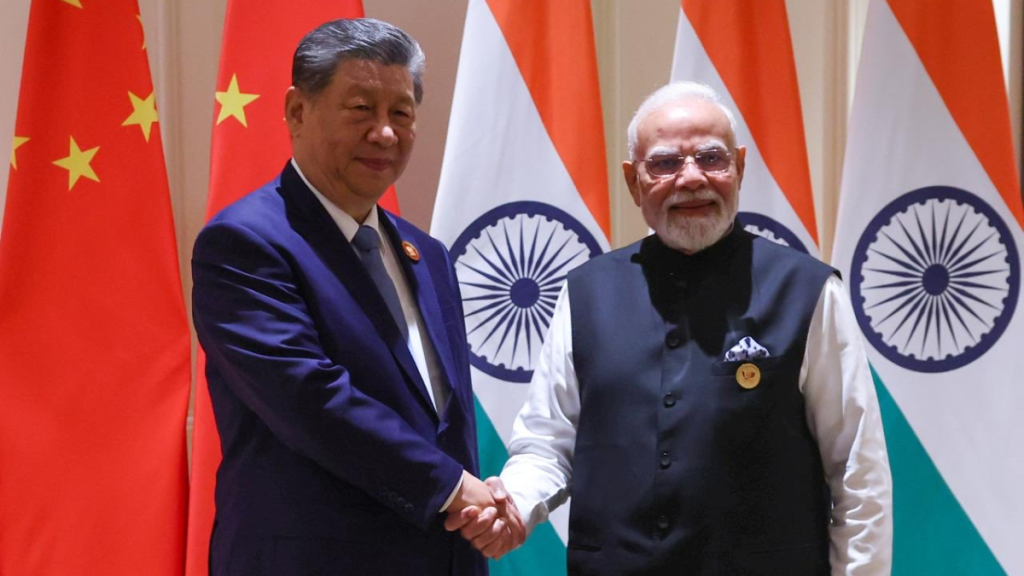
New Delhi: The prime minister, Narendra Modi, met the Chinese president, Xi Jinping, on Saturday on the sidelines of the 18th BRICS Summit in New Delhi, with the two leaders agreeing that India and China should take a strategic and long-term perspective of their ties, and that differences between the two countries should not be allowed to become disputes.
According to a statement issued after the meeting, the two leaders welcomed the steady progress in bilateral relations since they last met in Tianjin in August 2025. Modi said both sides needed to be guided by “three mutuals” – mutual respect, mutual sensitivity and mutual interest – in managing the relationship.
On the boundary question, Modi said peace and tranquillity in the border areas remained an essential basis for the continued development of bilateral relations, and underlined the need for both sides to observe existing agreements and understandings on border-related issues. The two leaders reaffirmed their commitment to a fair, reasonable and mutually acceptable resolution of the boundary question, to be pursued from the political perspective of their overall bilateral relations and the long-term interests of the two peoples.
Trade, people-to-people ties
The two leaders took note of progress in people-to-people ties and underscored the need to further promote cultural exchanges, business linkages and greater mobility between the two countries. On economic and trade relations, they underlined the need to address each other’s concerns, including structural trade imbalances and supply chain issues, and to facilitate meaningful and predictable market access.
They also agreed that both countries should continue to expand common ground on regional and global issues and in addressing shared challenges. Modi appreciated China’s support for India’s BRICS chairship and its contribution to the success of the BRICS Summit 2026.
The meeting came on the first day of the summit when the BRICS leaders adopted the New Delhi Declaration by consensus, addressing issues ranging from tensions in West Asia and the Pahalgam terrorist attack to the prevention of an arms race in outer space. Reaching consensus on the declaration was reportedly complicated by divisions within the grouping, particularly between Iran and the UAE, though the document was ultimately adopted after last-minute negotiations among member states.