


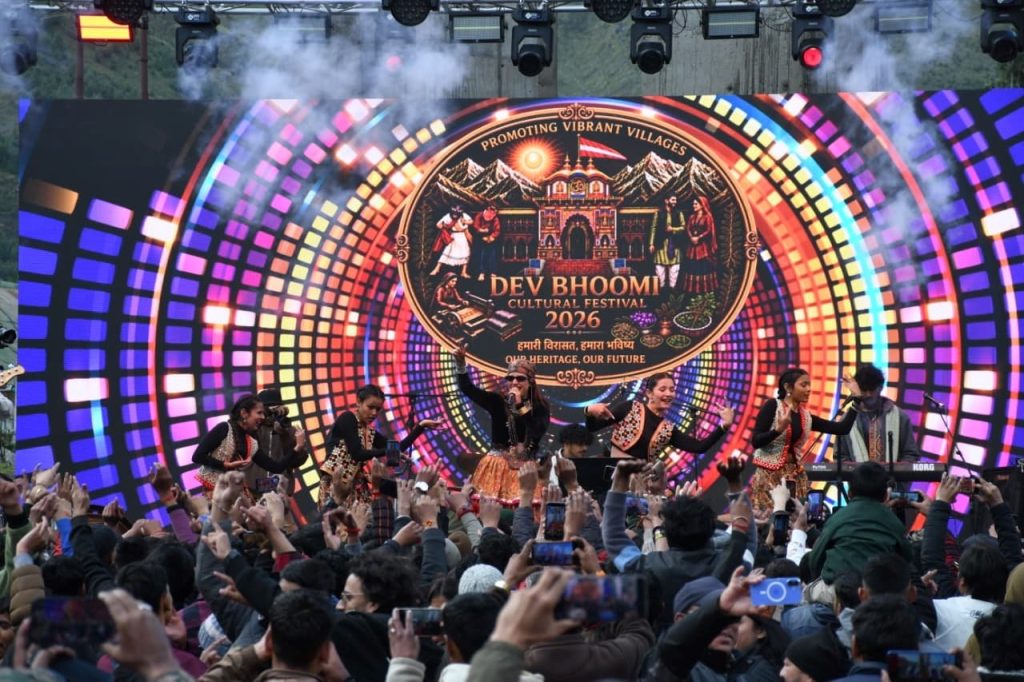
New Delhi: The Chamoli administration has served a notice on the Indian Army over a cultural festival in Badrinath, although contemporaneous accounts described it as a joint initiative and the Uttarakhand chief minister, Pushkar Singh Dhami, attended its concluding ceremony. The controversy has brought competing accounts of administrative responsibility into focus, alongside objections to amplified music and performances near the revered Himalayan shrine.
The district magistrate, Gaurav Kumar, issued the notice to the commanding officer of the Garhwal Scouts, Colonel Shantanu, on September 26, 2026, seeking an explanation for allegedly organizing the programme without prior administrative permission. According to media reports, Kumar cited large crowds and high-volume sound systems, saying such activities could interfere with worship and compromise the shrine’s religious dignity.
However, the public record establishes that the festival had visible civilian administrative backing before the backlash emerged. In its September 19 report, Akashvani, explicitly described the programme as jointly organized by the Army and district administration under Operation Sadbhavana.
The two-day Devbhoomi Cultural Festival was held on September 19 and September 20 with regional culture, local livelihoods and cooperation between soldiers and border communities among its stated objectives. Akashvani reported that women’s self-help groups, artisans, farmers and young entrepreneurs exhibited their products, alongside folk music, dance, handicrafts and traditional cuisine.
Dhami attended the closing ceremony as chief guest, distributed prizes and visited the stalls and military exhibition, according to contemporaneous coverage by Garhwal Post. He praised the festival’s contribution to Army–community relations and congratulated the Army, district administration and other organizers on its successful conduct.
The dispute intensified after videos showing performances, amplified music and dancing circulated online, including footage of the Uttarakhand singer, Priyanka Meher. The Indian Express reported that priests, religious representatives and political figures questioned whether the programme’s format was appropriate for Badrinath’s sacred setting.
The former BJP president, Murli Manohar Joshi, described permission for such a concert as a “direct assault on the sanctity of the shrine” in remarks posted on X and reported by The Statesman. Referring to the tradition against blowing conch shells at Badrinath, he urged the central and state governments to prevent entertainment formats that he considered incompatible with its religious character.
The Char Dham Teerth Purohit Mahapanchayat also objected to the loud music and nature of the performances, while the activist, Anoop Nautiyal, questioned the use of sacred pilgrimage destinations for entertainment programmes. These objections concern the suitability of the venue and format, making them distinct from the separate question of which institutions planned, supported and authorized the event.
In its subsequent clarification, the administration said its involvement was largely confined to stalls and facilitating arrangements, with the Army responsible for the cultural programme. That narrower description differs from the joint-organizer status recorded in reporting when the festival opened, although participation in an event does not by itself establish approval for every performance or sound arrangement.
Sources cited by the Print disputed the suggestion that the programme lacked prior coordination, saying the administration designated its chief development officer as nodal officer on September 8 and held a multi-department review on September 10. They also claimed that the necessary civilian permissions had been obtained, directly contradicting the premise of the notice.
Army sources quoted in the same report rejected descriptions of the performance as a DJ event, saying local singers had performed and no DJ was involved. They placed the venue at a designated cultural site with an amphitheatre near Mana, approximately two kilometres from the temple premises; other reports described it as Badrinath’s Tourist Arrival Plaza.
The festival’s broader purpose also deserves attention beyond the disputed performance: it provided a platform for border communities to present their products, traditions and talent to visitors. The Army’s exhibition combined information about border protection with its social development activities, placing the programme within a wider effort to strengthen its relationship with local residents.
At the closing ceremony, Dhami linked tourism and market access for local products to employment opportunities in frontier villages, while identifying migration as a continuing concern. That background helps explain official support for the initiative, even as the controversy raises legitimate questions about how cultural promotion should accommodate religious customs and expectations.
For now, the evidence supports a distinction between criticism of particular performances and responsibility for organizing the wider festival. The contemporaneous accounts of joint participation, set against the administration’s later clarification and the reported claims of prior permissions, leave the approval process as the central unresolved issue.