


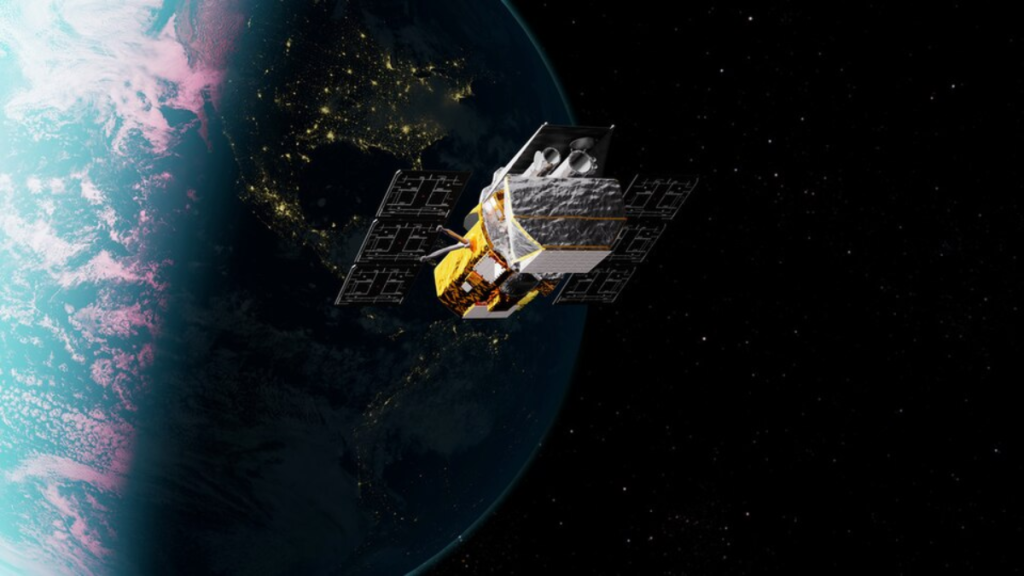
New Delhi: Nasa’s Swift observatory, a space telescope that has spent more than two decades tracking powerful explosions in the universe, is nearing the end of its mission. The aging spacecraft is expected to return to Earth’s atmosphere in the coming days after a rescue attempt failed.
Launched on November 20, 2004, the telescope was designed to detect gamma-ray bursts and supernovas. It could turn quickly towards these events and alert other observatories to study them in greater detail.
During its 22 years in orbit, the telescope detected more than 2,000 gamma-ray bursts and 1,400 exploding stars. It also observed comets, asteroids and black holes tearing apart nearby stars.
Swift’s chief scientist, Brad Cenko, said most of the 1.5-tonne spacecraft would burn up during re-entry. But some heavier components made of tungsten, a metal denser than lead, and parts of its mirrors could survive the fall, the Associated Press reported.
Any surviving debris is most likely to land in the ocean. But India, Australia, Africa, Southeast Asia and parts of Central and South America are within the possible re-entry zone. The US Space Force is tracking the spacecraft’s descent.
Swift’s return to Earth follows years of declining altitude, which accelerated because of intense solar activity. To keep the telescope from falling, Nasa hired the space company Katalyst Space last year to attempt a rescue.
The company launched a three-armed robotic spacecraft called Link in July. But it failed to reach Swift and came no closer than 12-15km. Link itself fell back to Earth in September, ending the rescue effort.
Despite the failed attempt, Swift continued making observations and detecting more high-energy events. By late October, its altitude had become too low to maintain the stability needed for scientific work, and Nasa shut down its systems.
The telescope also served as an early-warning system for other observatories, including Hubble and James Webb. Its alerts helped scientists direct these telescopes towards unusual cosmic events for closer examination.
John Nousek of Pennsylvania State University, who led Swift’s control team, said the team had known since before launch that the mission would eventually end, according to the report. He expressed hope that the knowledge gained from Swift would help scientists improve future space missions and understand the universe better.