


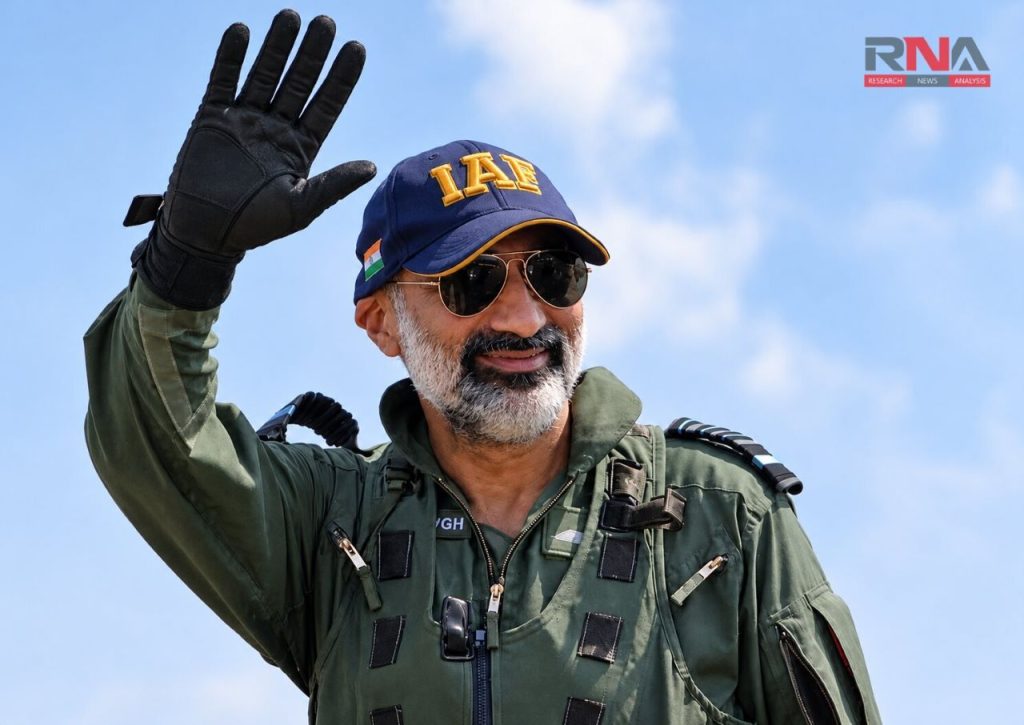
When the chief of air staff, Air Chief Marshal Amar Preet Singh, hangs his uniform on Saturday, he will bring to a close nearly 42 years of service to the Indian Air Force. He leaves behind the record of an accomplished aviator and a wartime service chief, and a habit of saying uncomfortable things out loud that became impossible to miss.
Few jobs carry the weight of commanding a fighting service just when its preparedness is being tested in combat. ACM Singh’s tenure put him squarely there, at the crossroads of operational decisions, technological ambition and the hard business of preparing for tomorrow’s war with the resources available today.
A farewell like this calls for warmth and gratitude, and for honesty too. The best tribute to a military professional recognizes both what he achieved and the difficult circumstances in which he served, without pretending that every controversy vanished or every problem was solved.
Start at the beginning. ACM Singh was commissioned into the fighter stream on December 21, 1984, into an Air Force whose aircraft, operating environment and technology looked very different from the one he now hands over. Over his career, air warfare shifted from being overwhelmingly about the platform to something networked, with sensors, precision weapons, electronic warfare and integrated air defence working together.
He is an alumnus of the National Defence Academy, the Defence Services Staff College and the National Defence College, and he paired that schooling with plenty of time in the cockpit. A qualified flying instructor and experimental test pilot, he logged more than 5,000 flying hours across fighter and trainer aircraft, a breadth of experience that shaped his later decisions.
That test-pilot background matters more than it might seem. Test flying takes more than confidence at the controls; it demands disciplined curiosity, technical understanding and the knack of knowing when a glossy promise must be checked against what an aircraft can actually do.
His work on the MiG-29 upgrade project in Russia and his involvement in flight-testing the indigenous light combat aircraft brought him close to two enduring needs of Indian air power. One was squeezing more capability out of existing fleets; the other, a longer and harder task, was building credible alternatives at home.
His command appointments included a frontline fighter squadron and an airbase, followed by senior operational and staff roles. Before he became vice-chief and then, on September 30, 2024, the 28th chief of air staff, he headed Central Air Command – experience at several levels of the institution he would eventually lead.
The Param Vishisht Seva Medal and the Ati Vishisht Seva Medal marked distinguished service along the way. But the biggest test was still waiting.
It arrived with Operation Sindoor, which put the Air Force at the centre of a confrontation whose military and political consequences travelled well beyond the targets struck. Launched in May 2025 after the Pahalgam terrorist attack, the operation demanded precision, coordination and the ability to answer escalation without losing sight of the political objectives.
For ACM Singh, it meant steering his service through a conflict in which aircraft, missiles, air defences and competing public narratives all shaped the wider contest.
The Air Force’s role was an institutional achievement, built on pilots, controllers, engineers, intelligence personnel and many others working out of public view. ACM Singh’s distinction was to lead that institution in combat, carrying responsibility for its preparedness, its employment and the hard decisions that come with using force.
India later described strikes against Pakistani military infrastructure and the effectiveness of its integrated air-defence arrangements as key elements of the operation. Whatever fuller assessments eventually show about individual engagements, Sindoor underlined the value of coordinated air power and the enormous preparation needed before the first weapon is released.
It also stirred controversy over aircraft losses, competing claims and the evidence available to the public. ACM Singh’s later account of Pakistani aircraft being shot down drew considerable attention and was disputed by Pakistan, so careful attribution is essential whenever those claims come up.
A responsible tribute does not dodge these questions, nor does it turn contested battlefield accounts into settled history. ACM Singh’s leadership can be honoured while accepting that public accountability, operational secrecy and independent verification are hard to reconcile in the aftermath of combat.
Some of the most telling moments of his tenure, though, came far from any operations room. His public frustration over delayed aircraft deliveries, especially under the Tejas-Mk1A programme, laid bare the strain between what the Air Force needed now and how fast India’s industrial system could deliver.
His blunt exchanges over Hindustan Aeronautics Limited set off a debate about whether such disagreements should have stayed behind closed doors. Supporters saw a service chief demanding accountability; critics wondered whether airing the criticism in public did anything to fix problems involving manufacturers, suppliers and government decision-making.
The method was fair game for argument. The concern underneath it still deserved attention, because an Air Force facing demanding contingencies cannot plan its readiness around delivery schedules that keep slipping, however strong the long-term case for indigenous development.
ACM Singh’s position carried extra weight because his own background included direct work on the indigenous fighter programme. That made his criticism hard to wave away as resistance to Indian technology. This was an operator who understood the programme’s promise and needed it turned into dependable combat capability.
And that is the distinction at the heart of India’s self-reliance debate. Backing domestic development takes sustained investment and patience, but it also takes reliable production, rigorous testing, timely delivery and the willingness to admit shortcomings before they turn into operational liabilities.
ACM Singh did not solve the Air Force’s fighter shortfall, its dependence on foreign technologies or the delays dogging important modernization programmes. These are old national problems, shaped by procurement choices, industrial capacity, funding and technological limits that stretch well beyond one chief’s tenure.
What he did was give those problems a clear and, at times, uncomfortable public voice. His legacy includes the insistence that operational preparedness is the yardstick against which announcements, ambitions and industrial achievements must be measured.
That candour will stay part of how he is remembered, alongside his flying record and his leadership during Sindoor. It showed a commander willing to risk criticism when he believed the service needed a more forceful hearing.
Now, as he takes off his uniform for the last time, India owes him its gratitude for a professional life spent in its defence. Over nearly 42 years, he has been aviator, instructor, test pilot and commander, and finally the man who led the Air Force in combat. Air Marshal Ashutosh Dixit will take the Indian Air Force’s command after being promoted to air chief marshal, inheriting everything ACM Singh leaves behind.
The expectations are formidable: preserve operational readiness, absorb Operation Sindoor’s lessons, speed up modernization and turn indigenous ambition into available capability – all while keeping the professional confidence and insistence on preparedness that defined his predecessor.