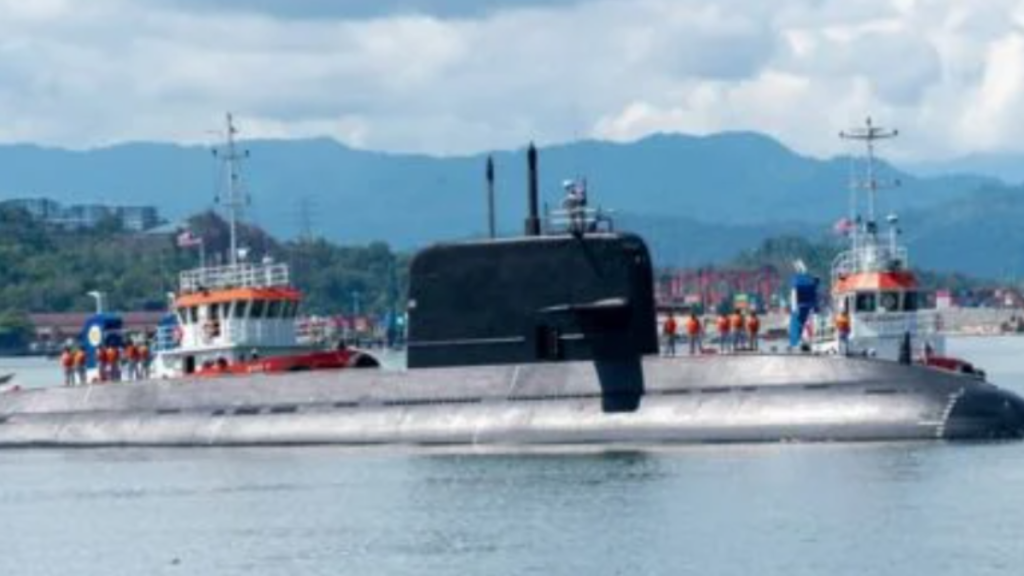
The Hangor submarine programme does not exist solely as a defence procurement exercise. It functions as the latest and largest addition to a parallel economic structure that Pakistan’s military establishment has been building for decades, one that operates through opacity, captures rents from public money, and answers to no civilian institution.
That structure is very well documented. Pakistan’s armed forces operate four major commercial foundations such as the Fauji Foundation for the army, the Bahria Foundation for the navy, the Shaheen Foundation for the air force, and the Army Welfare Trust.
Together, they constitute the largest business conglomerate in the country. The Fauji Foundation alone controls at least 25 listed and unlisted companies, including Fauji Fertilizer Company, Fauji Cement, Askari Bank, and Fauji Foods.
The Defence Housing Authority has made the military Pakistan’s largest land developer, with projects across the country. These entities operate under the banner of welfare but function as commercial enterprises run by retired military officers, with profits distributed to retired senior personnel.
Dr. Ayesha Siddiqa, whose landmark study Military Inc: Inside Pakistan’s Military Economy remains the authoritative analysis of this ecosystem, documented how these institutions use state assets and resources while remaining outside the civilian accountability frameworks that apply to every other economic actor in the country.
The Bahria Foundation—the navy’s commercial arm—sits directly within the institutional chain that the Hangor programme feeds. A deal of this scale and duration generates contracting relationships, maintenance agreements, training packages, spare parts supply networks, and upgrade schedules that sustain affiliated commercial entities for years or decades after the headline transaction is concluded.
The Hangor programme, at $5 billion and with a maintenance tail extending well into the 2040s, is the most significant such arrangement the navy has ever managed. The commercial adjacencies it creates will outlast the submarines themselves.
Ordinary Pakistanis are absorbing the cost of this. Pakistan’s defence budget rose by over 20% in the latest fiscal cycle while social spending was cut by nearly 7%. Health allocations, education funding, and infrastructure budgets all contracted.
The IMF conditioned its bailout support on reduced public subsidy expenditure, and the government honoured those conditions in civilian spending. It has not applied them to military procurement. The result is an austerity programme that falls on citizens and not on the establishment whose procurement decisions contributed substantially to the fiscal pressure in the first place.
This is the operating logic of Pakistan’s military-commercial complex. Large, opaque procurements are institutionally valuable not only because of the security assets they produce but also because of the commercial ecosystems they generate.
Whether the Hangor submarines ultimately deliver meaningful deterrence in the Arabian Sea is, from this institutional perspective, a secondary question. What matters is that the programme is funded, managed within structures the military controls, and insulated from the civilian oversight that might otherwise scrutinise how the money flows.
Pakistan’s civilian institutions are structurally unable to challenge this arrangement. Parliament has not been given contract documentation for the Hangor deal. Civil society organisations that have attempted to access procurement information have encountered classification barriers that effectively insulate the programme from public review.
The media, operating in an environment where critical reporting on military procurement carries documented professional and personal risk, has treated the deal overwhelmingly as a national security asset rather than a fiscal accountability question.
The 1973 Constitution formally limits the role of the armed forces to external security. The commercial empire that runs alongside the defence function has no constitutional mandate, no civilian audit mechanism, and no accountability to the public whose taxes sustain both.
The Hangor programme will proceed. Its maintenance will feed the same network of foundations, affiliated contractors, and retired-officer-run enterprises for decades.
The citizens whose hospitals, schools, and flood defences were defunded to make room for the naval expansion will have had no meaningful voice in any of it. This goes beyond being a security policy. It is a description of how a state within a state manages public resources for private institutional benefit, and has done so, with growing sophistication, for the better part of seventy years.
A State Within a State: How the Hangor Deal Enriches Pakistan’s Military-Commercial Complex